Universal menu

  • Global
  • Regions
    • Africa
    • Americas and the Caribbean
    • Arab States
    • Asia and the Pacific
    • Europe and Central Asia
  • Knowledge
  • Data
  • Training
  • Transparency
UN Women - For all women and girls

Main Navigation-HQ

  • Who we are
    • About us
      • About UN Women
      • Business model
      • Guiding documents
      • Worldwide presence
    • Leadership
      • Governance structure
      • Executive leadership
      • Executive Board
      • Accountability
    • Work with us
      • Employment
      • Procurement
      • Calls for proposals
      • Contact us
      • UN Women Strategic Plan 2026–2029
      • UN Women Strategic Plan 2026–2029 - social media image
        UN Women Strategic Plan 2026–2029
  • What we do
    • Focus areas
      • Ending violence against women
      • Peace and security
      • Humanitarian action
      • Leadership and governance
      • Economic empowerment
      • Innovation and technology
      • Women with disabilities
      • Youth
      • HIV and AIDS
    • How we work
      • 2030 Agenda for Sustainable Development
      • Commission on the Status of Women
      • Gender parity in the UN system
      • Intergovernmental support
      • Partnerships
      • Research and data
      • Training Centre
      • Trust funds
      • UN system coordination
      • Gender Equality Accelerators
      • Gender Equality Accelerators artwork
        Gender Equality Accelerators
  • News and stories
    • Latest
      • News
      • Articles and explainers
      • In focus
    • Media center
      • Press materials
      • Media contacts
      • Explainer: Why are women so exhausted? Care work and the mental load
      • Two adults stand at a table changing diapers on baby dolls, with laundry hanging on a clothesline behind them in a home setting.
        Explainer: Why are women so exhausted? Care work and the mental load
      • Press release: Aid cuts dismantle women’s organizations working in humanitarian crises
      • A young Ugandan woman sits with another local woman to talk
        Press release: Aid cuts dismantle women’s organizations working in humanitarian crises
  • Digital library
    • Resources
      • Publications
      • Annual reports
      • Gender snapshot
      • Progress of the world’s women
      • World survey on the role of women in development
    • GenderTerm
      • GenderTerm
      • Reprint permissions
      • UN Women Highlights 2025–2026
      • A smiling woman.
        UN Women Highlights 2025–2026
      • Gender snapshot 2026
      • A diverse group of people represented as simplified silhouettes, arranged against a dark blue background.
        Gender snapshot 2026
  • Get involved
    • How to get involved
      • For ALL Women and Girls
      • International Women's Day
      • 16 Days of Activism to End Violence against Women and Girls
      • UNiTE! Campaign to End Violence against Women
      • Generation Equality
      • He for She
Ask AI
https://84e5cfacd5c7e99f9825edf344450c.1b.environment.api.powerplatform.com/powervirtualagents/botsbyschema/crad4_websiteQA/directline/token?api-version=2022-03-01-preview
1
-
Ask your question here
AI website assistant

Hello, how can I assist you?

AI chatbot responses may be incorrect. Always verify important information.

Donate button menu

Donate

Breadcrumb

  1. Home
  2. Publications

Website survey

We want to know how we can improve your experience on this website. Completing this survey takes less than 5 minutes.

TAKE THE SURVEY
Image
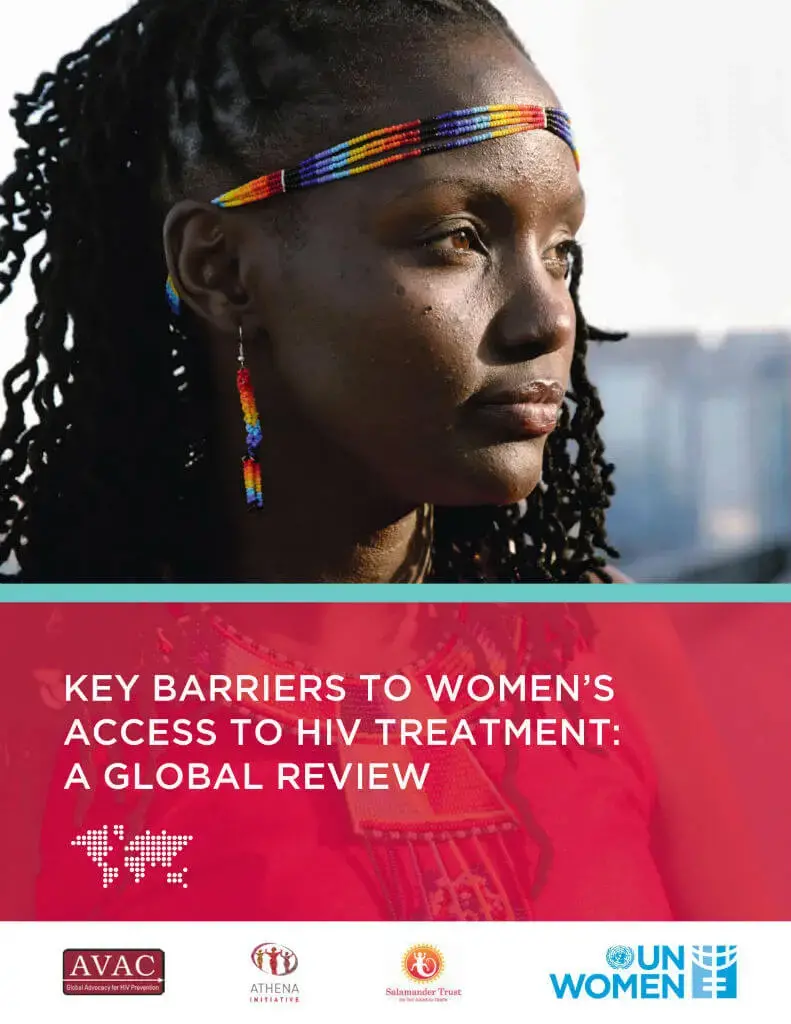
Key barriers to women’s access to HIV treatment: A global review

Key barriers to women’s access to HIV treatment: A global review

Publication year 2017
  • Share to Facebook
  • Share to Twitter
  • Share to LinkedIn
  • Share to E-mail
Author(s)/editor(s) AVAC, Athena Network, Salamander Trust

Commissioned by UN Women, the AIDS Vaccine Advocacy Coalition (AVAC), Athena Network, and Salamander Trust undertook a multistage review to highlight the experiences of women living with HIV accessing treatment and quality care. This community-based, participatory review was led and governed by 14 women living with HIV from 11 countries as a Global Reference Group: they designed the survey questionnaires, conducted focus group discussions and interviews and validated the findings.

This global review takes place during a turning point in the HIV epidemic, when an increasing focus is placed on strategic investments in health. This review is informed by a gender-responsive and human rights–based framework to explore the micro-, meso-, and macro-level factors that impact women’s experiences of treatment availability and their decision-making processes around its uptake.

Findings presented in this report address the interplay of structural factors that affect women’s overall access to health and resources, such as poverty, economic security, decision-making power, and stigma and discrimination. The most frequently cited barriers included actual and/or fear of violence, stigma and discrimination, treatment side effects, low treatment literacy, gender roles and care responsibilities, lack of access to and control over resources, dismissal, fear of disclosure or of HIV-related employment refusal, and other barriers.

Approaching the construct of treatment access from a gender-responsive and human rights–based approach yields valuable insights into the availability, affordability, acceptability, and quality of services and care. This knowledge is critical to the development of effective, women-led care, treatment, and support programmes.
View online/download

  • PDF version: English (1.4MB), French (1.2MB), Spanish (1MB)

Bibliographic information

Number of pages
146
Resource type(s)
Assessments Case studies Literature reviews/bibliographies
ISBN
978-1-63214-084-5
Publishing entities
United Nations Entity for Gender Equality and the Empowerment of Women (UN Women)
UN Women office publishing
UN Women Headquarters Office

Tags

Africa Arab States/North Africa Asia and the Pacific Bolivia, Plurinational State of Care and support services Europe and Central Asia HIV and AIDS Health Health care services Human rights Human rights–based approach Kenya Latin America and the Caribbean Nepal OECD DAC Donors and Other Countries Sexual and reproductive health and rights Treatment Tunisia Uganda Ukraine United Kingdom of Great Britain and Northern Ireland United States of America Zimbabwe

Related publications

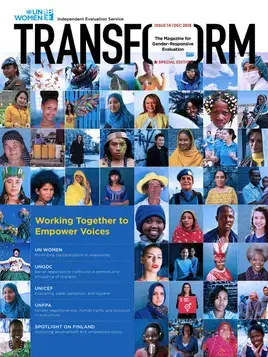
TRANSFORM – The magazine for gender-responsive evaluation – Issue 14, December 2018

TRANSFORM – The magazine for gender-responsive evaluation – Issue 14, December 2018

14 December 2018
TRANSFORM – The magazine for gender-responsive evaluation – Issue 14, December 2018
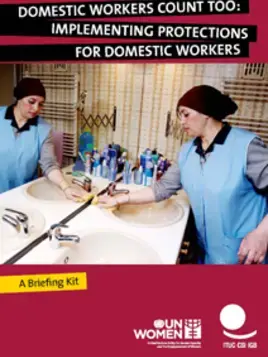
Domestic Workers Count Too: Implementing Protections for Domestic Workers

Domestic Workers Count Too: Implementing Protections for Domestic Workers

1 March 2013
Domestic Workers Count Too: Implementing Protections for Domestic Workers
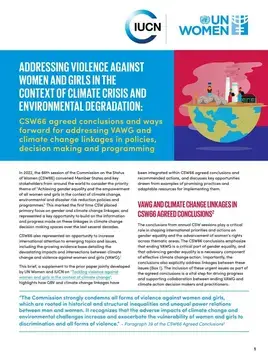
CSW66 agreed conclusions and ways forward for addressing VAWG and climate change linkages in policies, decision making and programming

CSW66 agreed conclusions and ways forward for addressing VAWG and climate change linkages in policies, decision making and programming

4 November 2022
CSW66 agreed conclusions and ways forward for addressing VAWG and climate change linkages in policies, decision making and programming

Footer menu-HQ

  • News and stories
  • Resources
  • What we do
  • How we work
  • Where we are
  • Partnerships
  • Employment
  • Procurement
  • Contact us
  • Executive Board
  • Commission on the Status of Women

Donate button menu [Footer tablet]

  • Donate

Donate button menu [Footer]

  • Donate

Social media menu

  • Facebook
  • Twitter
  • LinkedIn
  • Flickr
  • YouTube
  • Instagram
UN Women - For all women and girls

Footer bottom [Menu]

  • Copyright
  • Information security
  • Privacy notice
  • Report wrongdoing
  • Terms of use
Share this page
  • Share to Facebook
  • Share to Twitter
  • Share to LinkedIn
  • Share to E-mail

Or copy link