Universal menu

  • Global
  • Regions
    • Africa
    • Americas and the Caribbean
    • Arab States
    • Asia and the Pacific
    • Europe and Central Asia
  • Knowledge
  • Data
  • Training
  • Transparency
UN Women - For all women and girls

Main Navigation-HQ

  • Who we are
    • About us
      • About UN Women
      • Business model
      • Guiding documents
      • Worldwide presence
    • Leadership
      • Governance structure
      • Executive leadership
      • Executive Board
      • Accountability
    • Work with us
      • Employment
      • Procurement
      • Calls for proposals
      • Contact us
      • UN Women Strategic Plan 2026–2029
      • UN Women Strategic Plan 2026–2029 - social media image
        UN Women Strategic Plan 2026–2029
  • What we do
    • Focus areas
      • Ending violence against women
      • Peace and security
      • Humanitarian action
      • Leadership and governance
      • Economic empowerment
      • Innovation and technology
      • Women with disabilities
      • Youth
      • HIV and AIDS
    • How we work
      • 2030 Agenda for Sustainable Development
      • Commission on the Status of Women
      • Gender parity in the UN system
      • Intergovernmental support
      • Partnerships
      • Research and data
      • Training Centre
      • Trust funds
      • UN system coordination
      • Gender Equality Accelerators
      • Gender Equality Accelerators artwork
        Gender Equality Accelerators
  • News and stories
    • Latest
      • News
      • Articles and explainers
      • In focus
    • Media center
      • Press materials
      • Media contacts
      • Explainer: Why are women so exhausted? Care work and the mental load
      • Two adults stand at a table changing diapers on baby dolls, with laundry hanging on a clothesline behind them in a home setting.
        Explainer: Why are women so exhausted? Care work and the mental load
      • Press release: Aid cuts dismantle women’s organizations working in humanitarian crises
      • A young Ugandan woman sits with another local woman to talk
        Press release: Aid cuts dismantle women’s organizations working in humanitarian crises
  • Digital library
    • Resources
      • Publications
      • Annual reports
      • Gender snapshot
      • Progress of the world’s women
      • World survey on the role of women in development
    • GenderTerm
      • GenderTerm
      • Reprint permissions
      • UN Women Highlights 2025–2026
      • A smiling woman.
        UN Women Highlights 2025–2026
      • Gender snapshot 2026
      • A diverse group of people represented as simplified silhouettes, arranged against a dark blue background.
        Gender snapshot 2026
  • Get involved
    • How to get involved
      • For ALL Women and Girls
      • International Women's Day
      • 16 Days of Activism to End Violence against Women and Girls
      • UNiTE! Campaign to End Violence against Women
      • Generation Equality
      • He for She
Ask AI
https://84e5cfacd5c7e99f9825edf344450c.1b.environment.api.powerplatform.com/powervirtualagents/botsbyschema/crad4_websiteQA/directline/token?api-version=2022-03-01-preview
1
-
Ask your question here
AI website assistant

Hello, how can I assist you?

AI chatbot responses may be incorrect. Always verify important information.

Donate button menu

Donate

Breadcrumb

  1. Home
  2. Publications

Website survey

We want to know how we can improve your experience on this website. Completing this survey takes less than 5 minutes.

TAKE THE SURVEY
Image
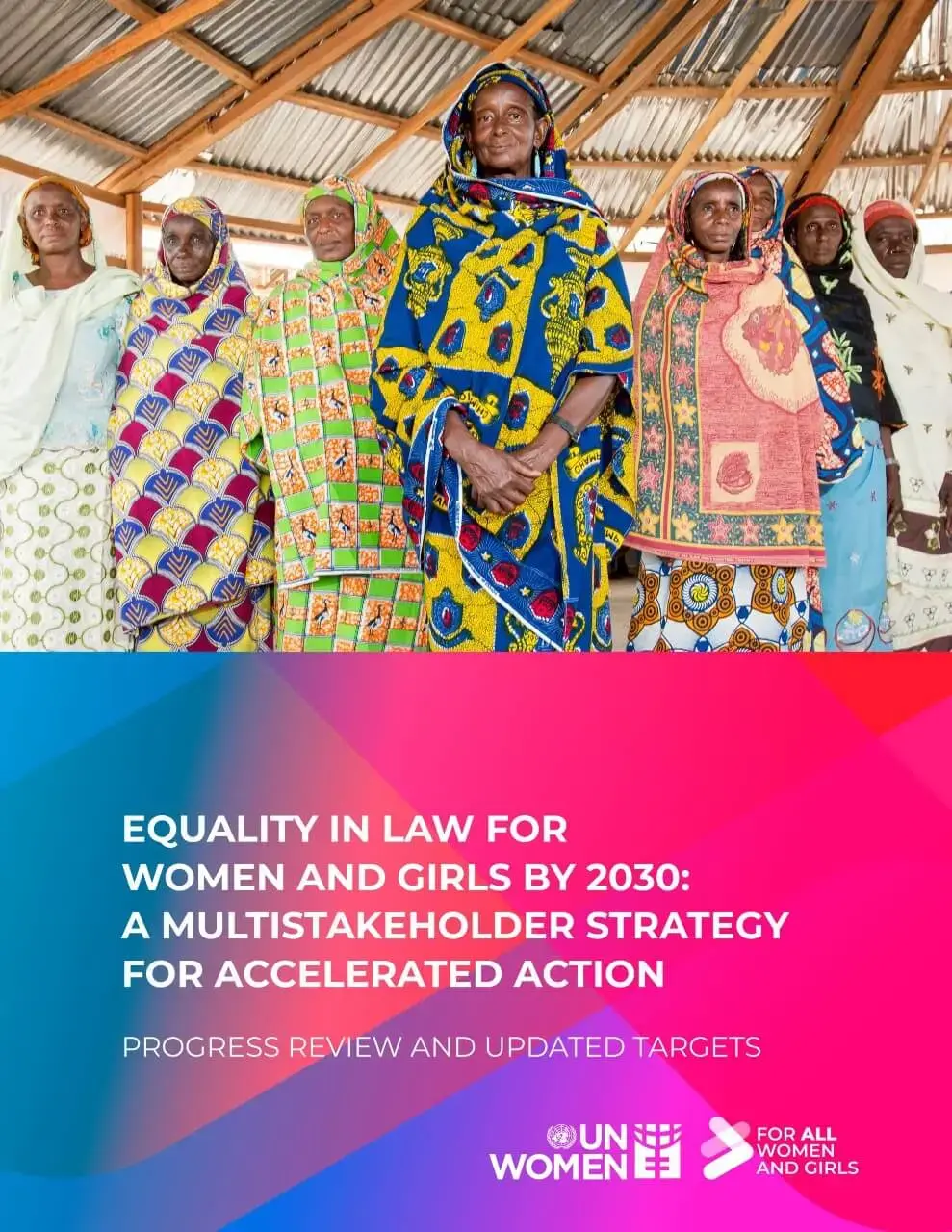
Equality in law for women and girls by 2030: A multistakeholder strategy for accelerated action: Progress review and updated targets - cover
DOWNLOAD
English

Equality in law for women and girls by 2030: A multistakeholder strategy for accelerated action: Progress review and updated targets

Publication year 2026
  • Share to Facebook
  • Share to Twitter
  • Share to LinkedIn
  • Share to E-mail

More than 2.5 billion women and girls worldwide continue to live under the shadow of discriminatory legal systems that erode their dignity, restrict opportunities, and violate fundamental human rights. Discriminatory laws, whether constitutional, civil, criminal, labour, or administrative, remain one of the most entrenched barriers to gender equality, undermining sustainable development and the realization of human potential.

In response to this challenge, UN Women and a diverse, global coalition of 20 partner organizations launched “Equality in law for women and girls by 2030: A multistakeholder strategy for accelerated action” in 2019. The strategy set a bold vision: to fast-track the repeal of discriminatory laws across six thematic areas in 100 countries, with the aim of impacting the lives of more than 50 million women and girls.

A review of strategy implementation at the midpoint confirmed both substantial progress and persistent challenges. To sustain and accelerate progress, the strategy’s targets have been updated to reflect current realities while preserving shared ambition. While the original strategy continues to anchor this work, including through levels of engagement and implementation accelerators, the new document outlines the progress achieved to date, the recalibrated targets for each priority area, and the next steps required to ensure that equality in law for women and girls can be realized by 2030.
View online/download

  • Publication (PDF, 797 KB)
  • See also: Equality in law for women and girls by 2030: A multistakeholder strategy for accelerated action

Bibliographic information

Number of pages
16
Resource type(s)
Assessments Laws/legislation
Publishing entities
United Nations Entity for Gender Equality and the Empowerment of Women (UN Women)
UN Women office publishing
Human Rights and Non-discrimination Section (HRNDS)

Tags

Constitutions and legal reform Economic empowerment Ending violence against women and girls Gender discrimination Gender equality and women’s empowerment Governance and national planning Human rights Leadership and political participation Rule of law Women’s rights

Related publications

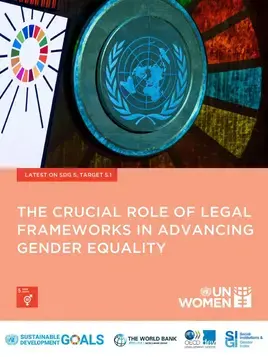
Infographic: The crucial role of legal frameworks in advancing gender equality

The crucial role of legal frameworks in advancing gender equality

1 March 2024
Infographic: The crucial role of legal frameworks in advancing gender equality
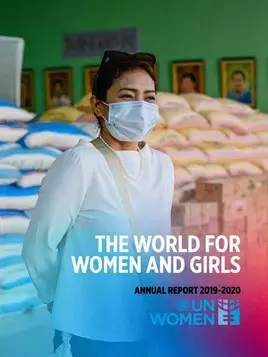
UN Women annual report 2019-2020

Annual Report 2019–2020

18 June 2020
Annual Report 2019–2020
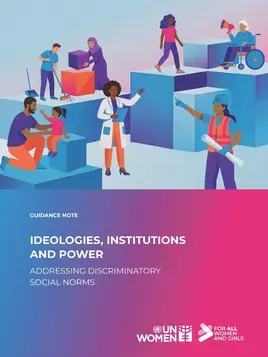
Ideologies, institutions and power: Addressing discriminatory social norms

Ideologies, institutions and power: Addressing discriminatory social norms

9 March 2026
Ideologies, institutions and power: Addressing discriminatory social norms

Footer menu-HQ

  • News and stories
  • Resources
  • What we do
  • How we work
  • Where we are
  • Partnerships
  • Employment
  • Procurement
  • Contact us
  • Executive Board
  • Commission on the Status of Women

Donate button menu [Footer tablet]

  • Donate

Donate button menu [Footer]

  • Donate

Social media menu

  • Facebook
  • Twitter
  • LinkedIn
  • Flickr
  • YouTube
  • Instagram
UN Women - For all women and girls

Footer bottom [Menu]

  • Copyright
  • Information security
  • Privacy notice
  • Report wrongdoing
  • Terms of use
Share this page
  • Share to Facebook
  • Share to Twitter
  • Share to LinkedIn
  • Share to E-mail

Or copy link