Universal menu

  • Global
  • Regions
    • Africa
    • Americas and the Caribbean
    • Arab States
    • Asia and the Pacific
    • Europe and Central Asia
  • Knowledge
  • Data
  • Training
  • Transparency
UN Women - For all women and girls

Main Navigation-HQ

  • Who we are
    • About us
      • About UN Women
      • Business model
      • Guiding documents
      • Worldwide presence
    • Leadership
      • Governance structure
      • Executive leadership
      • Executive Board
      • Accountability
    • Work with us
      • Employment
      • Procurement
      • Calls for proposals
      • Contact us
      • UN Women Strategic Plan 2026–2029
      • UN Women Strategic Plan 2026–2029 - social media image
        UN Women Strategic Plan 2026–2029
  • What we do
    • Focus areas
      • Ending violence against women
      • Peace and security
      • Humanitarian action
      • Leadership and governance
      • Economic empowerment
      • Innovation and technology
      • Women with disabilities
      • Youth
      • HIV and AIDS
    • How we work
      • 2030 Agenda for Sustainable Development
      • Commission on the Status of Women
      • Gender parity in the UN system
      • Intergovernmental support
      • Partnerships
      • Research and data
      • Training Centre
      • Trust funds
      • UN system coordination
      • Gender Equality Accelerators
      • Gender Equality Accelerators artwork
        Gender Equality Accelerators
  • News and stories
    • Latest
      • News
      • Articles and explainers
      • In focus
    • Media center
      • Press materials
      • Media contacts
      • Explainer: Why are women so exhausted? Care work and the mental load
      • Two adults stand at a table changing diapers on baby dolls, with laundry hanging on a clothesline behind them in a home setting.
        Explainer: Why are women so exhausted? Care work and the mental load
      • Press release: Aid cuts dismantle women’s organizations working in humanitarian crises
      • A young Ugandan woman sits with another local woman to talk
        Press release: Aid cuts dismantle women’s organizations working in humanitarian crises
  • Digital library
    • Resources
      • Publications
      • Annual reports
      • Gender snapshot
      • Progress of the world’s women
      • World survey on the role of women in development
    • GenderTerm
      • GenderTerm
      • Reprint permissions
      • UN Women Highlights 2025–2026
      • A smiling woman.
        UN Women Highlights 2025–2026
      • Gender snapshot 2026
      • A diverse group of people represented as simplified silhouettes, arranged against a dark blue background.
        Gender snapshot 2026
  • Get involved
    • How to get involved
      • For ALL Women and Girls
      • International Women's Day
      • 16 Days of Activism to End Violence against Women and Girls
      • UNiTE! Campaign to End Violence against Women
      • Generation Equality
      • He for She
Ask AI
https://84e5cfacd5c7e99f9825edf344450c.1b.environment.api.powerplatform.com/powervirtualagents/botsbyschema/crad4_websiteQA/directline/token?api-version=2022-03-01-preview
1
-
Ask your question here
AI website assistant

Hello, how can I assist you?

AI chatbot responses may be incorrect. Always verify important information.

Donate button menu

Donate

Breadcrumb

  1. Home
  2. Publications

Website survey

We want to know how we can improve your experience on this website. Completing this survey takes less than 5 minutes.

TAKE THE SURVEY
Image
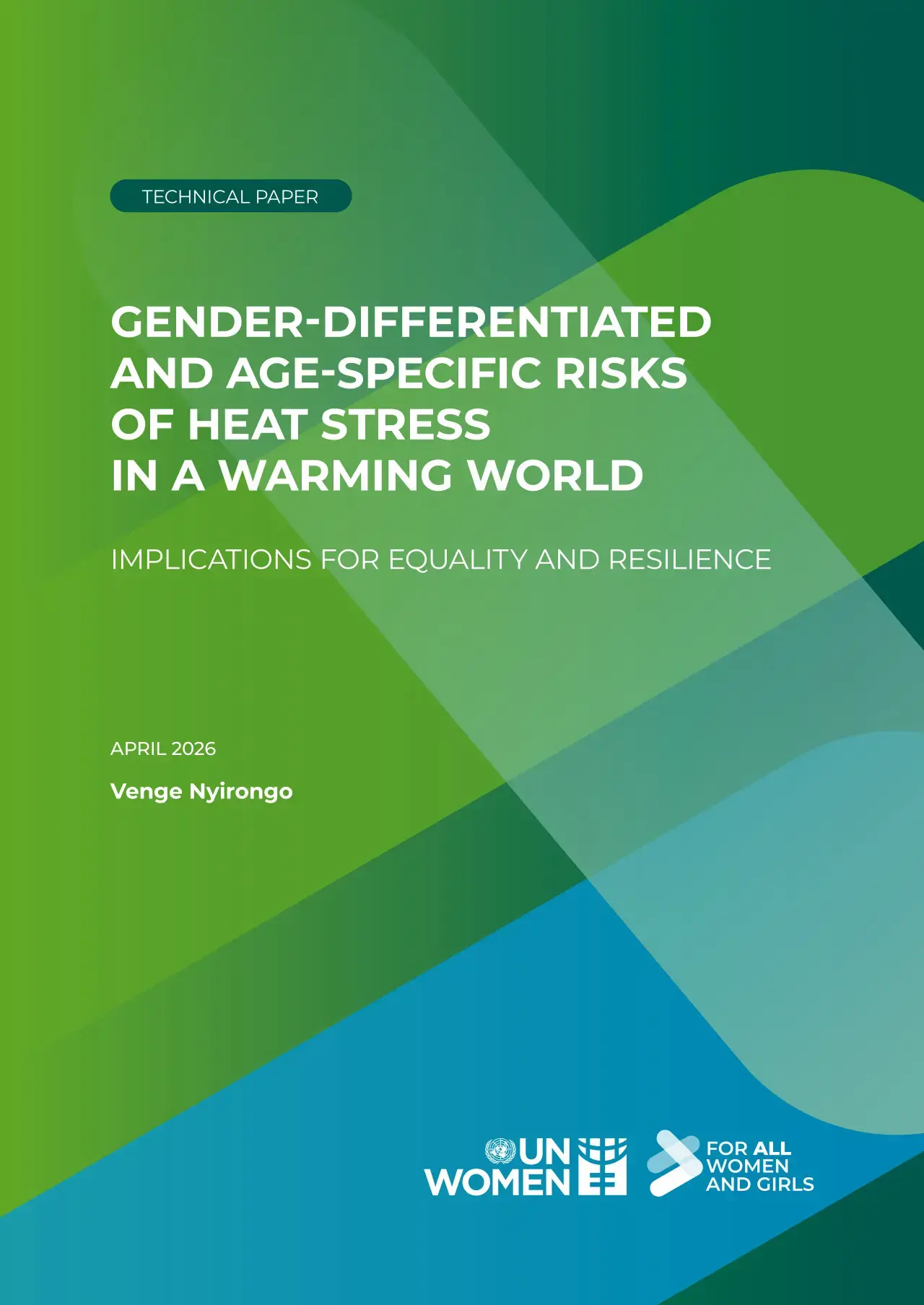
Cover in English.
DOWNLOAD
English

Gender-differentiated and age-specific risks of heat stress in a warming world: Implications for equality and resilience

Publication year 2026
  • Share to Facebook
  • Share to Twitter
  • Share to LinkedIn
  • Share to E-mail
Author(s)/editor(s) Venge Nyirongo

Extreme heat is an intensifying climate risk and an under-recognized driver of gender and age inequality, with implications for public health, labour, and social justice. As global temperatures rise beyond 1.5°C, heat stress is no longer episodic but a structural challenge that disproportionately affects women, children, older persons, and marginalized populations, particularly in low- and middle-income countries.

This paper shows that heat impacts emerge from the interaction of biological differences and gendered social roles. Physiological factors shape thermoregulation, fertility, and pregnancy outcomes, with elevated risks for pregnant women, newborns, and older women during heatwaves. Gendered divisions of labour and care amplify exposure. Women are overrepresented in subsistence agriculture, informal employment, and unpaid care and domestic work, often performed during the hottest hours with limited access to cooling, healthcare, and labour protections. Men, by contrast, experience high rates of acute heat injury in physically demanding outdoor occupations, reflecting exposure patterns and risk-discouraging norms.

Heat vulnerability varies across the life course. Children and adolescents face risks linked to physiological immaturity, education disruption, and early labour or pregnancy. Working-age adults experience productivity losses, occupational hazards, and reproductive health impacts. Older persons, especially women living alone, face the highest heat-related mortality due to declining thermoregulation, poverty, and social isolation. The analysis concludes that heat stress is a climate justice and gender equality issue requiring adaptation. Integrating age- and gender-responsive considerations across heat action plans, labour standards, urban design, health systems, and data collection is essential to prevent inequities in a warming world.
View online/download

  • Publication (PDF, 2.08 MB)

Order printed/published version

Languages available in print
English
Order from

[ Click to reveal ]

Bibliographic information

Number of pages
iii + 32
Resource type(s)
Research papers
Publishing entities
United Nations Entity for Gender Equality and the Empowerment of Women (UN Women)
UN Women office publishing
Economic Empowerment Section (EES)Intergovernmental Support Section (ISS)

Tags

2030 Agenda for Sustainable Development Ageing/older people Climate change Economic empowerment Environmental protection Gender statistics Gender, culture and society Youth

Related publications

Publication cover.

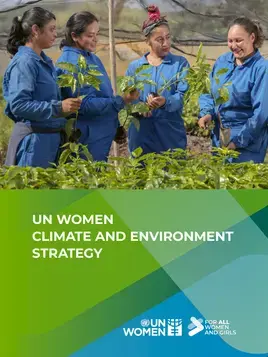
UN Women Climate and Environment Strategy

5 June 2026
UN Women Climate and Environment Strategy
Publication cover.

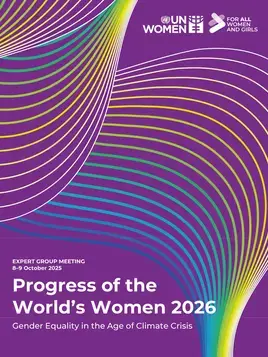
Expert Group Meeting report – Progress of the world’s women 2026: Gender equality in the age of climate crisis

1 June 2026
Expert Group Meeting report – Progress of the world’s women 2026: Gender equality in the age of climate crisis
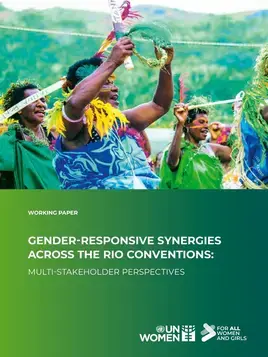
Gender-responsive synergies across the Rio Conventions: Multi-stakeholder perspectives

Gender-responsive synergies across the Rio Conventions: Multi-stakeholder perspectives

18 November 2025
Gender-responsive synergies across the Rio Conventions: Multi-stakeholder perspectives

Footer menu-HQ

  • News and stories
  • Resources
  • What we do
  • How we work
  • Where we are
  • Partnerships
  • Employment
  • Procurement
  • Contact us
  • Executive Board
  • Commission on the Status of Women

Donate button menu [Footer tablet]

  • Donate

Donate button menu [Footer]

  • Donate

Social media menu

  • Facebook
  • Twitter
  • LinkedIn
  • Flickr
  • YouTube
  • Instagram
UN Women - For all women and girls

Footer bottom [Menu]

  • Copyright
  • Information security
  • Privacy notice
  • Report wrongdoing
  • Terms of use
Share this page
  • Share to Facebook
  • Share to Twitter
  • Share to LinkedIn
  • Share to E-mail

Or copy link