Universal menu

  • Global
  • Regions
    • Africa
    • Americas and the Caribbean
    • Arab States
    • Asia and the Pacific
    • Europe and Central Asia
  • Knowledge
  • Data
  • Training
  • Transparency
UN Women - For all women and girls

Main Navigation-HQ

  • Who we are
    • About us
      • About UN Women
      • Business model
      • Guiding documents
      • Worldwide presence
    • Leadership
      • Governance structure
      • Executive leadership
      • Executive Board
      • Accountability
    • Work with us
      • Employment
      • Procurement
      • Calls for proposals
      • Contact us
      • UN Women Strategic Plan 2026–2029
      • UN Women Strategic Plan 2026–2029 - social media image
        UN Women Strategic Plan 2026–2029
  • What we do
    • Focus areas
      • Ending violence against women
      • Peace and security
      • Humanitarian action
      • Leadership and governance
      • Economic empowerment
      • Innovation and technology
      • Women with disabilities
      • Youth
      • HIV and AIDS
    • How we work
      • 2030 Agenda for Sustainable Development
      • Commission on the Status of Women
      • Gender parity in the UN system
      • Intergovernmental support
      • Partnerships
      • Research and data
      • Training Centre
      • Trust funds
      • UN system coordination
      • Gender Equality Accelerators
      • Gender Equality Accelerators artwork
        Gender Equality Accelerators
  • News and stories
    • Latest
      • News
      • Articles and explainers
      • In focus
    • Media center
      • Press materials
      • Media contacts
      • Explainer: Why are women so exhausted? Care work and the mental load
      • Two adults stand at a table changing diapers on baby dolls, with laundry hanging on a clothesline behind them in a home setting.
        Explainer: Why are women so exhausted? Care work and the mental load
      • Press release: Aid cuts dismantle women’s organizations working in humanitarian crises
      • A young Ugandan woman sits with another local woman to talk
        Press release: Aid cuts dismantle women’s organizations working in humanitarian crises
  • Digital library
    • Resources
      • Publications
      • Annual reports
      • Gender snapshot
      • Progress of the world’s women
      • World survey on the role of women in development
    • GenderTerm
      • GenderTerm
      • Reprint permissions
      • UN Women Highlights 2025–2026
      • A smiling woman.
        UN Women Highlights 2025–2026
      • Gender snapshot 2026
      • A diverse group of people represented as simplified silhouettes, arranged against a dark blue background.
        Gender snapshot 2026
  • Get involved
    • How to get involved
      • For ALL Women and Girls
      • International Women's Day
      • 16 Days of Activism to End Violence against Women and Girls
      • UNiTE! Campaign to End Violence against Women
      • Generation Equality
      • He for She
Ask AI
https://84e5cfacd5c7e99f9825edf344450c.1b.environment.api.powerplatform.com/powervirtualagents/botsbyschema/crad4_websiteQA/directline/token?api-version=2022-03-01-preview
1
-
Ask your question here
AI website assistant

Hello, how can I assist you?

AI chatbot responses may be incorrect. Always verify important information.

Donate button menu

Donate

Breadcrumb

  1. Home
  2. News and stories
  3. Interview

Website survey

We want to know how we can improve your experience on this website. Completing this survey takes less than 5 minutes.

TAKE THE SURVEY
Interview

Women’s rights then and now: “We should bring back hope.”

Interview with Flutura Xhabija on attending the Fourth World Conference on Women in Beijing in 1995 and how the Beijing Platform for Action remains relevant today.

24 February 2025
  • Share to Facebook
  • Share to Twitter
  • Share to LinkedIn
  • Share to E-mail

Flutura Xhabija, at 76, is a trailblazer in business and advocacy, and the founder of the National Professionals, Businesswomen and Craft Association in Albania. In 1995, she was among the few Albanian women who traveled to the Fourth World Conference on Women in Beijing, where she witnessed firsthand the power of global activism.

Image
Flutura Xhabija, at 76, pictured with photo prints of her participation in Beijing in 1995. Photo: UN Women/Yllka Parllaku

The Beijing Conference in 1995: A historic moment for women's rights

“Five years after Albania’s transition to democracy, we had limited information, few civil society organizations, and even less experience, but our determination was immense. The United Nations in Tirana engaged the few women-led organizations at the time to attend the Fourth World Conference on Women,” recalls Xhabija. She was excited, and proud, as she was following her mother’s footsteps in activism.

“We joined the train to Beijing, China—the train of peace, the train of women in Warsaw,” she narrates. “We were 200 representatives from around the world, travelling together with one shared mission. The train carriages were more than just a means of transport—they were also meeting spaces where we discussed strategies for gender equality.”

“What stood out for me during the Beijing conference was the immense freedom of expression that people enjoyed.”

Image
A pamphlet detail showing the route of the “Beijing Express” which carried 200 representatives from around the world from Warsaw Poland to Beijing China.   The train carriages were more than just a means of transport—they were also meeting spaces where activists discussed strategies for gender equality.   Photos Courtesy of Flutura Xhabija
A pamphlet detail showing the route of the “Beijing Express” which carried 200 representatives from around the world from Warsaw Poland to Beijing China. The train carriages were more than just a means of transport—they were also meeting spaces where activists discussed strategies for gender equality.
Photos Courtesy of Flutura Xhabija
A pamphlet detail showing the route of the “Beijing Express” which carried 200 representatives from around the world from Warsaw Poland to Beijing China. The train carriages were more than just a means of transport—they were also meeting spaces where activists discussed strategies for gender equality. Photos Courtesy of Flutura Xhabija

From 1995 to 2025: What changed for gender equality and challenges that remain

“The impact was undeniable in Albania,” says Xhabija when asked about how the Beijing Declaration and Platform for Action impacted women’s lives in Albania. “Beijing [Platform for Action] was a new element for Europe—it had a significant impact [regionally]. The primary goal was to communicate that we were not alone, to emphasize the importance of working independently in our own country, while also fostering international cooperation. The Beijing Declaration and Platform for Action  played a significant role in this journey.”

Speaking of progress since 1995, Xhabija says women are more aware of their rights and inspiring others as mentors. “One area where I’ve seen the most progress is in women’s entrepreneurship. We have actively participated in discussions at chambers of commerce under the Ministry of Economy and the Ministry of Finance, advocating for the role of women in business.”

“However, we still need stronger policies to support women in balancing work and family life,” she adds. “Childcare services must be expanded so that women don’t have to choose between career and motherhood.”
Image
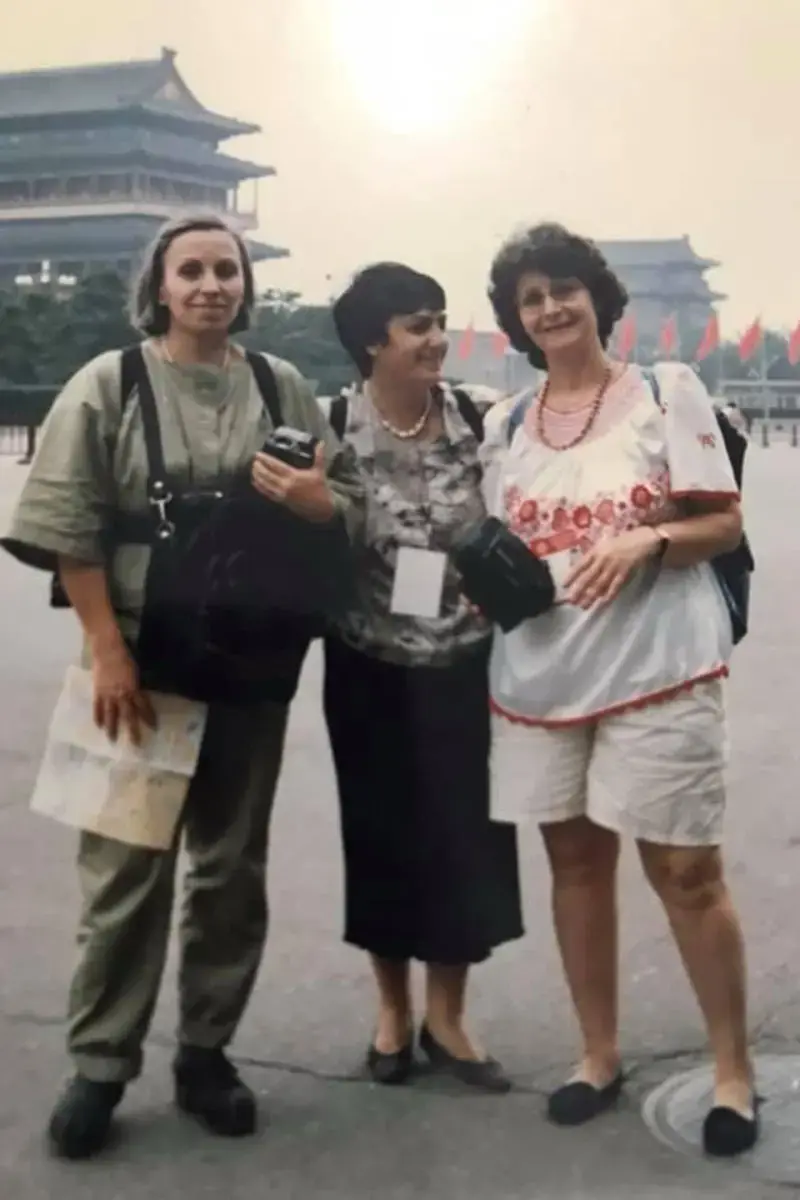
In 1995, Flutura Xhabija (at right) was among the few Albanian women who traveled via train to the Fourth World Conference on Women in Beijing, where she witnessed firsthand the power of global activism.

“What stood out for me during the Beijing conference was the immense freedom of expression that people enjoyed.”

—Flutura Xhabija (at right) photographed in Beijing, 1995

What’s next for gender equality and women’s rights in Albania and the world

“Gender equality cannot be achieved through words alone,” urges Xhabija. “We have spent too much time on reports, publications, and speeches. Rather than just engaging politicians, we need to work directly with people, especially marginalized communities in both urban and rural areas, who are often forgotten.”

“Our approach must be active, face-to-face, and practical. We must commit to supporting these women through projects, funding, and focused training initiatives. And everyone must be included, without exception, from the youngest to the oldest—everyone has a role to play. We should bring back hope to people.”

Xhabija outlines some priorities for her country and community: “It is urgent that we invest in education in Albania. Invest in women’s businesses and ensure affordable childcare. Invest in sports and art, so that people can be entertained and find joy.”  

Advice for young feminists today

“Understand the soul of the people,” says Xhabija. “Today, great minds have come together—people who understand that women’s talents, potential, energy and knowledge remain unused.” Xhabija sees this as the moment to march forward, and refuse to take any step back.
Topics

  • Gender equality and women’s empowerment
  • Beijing Platform for Action
  • Europe and Central Asia
  • Albania

Related content

Image
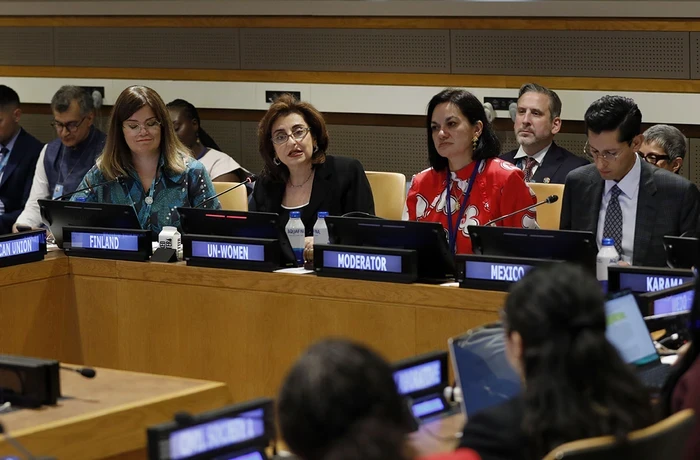
UN Women Executive Director Sima Bahous speaks at the High-Level Dialogue on Reinvigorating Feminist Multilateralism held at the UN Headquarters during the High-Level week of the 81st session of the UN General Assembly on 25 September 2026.  Photo: UN Women/Ryan Brown
Speech

Speech: Multilateralism will only remain fit for purpose if it shares power, centres women’s leadership, and delivers for the people it serves

25 September 2026
Speech: Multilateralism will only remain fit for purpose if it shares power, centres women’s leadership, and delivers for the people it serves
Image
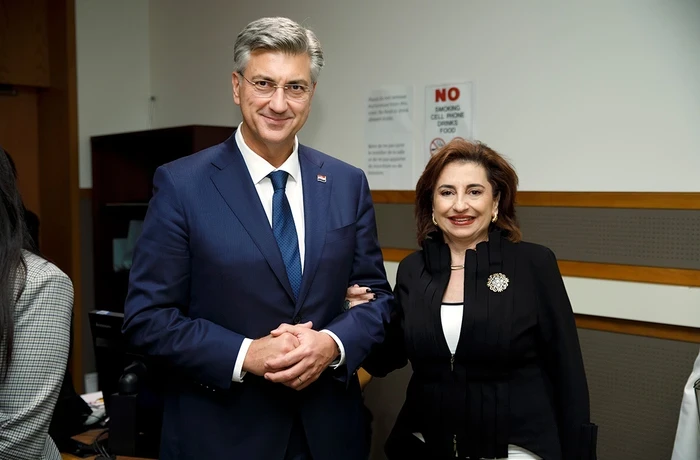
UN Women Executive Director Sima Bahous poses with the Prime Minister of Croatia at an indoor event.
News

Governments, civil society, and private sector call for coordinated action to end technology-facilitated violence against women and girls

25 September 2026
Governments, civil society, and private sector call for coordinated action to end technology-facilitated violence against women and girls
Image
UNWomen_Placeholder
Op-ed

Global war on women through South Africa's eyes

25 September 2026
Global war on women through South Africa's eyes

Footer menu-HQ

  • News and stories
  • Resources
  • What we do
  • How we work
  • Where we are
  • Partnerships
  • Employment
  • Procurement
  • Contact us
  • Executive Board
  • Commission on the Status of Women

Donate button menu [Footer tablet]

  • Donate

Donate button menu [Footer]

  • Donate

Social media menu

  • Facebook
  • Twitter
  • LinkedIn
  • Flickr
  • YouTube
  • Instagram
UN Women - For all women and girls

Footer bottom [Menu]

  • Copyright
  • Information security
  • Privacy notice
  • Report wrongdoing
  • Terms of use
Share this page
  • Share to Facebook
  • Share to Twitter
  • Share to LinkedIn
  • Share to E-mail

Or copy link