Universal menu

  • Global
  • Regions
    • Africa
    • Americas and the Caribbean
    • Arab States
    • Asia and the Pacific
    • Europe and Central Asia
  • Knowledge
  • Data
  • Training
  • Transparency
UN Women - For all women and girls

Main Navigation-HQ

  • Who we are
    • About us
      • About UN Women
      • Business model
      • Guiding documents
      • Worldwide presence
    • Leadership
      • Governance structure
      • Executive leadership
      • Executive Board
      • Accountability
    • Work with us
      • Employment
      • Procurement
      • Calls for proposals
      • Contact us
      • UN Women Strategic Plan 2026–2029
      • UN Women Strategic Plan 2026–2029 - social media image
        UN Women Strategic Plan 2026–2029
  • What we do
    • Focus areas
      • Ending violence against women
      • Peace and security
      • Humanitarian action
      • Leadership and governance
      • Economic empowerment
      • Innovation and technology
      • Women with disabilities
      • Youth
      • HIV and AIDS
    • How we work
      • 2030 Agenda for Sustainable Development
      • Commission on the Status of Women
      • Gender parity in the UN system
      • Intergovernmental support
      • Partnerships
      • Research and data
      • Training Centre
      • Trust funds
      • UN system coordination
      • Gender Equality Accelerators
      • Gender Equality Accelerators artwork
        Gender Equality Accelerators
  • News and stories
    • Latest
      • News
      • Articles and explainers
      • In focus
    • Media center
      • Press materials
      • Media contacts
      • Explainer: Why are women so exhausted? Care work and the mental load
      • Two adults stand at a table changing diapers on baby dolls, with laundry hanging on a clothesline behind them in a home setting.
        Explainer: Why are women so exhausted? Care work and the mental load
      • Press release: Aid cuts dismantle women’s organizations working in humanitarian crises
      • A young Ugandan woman sits with another local woman to talk
        Press release: Aid cuts dismantle women’s organizations working in humanitarian crises
  • Digital library
    • Resources
      • Publications
      • Annual reports
      • Gender snapshot
      • Progress of the world’s women
      • World survey on the role of women in development
    • GenderTerm
      • GenderTerm
      • Reprint permissions
      • UN Women Highlights 2025–2026
      • A smiling woman.
        UN Women Highlights 2025–2026
      • Gender snapshot 2026
      • A diverse group of people represented as simplified silhouettes, arranged against a dark blue background.
        Gender snapshot 2026
  • Get involved
    • How to get involved
      • For ALL Women and Girls
      • International Women's Day
      • 16 Days of Activism to End Violence against Women and Girls
      • UNiTE! Campaign to End Violence against Women
      • Generation Equality
      • He for She
Ask AI
https://84e5cfacd5c7e99f9825edf344450c.1b.environment.api.powerplatform.com/powervirtualagents/botsbyschema/crad4_websiteQA/directline/token?api-version=2022-03-01-preview
1
-
Ask your question here
AI website assistant

Hello, how can I assist you?

AI chatbot responses may be incorrect. Always verify important information.

Donate button menu

Donate

Breadcrumb

  1. Home
  2. News and stories
  3. Press release

Website survey

We want to know how we can improve your experience on this website. Completing this survey takes less than 5 minutes.

TAKE THE SURVEY
Press release

UN Women launches the Digital, Innovation and AI Hub dedicated exclusively to gender equality

New global platform brings together researchers, governments, technology companies and women’s rights organizations to help shape AI and digital transformation in ways that advance gender equality and benefit women and girls.

25 September 2026
  • Share to Facebook
  • Share to Twitter
  • Share to LinkedIn
  • Share to E-mail

New York, 25 September 2026 – Artificial intelligence (AI) is rapidly reshaping how people work, communicate, access public services, and exercise their rights. Yet women remain significantly underrepresented among those developing the technologies and making decisions about how they are governed and deployed: men hold nearly eight in 10 artificial intelligence jobs and almost nine in 10 senior leadership positions shaping the technology.

As world leaders gather in New York for the 81st session of the United Nations General Assembly (UNGA81), artificial intelligence is at the forefront of discussions on economic transformation, the future of work, development, warfare, and international peace and security. And still, women and girls, and the implications of these technological shifts on their rights and empowerment, remain largely absent from the debate.

“The artificial intelligence systems we build today will shape how we live and work tomorrow. If women are missing from their design and governance, we risk carrying the inequalities of the present into the future”, said Sima Bahous, Under-Secretary-General and Executive Director of UN Women.

Women are already experiencing the consequences of AI systems that fail to account for their realities. A global analysis of 133 AI systems found that 44 per cent demonstrated gender bias. Meanwhile, nearly one in four women human rights defenders, activists and journalists surveyed by UN Women reported experiencing AI-assisted online violence.

Launched today, the Hub aims to change both who shapes technology and who it serves.

It will bring together researchers, governments, technology companies, AI experts and women’s rights organizations to generate evidence on how emerging technologies affect women and girls. It will support Member States in developing gender-responsive digital and AI policies that benefit society as a whole, while working with technology companies to embed gender equality principles into the design and governance of technology.

The Hub will help ensure that gender equality is at the heart of AI and digital governance, strengthening the UN system’s capacity to act, while giving women and women’s rights organizations a stronger voice in shaping the policies, rules and technologies that will define the future of AI.

“AI can deepen gender inequality or help overcome it. That is a human choice – and those choices are being made now by engineers, companies, investors and governments”, said Sima Bahous, Under-Secretary-General and Executive Director of UN Women. At UNGA81, UN Women’s message is clear: equality is not only about representation. It is also about power. AI is already helping to reshape economic, social and political power. Women and girls, their rights, voices, needs and perspectives - must therefore be central to designing it and shaping its future.”

The Digital, Innovation and AI Hub forms part of UN Women’s broader work to advance gender equality and women’s empowerment in the context of rapid technological change. Its work will contribute to international efforts to ensure that digital transformation and AI support inclusive and sustainable development and respect human rights.


Media contacts

UN Women Media Team - [ Click to reveal ]
Topics

  • Ending violence against women and girls
  • Gender equality and women’s empowerment
  • Innovation and technology
  • Intergovernmental processes
  • United Nations General Assembly

Related content

Image
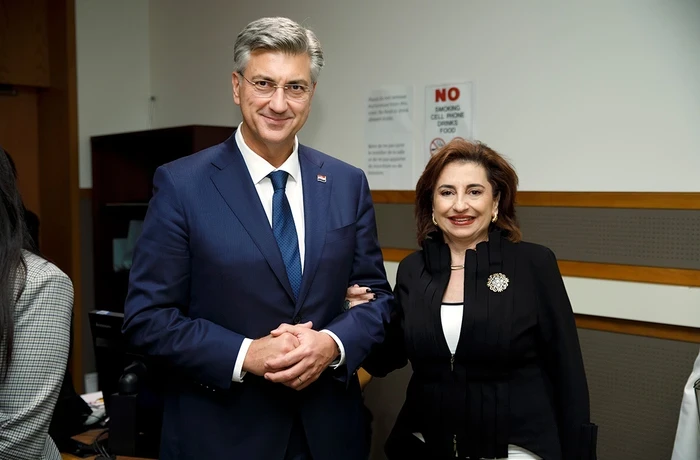
UN Women Executive Director Sima Bahous poses with the Prime Minister of Croatia at an indoor event.
News

Governments, civil society, and private sector call for coordinated action to end technology-facilitated violence against women and girls

25 September 2026
Governments, civil society, and private sector call for coordinated action to end technology-facilitated violence against women and girls
Image
UNWomen_Placeholder
Op-ed

Global war on women through South Africa's eyes

25 September 2026
Global war on women through South Africa's eyes
Image
UN Women Executive Director Sima Bahous speaks at the High-Level Dialogue on Reinvigorating Feminist Multilateralism held at the UN Headquarters during the High-Level week of the 81st session of the UN General Assembly on 25 September 2026.  Photo: UN Women/Ryan Brown
Speech

Speech: Multilateralism will only remain fit for purpose if it shares power, centres women’s leadership, and delivers for the people it serves

25 September 2026
Speech: Multilateralism will only remain fit for purpose if it shares power, centres women’s leadership, and delivers for the people it serves

Footer menu-HQ

  • News and stories
  • Resources
  • What we do
  • How we work
  • Where we are
  • Partnerships
  • Employment
  • Procurement
  • Contact us
  • Executive Board
  • Commission on the Status of Women

Donate button menu [Footer tablet]

  • Donate

Donate button menu [Footer]

  • Donate

Social media menu

  • Facebook
  • Twitter
  • LinkedIn
  • Flickr
  • YouTube
  • Instagram
UN Women - For all women and girls

Footer bottom [Menu]

  • Copyright
  • Information security
  • Privacy notice
  • Report wrongdoing
  • Terms of use
Share this page
  • Share to Facebook
  • Share to Twitter
  • Share to LinkedIn
  • Share to E-mail

Or copy link