Image

We want to know how we can improve your experience on this website. Completing this survey takes less than 5 minutes.
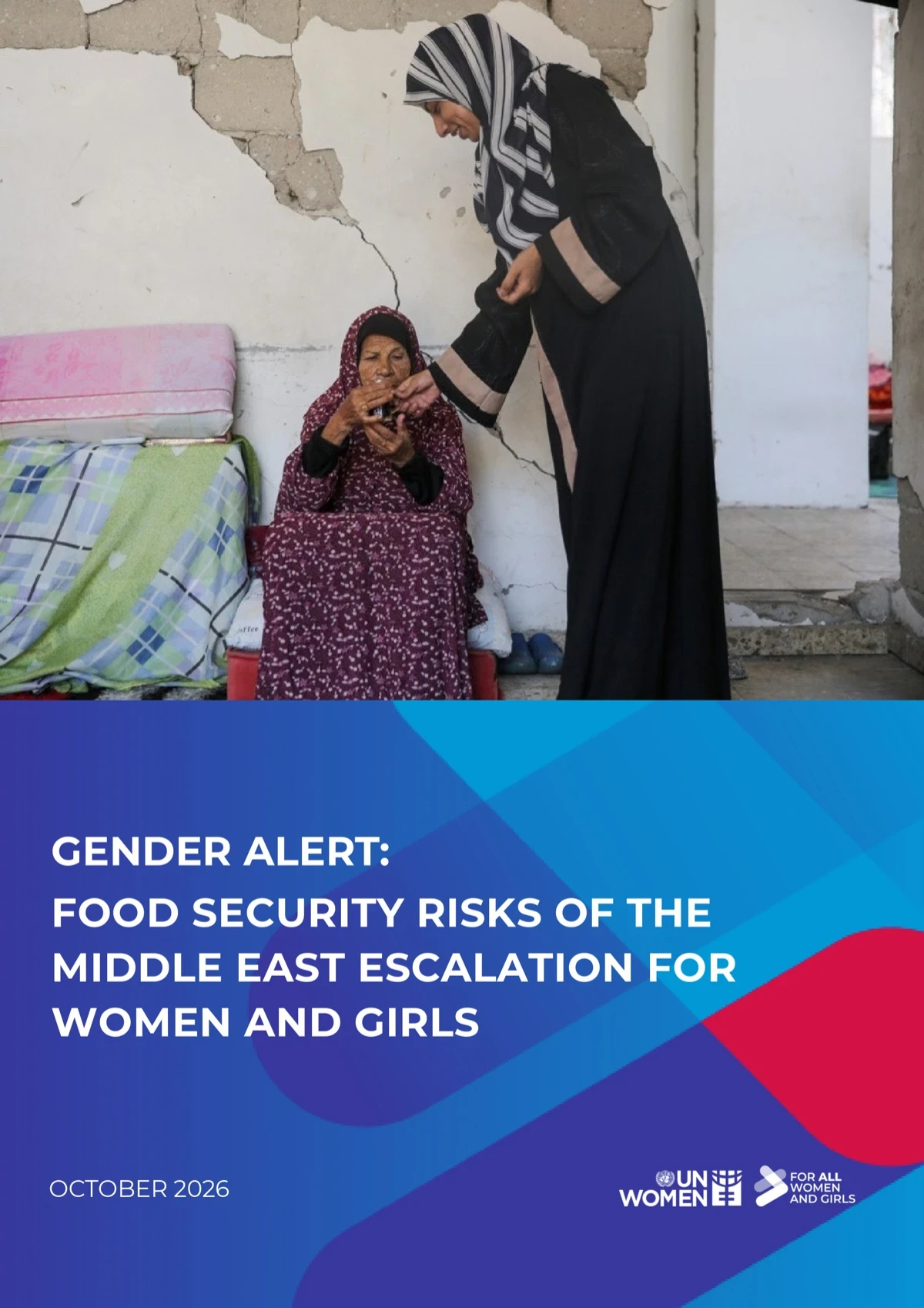
This publication explores the impact of the escalation in the Middle East and disruptions to shipping through the Strait of Hormuz on food security risks for women and girls.
Based on analysis of data from 28 countries, UN Women estimated that an additional 11.7 million women and girls could face food insecurity by the end of 2026 as the escalation and disruptions drive up food, energy, fertilizer, and transport costs. Across the 28 countries analyzed, women and girls account for 53 per cent of the projected 22 million additional people who could face food insecurity by the end of the year. These scenario-based estimates and come on top of an estimated 208 million women and girls already facing food insecurity across the countries analyzed.
The gender alert emphasizes the need for an integrated response to rising food insecurity that meets the needs of women and girls through food and cash assistance, nutrition, protection, livelihoods, and agricultural support. It calls for strengthening women’s access to land, credit, essential services, and other productive assets that can help households withstand food-price shocks and protect livelihoods.
The publication also emphasizes the importance of targeting resources to countries and communities where women and girls face multiple, overlapping risks and delivering support at the right time, including ahead of key agricultural seasons. Timely assistance can help protect food access, livelihoods, and resilience as rising food prices and input costs place additional strain on households.
Better gender data are critical to identifying where food insecurity is worsening and how women and girls are being affected. This includes understanding who is eating less, losing income or livelihoods, taking on additional unpaid care work, or facing heightened nutrition and protection risks within households.
Together, these measures can help governments, humanitarian actors, and development partners strengthen food security responses that address the distinct needs of women and girls and ensure assistance reaches those facing the greatest risks.