Digital violence is real violence: One activist's fight for safety and human rights
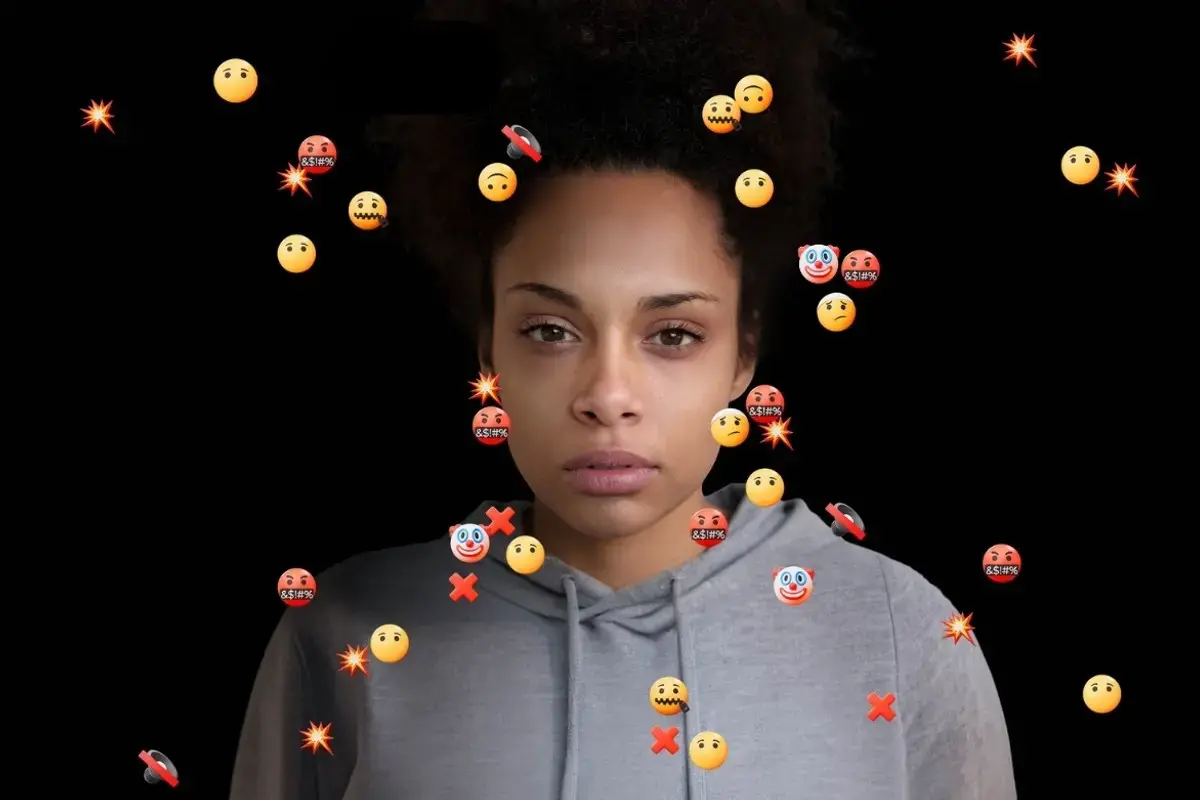
“When you get away from your abusers, you feel kind of safe, but digital violence is following you around everywhere you go”, says Ljubica Fuentes.
Ljubica Fuentes remembers the moment everything changed.
As a law student at Ecuador's largest public university, she raised her hand in objection when her teacher declared that women weren't real lawyers – they were just there “to pick up some guy.” From that day onward, she became known as “feminazi” (a derogatory, insulting term) in her programme.
What started with classroom harassment soon escalated into a digital nightmare. Private messages on Instagram warned her to stop advocating for women's rights. Anonymous users flooded her campus Facebook page with threats. Notes and whispers circulated around campus with rape threats. One day, she heard that someone was hired to physically assault her.
“I realized that I needed to be outside of the campus for my sanity and integrity”, shares Fuentes, who fled to a semester abroad in the middle of the night. Today, she's a human rights lawyer and founder of an organization combating gender-based violence in higher education.

Digital abuse: A global epidemic hiding in plain sight
Fuentes' experience is not uncommon. Digital abuse is a disturbing global reality. Between 16-58 per cent of women have experienced technology-facilitated gender-based violence (or, digital violence). In one global study, the Economist Intelligence Unit found that 38 per cent of women have personally experienced online abuse, while 85 per cent have witnessed it happening to other women.
During COVID-19, as life moved online, digital abuse and online harassment exploded.
“Patriarchy understood how to change in order to reach people inside homes”, Fuentes explains. “Online, everyone becomes braver. People were able to hide behind the screen and a fake user id.”
What is digital violence?
Digital abuse or digital violence refers to any act that is committed, assisted, aggravated, or amplified by the use of information communication technologies or other digital tools, that results in or is likely to result in physical, sexual, psychological, social, political, or economic harm, or other infringements of rights and freedoms.
This is also known as “technology-facilitated violence against women” – a term that better reflects how technology can enable harm against women, both online and offline.
The digital revolution has both exacerbated existing forms of gender-based violence (such as sexual harassment, stalking, hate speech, misinformation, defamation, and impersonation) and created new forms of abuse (such as hacking, astroturfing, video and image-based abuse including deepfakes, doxing, cyberbullying, and online grooming among others).
When the virtual becomes devastatingly real
Digital violence isn't just words on a screen – it's real violence with real consequences.
For Fuentes, online harassment meant constantly scrutinizing every post, every opinion, every friendship she shared on social media.
“The constant scrutiny takes away your peace”, she says. “You always have to be 120 per cent prepared to make an opinion online. If you are a feminist, if you are an activist, you don't have the right to be wrong. You are not allowed to even have a past.”
Young women and girls face heightened risk – 58 per cent have experienced some form of online harassment, according to one global study. Women in public life face even higher rates: In its last report (2020) UNESCO found that 73 per cent of women journalists experienced online violence in their work.
The consequences extend far beyond the digital realm. Women and girls abandon education, restrict their online presence, suffer mental health crises, and lose confidence to speak up. Some face physical violence, even femicide, when digital abuse escalates offline.

Closing the justice gap and why supporting feminist organizations is important right now
Despite the scale of the crisis, less than half of countries have laws that prosecute online abuse.
“They don't have laws that say anything about this problem”, Fuentes notes. “If you go to a public defender, they are going to say to you, you have to wait five years for this to be solved. Are you sure you want to start it?”
The normalization of the justice gaps keeps survivors from reporting the abuse or seeking justice. Tech companies, meanwhile, have been slow to take responsibility for violence perpetrated on their platforms.
Fuentes' organization now works with 600 people annually on early violence prevention and helps universities build safety protocols. They provide legal support to survivors and mobilize 1,000 people each year in advocacy campaigns.
This is precisely the kind of grassroots work by feminists and women’s organizations that need support. Fuentes is part of a Civil Society Steering Committee of the ACT Programme – a game-changing commitment between the European Commission and UN Women – making sure that the Programme responds to the on-the-ground reality and priorities of women and girls.
Although it has been proven that a strong, independent feminist movement is the most critical factor driving policy changes to stop violence against women, recent and unprecedented funding cuts on women’s rights organizations have resulted in significant reductions in services and support: In a global UN Women survey under the ACT Programme between June-July 2025, more than 34 per cent of respondents reported that funding cuts have led to programme suspension and a staggering 89 per cent reported high or severe reductions in access to support services for survivors in their communities.
The ACT Programme is already working with more than 500 women’s rights organizations to expand their capacities, coalitions and networks. Supporting young leaders like Fuentes and amplifying their voices is a key goal of the programme.
What must change to stop digital violence and what you can do now
Fuentes has tips for governments, universities, tech companies, and women and girls reading her story.
- For governments and universities: Develop comprehensive laws and protocols for addressing digital violence. Create accountability mechanisms even when abuse doesn't occur on physical campuses.
- For tech companies: Invest in safeguards and hire gender activists to create safer online spaces. Take ownership of the violence happening on your platforms.
- For educators: Learn to recognize and interrupt patterns of digital violence in educational settings.
If you're facing digital violence, Fuentes says:
- Power off your phone and take a moment. "When you stop, you get the space you need to understand what you need to do", Fuentes advises. Digital violence is a spiral that traps you if you keep engaging with abusive content.
- Speak up to trusted people. You're not alone, and you're not to blame. "You can decide whatever you want to do with your body, your photos, your personal information. That doesn't mean you're giving permission for violence."
- Be mindful of what you consume. Know who you're following and what content you're engaging with. "It's important to know what and from who we are consuming content."
Fuentes persevered through her ordeal and eventually became the legal representative in a case against the teacher who first told her women couldn't be lawyers. Today, she continues fighting – not just for herself, but for the next generation.
“I will endure everything again,” she says, tears in her eyes, “just to know that someone is not going to go through what I went through.”
For more tips on how to spot signs of abuse and get help, read our Online Safety 101.
16 Days of Activism: #NoExcuse for online abuse
Online and digital spaces should empower women and girls. Yet every day, for millions of women and girls the digital world has become a minefield of harassment, abuse, and control.
From 25 November to 10 December join the UNiTE campaign to learn about and take action to stop digital abuse against women and girls.