
Universal menu

  • Global
  • Regions
    • Africa
    • Americas and the Caribbean
    • Arab States
    • Asia and the Pacific
    • Europe and Central Asia
  • Knowledge
  • Data
  • Training
  • Transparency
UN Women - For all women and girls

Main Navigation-HQ

  • Who we are
    • About us
      • About UN Women
      • Business model
      • Guiding documents
      • Worldwide presence
    • Leadership
      • Governance structure
      • Executive leadership
      • Executive Board
      • Accountability
    • Work with us
      • Employment
      • Procurement
      • Calls for proposals
      • Contact us
      • UN Women Strategic Plan 2026–2029
      • UN Women Strategic Plan 2026–2029 - social media image
        UN Women Strategic Plan 2026–2029
  • What we do
    • Focus areas
      • Ending violence against women
      • Peace and security
      • Humanitarian action
      • Leadership and governance
      • Economic empowerment
      • Innovation and technology
      • Women with disabilities
      • Youth
      • HIV and AIDS
    • How we work
      • 2030 Agenda for Sustainable Development
      • Commission on the Status of Women
      • Gender parity in the UN system
      • Intergovernmental support
      • Partnerships
      • Research and data
      • Training Centre
      • Trust funds
      • UN system coordination
      • Gender Equality Accelerators
      • Gender Equality Accelerators artwork
        Gender Equality Accelerators
  • News and stories
    • Latest
      • News
      • Articles and explainers
      • In focus
    • Media center
      • Press materials
      • Media contacts
      • Explainer: Why are women so exhausted? Care work and the mental load
      • Two adults stand at a table changing diapers on baby dolls, with laundry hanging on a clothesline behind them in a home setting.
        Explainer: Why are women so exhausted? Care work and the mental load
      • Press release: Aid cuts dismantle women’s organizations working in humanitarian crises
      • A young Ugandan woman sits with another local woman to talk
        Press release: Aid cuts dismantle women’s organizations working in humanitarian crises
  • Digital library
    • Resources
      • Publications
      • Annual reports
      • Gender snapshot
      • Progress of the world’s women
      • World survey on the role of women in development
    • GenderTerm
      • GenderTerm
      • Reprint permissions
      • UN Women Highlights 2025–2026
      • A smiling woman.
        UN Women Highlights 2025–2026
      • Gender snapshot 2026
      • A diverse group of people represented as simplified silhouettes, arranged against a dark blue background.
        Gender snapshot 2026
  • Get involved
    • How to get involved
      • For ALL Women and Girls
      • International Women's Day
      • 16 Days of Activism to End Violence against Women and Girls
      • UNiTE! Campaign to End Violence against Women
      • Generation Equality
      • He for She
Ask AI
https://84e5cfacd5c7e99f9825edf344450c.1b.environment.api.powerplatform.com/powervirtualagents/botsbyschema/crad4_websiteQA/directline/token?api-version=2022-03-01-preview
1
-
Ask your question here
AI website assistant

Hello, how can I assist you?

AI chatbot responses may be incorrect. Always verify important information.

Donate button menu

Donate

Breadcrumb

  1. Home
  2. News and stories
  3. Feature story

Website survey

We want to know how we can improve your experience on this website. Completing this survey takes less than 5 minutes.

TAKE THE SURVEY
Feature

For rural women in Liberia, digital and economic empowerment go hand-in-hand

With the help of UN Women and the Orange Foundation, women like Ma Nowai Kaine are gaining the necessary skills – and confidence – to manage their money in the digital era.

1 October 2026
  • Share to Facebook
  • Share to Twitter
  • Share to LinkedIn
  • Share to E-mail

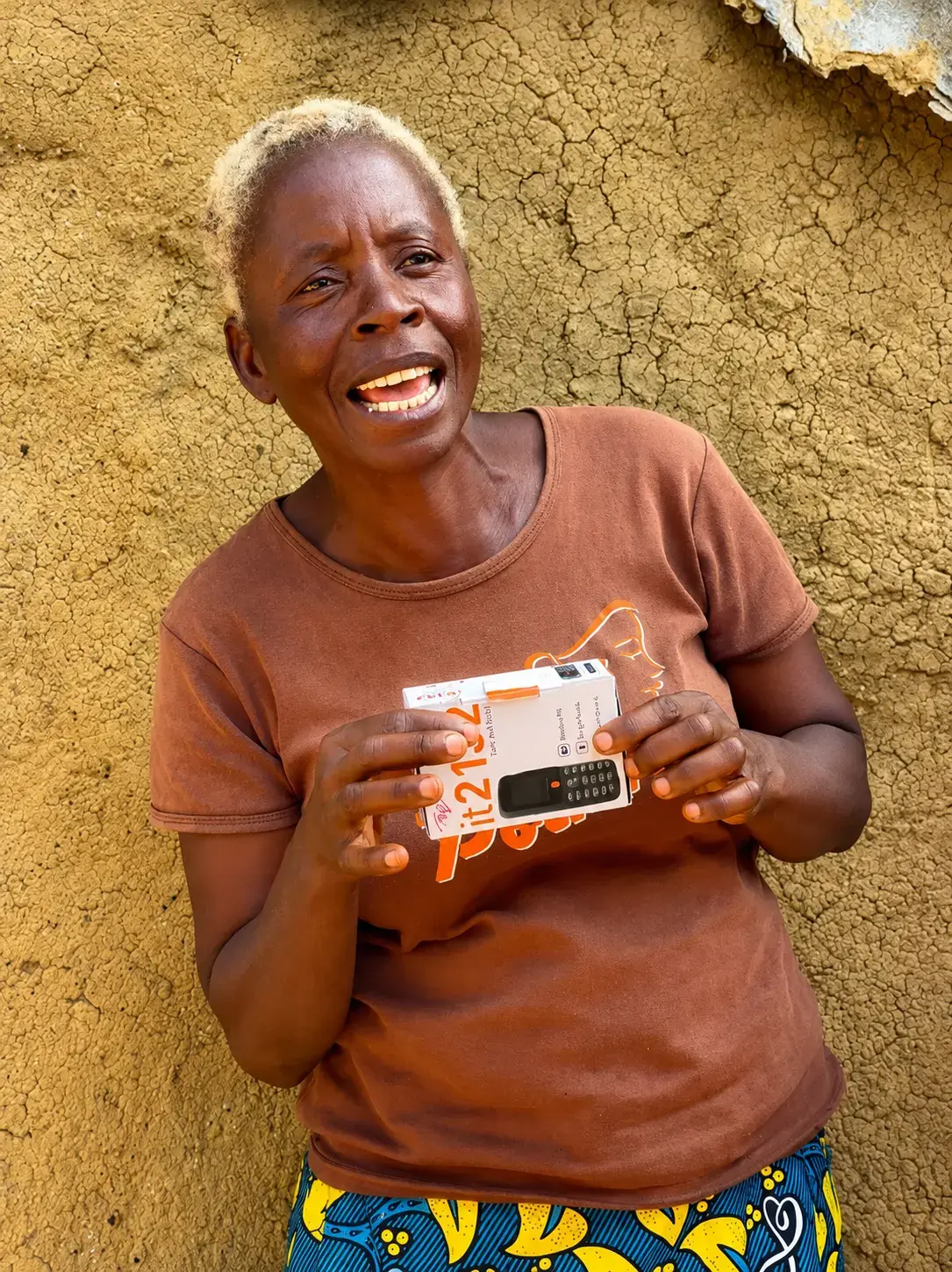
Ma Nowai Kaine has always worked hard to provide for her family.

A widow, mother of five, and caregiver to six grandchildren, the 61-year-old farmer from Sargent Kollie Town in Bong County, Liberia has built her livelihood through determination and resilience. As a member of the Margbeh Farmers Cooperative, she grows rice and vegetables to support her household.

But as digital financial services – mobile money, digital wallets, and online banking – became increasingly common in her community, Kaine faced a new challenge: “I didn’t know how to use a phone”, she tells UN Women.

Image
Ma Nowai Kaine (centre) and two other women from Sargent Kollie Town, Bong County, Liberia, hold mobile phones received through the D4WEE Project, implemented by UN Women with support from the Orange Foundation. Photo: UN Women/Aisha Kolubah.

Economic empowerment requires technological empowerment

Although mobile money services offered new possibilities for managing income, Kaine had to rely on others for help – and could not always monitor her finances or understand what was happening with her money.

“My grandchildren or the money changer boys would help me [complete transactions], but sometimes the money would not come back the same way”, she says.

Without the confidence to use digital financial tools, Kaine often kept her earnings in cash hidden under her mattress, worried about losing the money she had worked so hard to save.

How UN Women and partners help rural women strengthen their digital and financial literacy

According to the World Bank’s Global Findex 2025 data from Liberia, less than half of women had a bank or mobile-money account, compared to nearly 60 percent of men.

Kaine’s situation began to change when she joined UN Women’s Digital for Women’s Economic Empowerment (D4WEE) Project, with funding support from the Orange Foundation.

Through the initiative, she received a basic mobile phone and practical training on how to use Orange Money safely, protect her PIN, and complete transactions independently.

With new skills came greater confidence. Today, Kaine manages her own mobile money account. She can save, send, and receive money without depending on others.
Image
Ma Nowai Kaine of Sargent Kollie Town, Bong County, Liberia, holds the mobile phone she received through the D4WEE Project, enabling her to independently manage mobile money transactions. Photo: UN Women Liberia/Aisha Kolubah.

Now nobody can confuse me. I know how to use my Orange Money. My money is safe with me.

—Ma Nowai Kaine, farmer and caregiver

For Kaine, learning how to use a phone was not only about accessing a new technology. It was about having greater control over the income she earns and the decisions that affect her daily life.

Her experience reflects the challenges faced by many rural women who have limited access to digital tools and financial services. By strengthening women’s digital and financial literacy, the D4WEE Project is helping women farmers participate more safely in Liberia’s growing digital economy.

Since its launch in 2022, the project has supported rural women farmers through training on digital platform use, business development, and financial literacy. Women participating in the project have generated around USD 338,394 worth of sales through the Buy from Women platform, a UN Women digital marketplace for women farmers and entrepreneurs to advertise and sell rice, cassava, potatoes, peppers, and other products – with payments handled through mobile money. The women can expand their markets, securely manage income, and reduce dependence on intermediaries.

“This phone has helped me a lot. Now I can be anywhere, pay for my goods, and save my money without fear.”

Today, Ma Nowai no longer keeps her earnings hidden away or relies on others to manage her transactions. She carries with her a new confidence: the ability to use technology independently, protect her income, and continue building a more secure future for herself and her family.
Topics

  • 2030 Agenda for Sustainable Development
  • Economic empowerment
  • Employment
  • Entrepreneurship
  • Women farmers
  • Markets
  • Rural women
  • Education
  • Local development
  • Rural development

Related content

Image
UNWomen_Placeholder
Press briefing

Middle East escalation threatens food security for an additional 11.7 million women and girls by the end of 2026

2 October 2026
Middle East escalation threatens food security for an additional 11.7 million women and girls by the end of 2026
Image
UNWomen_Placeholder
Press release

Middle East escalation could leave 11.7 million more women and girls facing food insecurity by end-2026

2 October 2026
Middle East escalation could leave 11.7 million more women and girls facing food insecurity by end-2026
Image
Three women pose together outside a building, with two wearing purple shirts featuring organization logos.
Feature

We need better care policies. But where do we start?

30 September 2026
We need better care policies. But where do we start?

Footer menu-HQ

  • News and stories
  • Resources
  • What we do
  • How we work
  • Where we are
  • Partnerships
  • Employment
  • Procurement
  • Contact us
  • Executive Board
  • Commission on the Status of Women

Donate button menu [Footer tablet]

  • Donate

Donate button menu [Footer]

  • Donate

Social media menu

  • Facebook
  • Twitter
  • LinkedIn
  • Flickr
  • YouTube
  • Instagram
UN Women - For all women and girls

Footer bottom [Menu]

  • Copyright
  • Information security
  • Privacy notice
  • Report wrongdoing
  • Terms of use
Share this page
  • Share to Facebook
  • Share to Twitter
  • Share to LinkedIn
  • Share to E-mail

Or copy link