For ALL Women and Girls: Areej Hussein on young women peacebuilders taking the lead
A grassroots feminist organizer in Eastern Sudan shares how young women are demanding true inclusion and redefining peace from the ground up.
#ForAllWomenAndGirls is a rallying call for action on the 30th anniversary of the Beijing Declaration and Platform for Action. In Port Sudan, along the coast of the Red Sea, 26-year-old Areej Hussein is answering that call boldly and urgently – reshaping peace from the margins. Born in Eastern Sudan, Hussein leads grassroots efforts to tackle injustices rooted in discriminatory laws, gender norms and decades of marginalization – all while navigating the turmoil of Sudan’s ongoing war.

How does a young person get involved in peacebuilding?
As with so many things, it starts with conversation. Through her work with the March 8 Feminist Group, which she founded in 2021, Hussein organizes dialogues for women to share their stories and helps shape local responses to trauma and displacement. “We work with women and girls through community discussions,” she explains. “We listen to their concerns and work together on collective solutions.”
Since April 2023, Sudan has been gripped by a violent conflict between rival military factions, displacing millions and deepening an already dire humanitarian crisis. As the violence escalated, Hussein and her team responded with urgency: facilitating sessions to address the psychological toll of displacement and rising militarization. Hussein uses the term women’s mobilization to describe how, in these times of crisis, women consistently step into roles of caretaking, organizing and local leadership, despite extreme risks.
“Women’s mobilization means women are no longer just bearing the brunt of conflict – they are stepping into new roles to support their communities, often without recognition or support,” Hussein says. “It’s growing because we’ve had no choice.”
What does it mean to truly include women in peacebuilding?
For Hussein, the United Nations’ Women, Peace and Security (WPS) and Youth, Peace and Security (YPS) agendas are not abstract frameworks – they are tools for driving inclusion, shifting power and defending dignity where conflict tries to erase it.
“These agendas open space for us to demand meaningful participation,” she explains. “True inclusion means women are involved at every stage – from consultation to implementation. Young women’s voices must be heard, and their visions must be part of actual peacebuilding plans – not just symbolic participation in photos or events.”
Her work is a vivid reflection of UN Women’s efforts to recognize and support young women who are responding to conflict, exclusion and crisis with bold, community-rooted solutions – showing, time and again, that when women lead, peace follows.
The Young Women Peacebuilders Initiative emerges from this vision: creating platforms where young feminist leaders drive change from their own realities – not as beneficiaries, but as strategists, advocates and frontline responders. This global initiative, led by UN Women in partnership with the United Nations Population Fund (UNFPA), the United Nations Alliance of Civilizations (UNAOC) and UNICEF, recognizes their essential role in shaping inclusive peace processes grounded in justice, care and community-based solutions.

What are some of the challenges young peacebuilders face?
The road is far from easy. But it is the challenges that brought Hussein and other young women together to found the March 8 Feminist Group. “The idea of creating the group came from the inequality and marginalization we experienced as women, despite having access to education,” Hussein shares.
Their story has been documented in a film, “Kenan,” which chronicles the group’s creation, their first general assembly at the Beja Club in Port Sudan, and the resistance they encountered from both the local community and club officials.
Hussein also recalls the backlash they received after organizing a public forum on youth drug use – a taboo topic in Sudanese society. The group faced attacks online, and some members withdrew from public activism. “Despite the risks, we continued. I carry the memories of those members who were there from the start. Their courage gave us our foundation.”
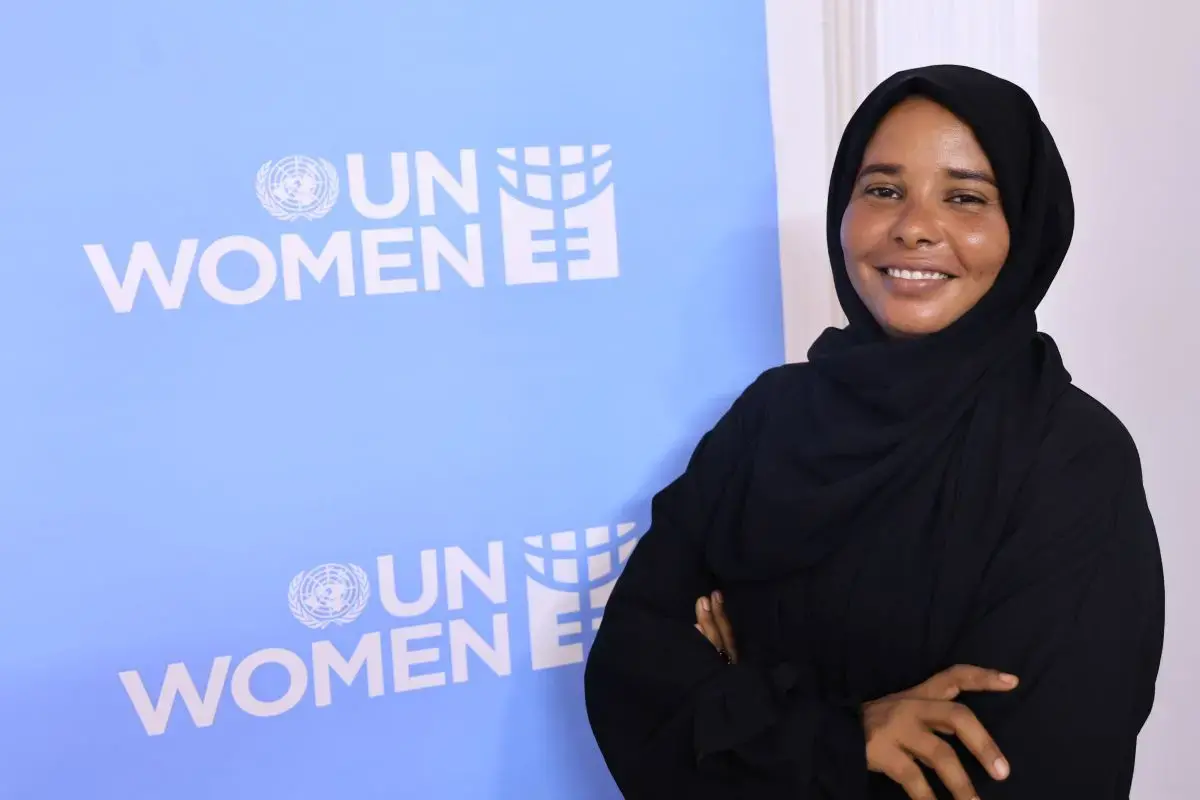
Women and girls are not just victims of war – we are peacebuilders. We want fair participation and direct funding... Enough of using women as slogans – it’s time to truly listen to their leadership.
The Beijing Declaration and the support young feminist movements urgently need
This year, global leaders will recognize three important milestones: in October, the 30th anniversary of the Beijing Declaration and Platform for Action on global gender equality; and the 25th anniversary of UN Security Council Resolution 1325, which recognized the impact of armed conflicts on women and girls, as well as their contributions to global security – launching the UN’s WPS agenda. In December, the UN will also commemorate 10 years of the YPS agenda.
As these milestones are crossed, Member States must do more than recognize them – they must act. Hussein’s message to these global leaders is clear: “Women and girls are not just victims of war – we are peacebuilders. We want fair participation and direct funding for young women’s initiatives, and support for feminist movements working on the front lines. Enough of using women as slogans – it’s time to truly listen to their leadership.”
She calls for direct funding, strategic support and safe spaces for intergenerational dialogue, healing and feminist leadership – all priorities of the Young Women Peacebuilders Initiative, yet still drastically underfunded.
Her call has been echoed by the many young peacebuilders UN Women has consulted with this year across CSW69, the ECOSOC Youth Forum and the WPS Focal Points Network: the gap is not in vision, but in resources, protection and political will.
For ALL women and girls… feminist peace
For Hussein, feminist peace in Sudan is about the full participation of women in shaping peace – not in theory, but in every decision-making space.
“Feminist peace means stability, justice, dignity for women, and their real participation in decisions around war and peace,” explains Hussein. “Hope comes from the women themselves – their strength despite the pain, their commitment to change. They are why I continue.”