Universal menu

  • Global
  • Regions
    • Africa
    • Americas and the Caribbean
    • Arab States
    • Asia and the Pacific
    • Europe and Central Asia
  • Knowledge
  • Data
  • Training
  • Transparency
UN Women - For all women and girls

Main Navigation-HQ

  • Who we are
    • About us
      • About UN Women
      • Business model
      • Guiding documents
      • Worldwide presence
    • Leadership
      • Governance structure
      • Executive leadership
      • Executive Board
      • Accountability
    • Work with us
      • Employment
      • Procurement
      • Calls for proposals
      • Contact us
      • UN Women Strategic Plan 2026–2029
      • UN Women Strategic Plan 2026–2029 - social media image
        UN Women Strategic Plan 2026–2029
  • What we do
    • Focus areas
      • Ending violence against women
      • Peace and security
      • Humanitarian action
      • Leadership and governance
      • Economic empowerment
      • Innovation and technology
      • Women with disabilities
      • Youth
      • HIV and AIDS
    • How we work
      • 2030 Agenda for Sustainable Development
      • Commission on the Status of Women
      • Gender parity in the UN system
      • Intergovernmental support
      • Partnerships
      • Research and data
      • Training Centre
      • Trust funds
      • UN system coordination
      • Gender Equality Accelerators
      • Gender Equality Accelerators artwork
        Gender Equality Accelerators
  • News and stories
    • Latest
      • News
      • Articles and explainers
      • In focus
    • Media center
      • Press materials
      • Media contacts
      • Explainer: Why are women so exhausted? Care work and the mental load
      • Two adults stand at a table changing diapers on baby dolls, with laundry hanging on a clothesline behind them in a home setting.
        Explainer: Why are women so exhausted? Care work and the mental load
      • Press release: Aid cuts dismantle women’s organizations working in humanitarian crises
      • A young Ugandan woman sits with another local woman to talk
        Press release: Aid cuts dismantle women’s organizations working in humanitarian crises
  • Digital library
    • Resources
      • Publications
      • Annual reports
      • Gender snapshot
      • Progress of the world’s women
      • World survey on the role of women in development
    • GenderTerm
      • GenderTerm
      • Reprint permissions
      • UN Women Highlights 2025–2026
      • A smiling woman.
        UN Women Highlights 2025–2026
      • Gender snapshot 2026
      • A diverse group of people represented as simplified silhouettes, arranged against a dark blue background.
        Gender snapshot 2026
  • Get involved
    • How to get involved
      • For ALL Women and Girls
      • International Women's Day
      • 16 Days of Activism to End Violence against Women and Girls
      • UNiTE! Campaign to End Violence against Women
      • Generation Equality
      • He for She
Ask AI
https://84e5cfacd5c7e99f9825edf344450c.1b.environment.api.powerplatform.com/powervirtualagents/botsbyschema/crad4_websiteQA/directline/token?api-version=2022-03-01-preview
1
-
Ask your question here
AI website assistant

Hello, how can I assist you?

AI chatbot responses may be incorrect. Always verify important information.

Donate button menu

Donate

Breadcrumb

  1. Home
  2. News and stories
  3. News

Website survey

We want to know how we can improve your experience on this website. Completing this survey takes less than 5 minutes.

TAKE THE SURVEY
News

Justice must work for all women and girls, and for every generation – At CSW70, young leaders and women’s rights advocates tackle the justice gap across the life course

17 March 2026
  • Share to Facebook
  • Share to Twitter
  • Share to LinkedIn
  • Share to E-mail

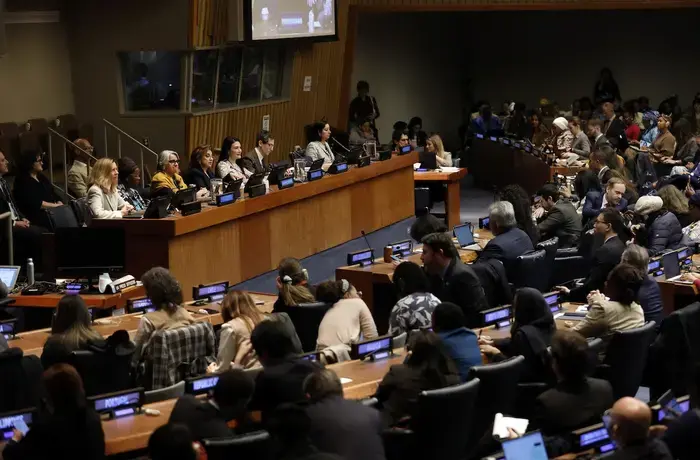
From adolescent girls confronting online violence to older women navigating barriers to inheritance and property rights, women across generations continue to face obstacles in accessing justice. At the 70th session of the Commission on the Status of Women (CSW70), they came together to demand change.

Image
At the annual ‘CSW Youth Forum’ on 8 March and at a panel discussion on ‘Intergenerational approaches to access to justice across the life-course’ on 13 March, girls, young feminists, older women advocates, civil society organizations, and policymakers came together to demand access to justice for all women and girls across the life course. Photo: UN Women/Ryan Brown

At the annual ‘CSW Youth Forum’ on 8 March and at a panel discussion on ‘Intergenerational approaches to access to justice across the life-course’ on 13 March, girls, young feminists, older women advocates, civil society organizations, and policymakers gathered to identify intergenerational approaches to advancing access to justice for all women and girls across the life course.

Both events, organized by UN Women during the CSW70 , served  as a uniquely intergenerational space to share experiences, exchange ideas, and propose solutions to the age-based barriers that continue to prevent women and girls from claiming their rights.

Justice gaps run deepest for the youngest and oldest

Globally, women hold just two-thirds of the same legal rights as men and no country has achieved full legal equality for women and girls.  Despite decades of international commitments, the justice gap persists — and it is sharpest at the margins. Adolescent girls and young women face limited legal literacy, parental restrictions on participation in justice processes, criminalization and stigma around sexual and reproductive health rights, and digital surveillance that deters safe reporting. Women's exposure to conflict has increased by 50 per cent over the past decade, heightening legal vulnerability and justice gaps for younger women in conflict and post-conflict settings.

Older women, meanwhile, confront compounding lifelong inequalities: pension exclusions, lack of documentation, barriers to inheritance and property rights, and a near-total absence of recognition of unpaid care work in legal claims. Elder abuse, often perpetrated within families, remains widely underreported and under-addressed.

Across the life course, structural barriers — patriarchal norms, weak law enforcement, and institutional bias — deepen these disadvantages. Participants emphasized that closing the justice gap requires an intergenerational lens and called for intentionally intergenerational and intersectional approaches to justice reform that recognize and respond to the distinct but connected challenges women face at every stage of life.

Participants also highlighted that age discrimination remains insufficiently addressed in legal frameworks, reinforcing exclusion across the life course. Speakers stressed that justice systems must better reflect lived realities and build trust with communities so that women of all ages can safely claim their rights.
Image
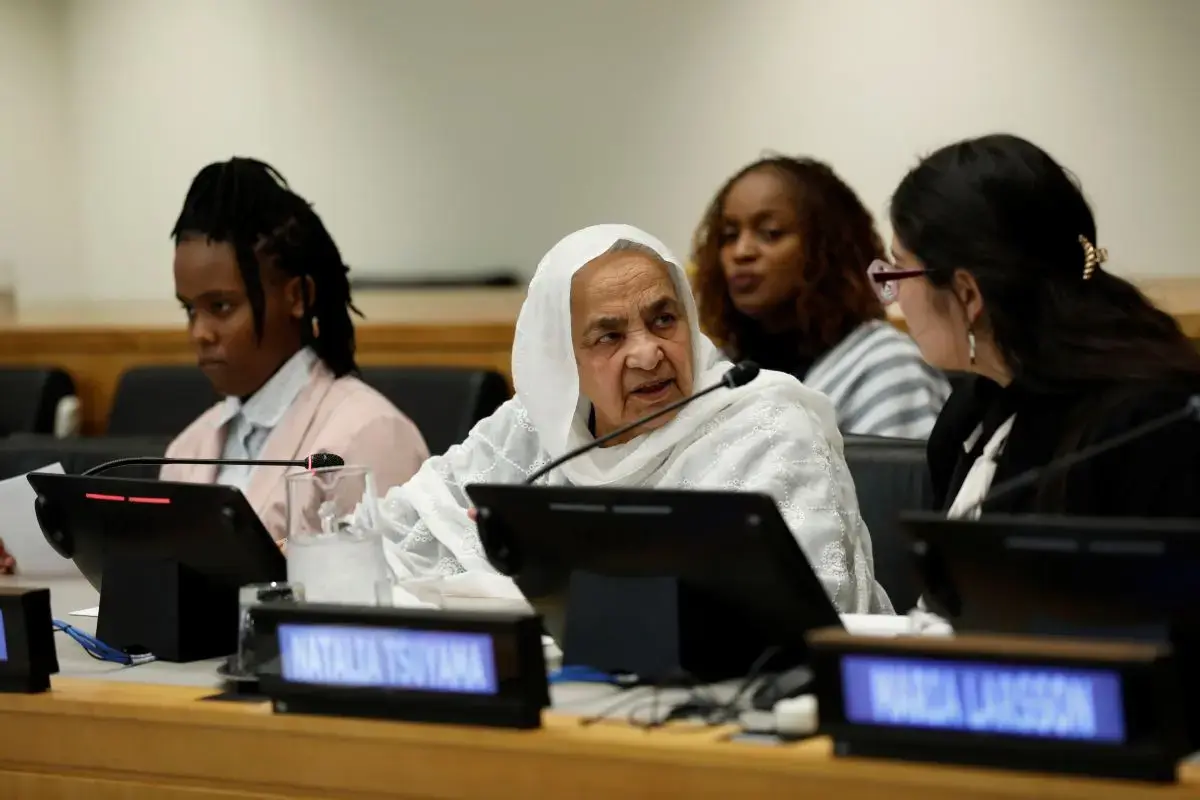
Maryam Bibi, Founder and Chief Executive of Khwendo Kor, Pakistan, speaking at the ‘Intergenerational approaches to access to justice across the life-course’ event on 13 March at CSW70. Photo: UN Women/Ryan Brown

“The barriers for older women are multiple and at all levels. They also include information barriers, financial barriers, legal barriers, cultural, economic and institutional and systemic barriers, because the system is not ready to solve the barriers that older women face”  - Maryam Bibi, Founder and Chief Executive of Khwendo Kor, Pakistan 

Young feminists shaping solutions

Young leaders spoke to the specific obstacles adolescent girls and young women face in seeking justice — limited legal literacy, stigma around sexual and reproductive health rights, digital harassment, and exclusion from the very policy spaces where laws are shaped.

Participants called for legal information to be made accessible in indigenous and local languages, and for structural inequalities within legal systems to be addressed head-on. Across regions, young feminists were clear: justice is not only a legal process — it is a broader effort to dismantle the inequalities that allow injustice to persist.
Image
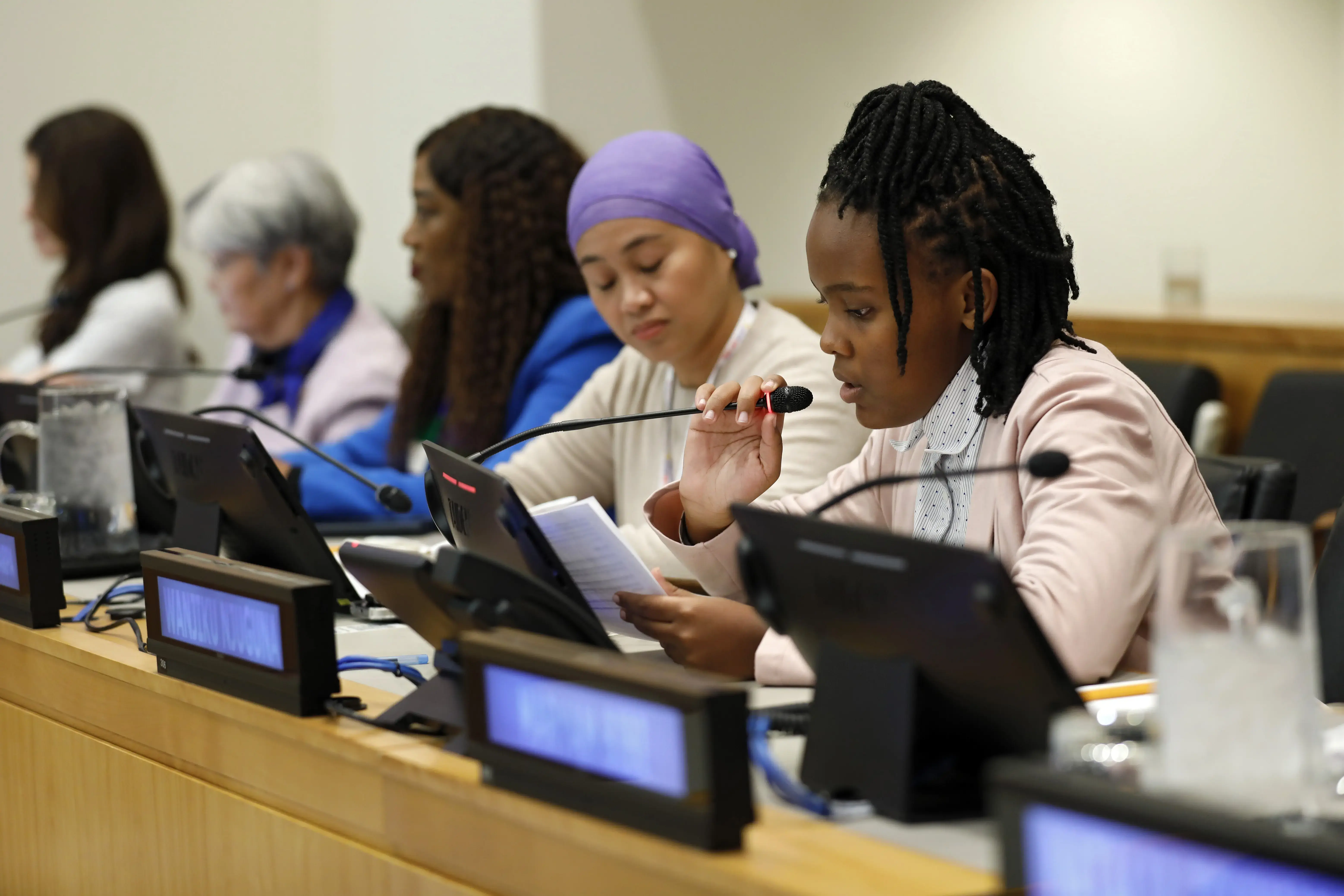
Wanjiku Njuguna, Coding student and youth advocate, Kenya, speaking at the ‘Intergenerational approaches to access to justice across the life-course’ event on 13 March, at CSW70. Photo: UN Women/Ryan Brown

 “It is important to build justice systems that believe girls, protect girls, and make space for every girl’s voice, including girls with disabilities and neurodivergent. Justice should be accessible to every girl” - Wanjiku Njuguna, Coding student and youth advocate, Kenya

Recognizing the realities that older women face

The dialogue also shone a light on barriers that older women disproportionately face — discrimination tied to inheritance rights, land ownership, access to pensions, and legal documentation. Lifelong economic inequality and unpaid care responsibilities further limit their ability to pursue legal remedies.

Participants stressed that justice systems must recognize how inequalities accumulate across women's lives, and that the knowledge and experience of older women must inform advocacy and policy reform — not be sidelined by it.

Image
At CSW70, adolescent girls, young feminists, older women advocates and policymakers came together to identify intergenerational solutions to one of the most persistent barriers hindering the advancement of gender equality — access to justice for women and girls at every stage of life. Photo: UN Women/Ryan Brown

From dialogue to action

Participants identified concrete steps to strengthen access to justice across generations: expanding legal literacy initiatives, strengthening gender-responsive legal aid, repealing discriminatory laws, and ensuring the meaningful participation of both young and older women in justice reform.

They also underscored the need for coordinated partnerships — across governments, civil society, UN agencies, development partners and international institutions — to address the structural barriers that no single actor can dismantle alone.

The recommendations emerging from the Youth Forum were shaped through a broader consultative process led by young feminists and adolescent girls in the lead-up to CSW70. More than 23,000 young people and adolescents from over 75 countries contributed to community, national, regional, and global consultations that informed the Global Youth and Adolescents Recommendations. The process also included a Virtual Global Adolescent Girl Leadership Town Hall on 12 February 2026, convened by UN Women and co-created with girl leaders, where more than 100 girls under 19, from over 50 countries, shared their experiences in navigating justice systems and identified priorities for making them more accessible and responsive to girls’ realities. The consultations fed into the CSW70 Youth Forum, helping shape the youth-led priorities presented during the session.
Image
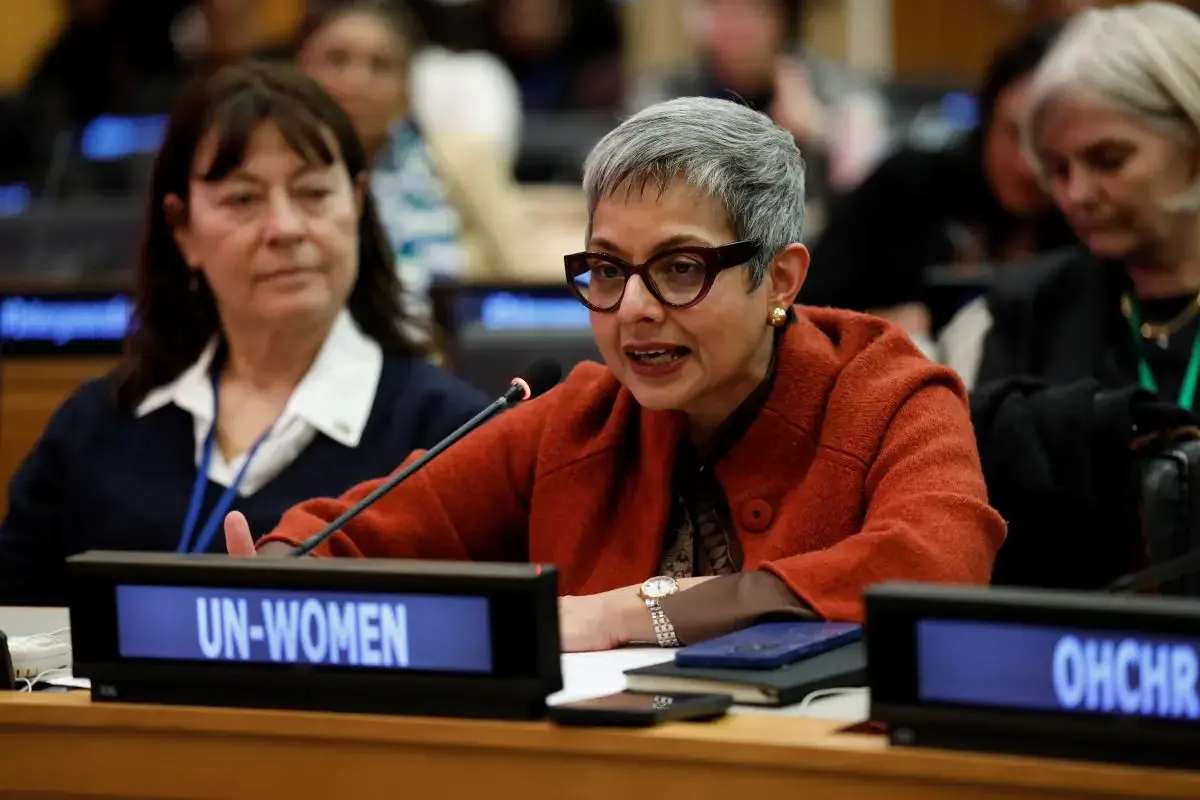
Lopa Banerjee, Director of UN Women’s Civil Society Division, speaks at the Intergenerational side event at CSW70. Photo: UN Women/Ryan Brown

“When women across generations shape the agenda together, justice stops being an abstract principle. It becomes something real, something lived." – Lopa Banerjee, Director of UN Women’s Civil Society Division.

Justice for every generation

The events demonstrated the power of intergenerational dialogue to build more inclusive and equitable justice systems. By centering the voices of women and girls across the life course, participants reaffirmed a shared commitment: justice must work for every woman, at every stage of her life. The recommendations emerging from these discussions will inform ongoing advocacy and policy efforts to make that commitment real.
 

Topics

  • Commission on the Status of Women
  • Youth

Related content

Image
UNWomen_Placeholder
Statement

UN Women statement for International Youth Day

11 August 2026
UN Women statement for International Youth Day
Image
Victoria Komekyeya sits in a computer lab and speaks with UN Women staff
Feature

From learning to leading: Unlocking the power of girls in ICT

27 March 2026
From learning to leading: Unlocking the power of girls in ICT
Image
Closing remarks by Ms. Sima Bahous, UN Under-Secretary-General and UN Women Executive Director at the Commission on the Status of Women at its Seventieth Session, UN Headquarters, 19 March 2026.
Speech

Speech: The headwinds are strong, but our shared resolve to advance women’s rights is stronger

19 March 2026
Speech: The headwinds are strong, but our shared resolve to advance women’s rights is stronger

Footer menu-HQ

  • News and stories
  • Resources
  • What we do
  • How we work
  • Where we are
  • Partnerships
  • Employment
  • Procurement
  • Contact us
  • Executive Board
  • Commission on the Status of Women

Donate button menu [Footer tablet]

  • Donate

Donate button menu [Footer]

  • Donate

Social media menu

  • Facebook
  • Twitter
  • LinkedIn
  • Flickr
  • YouTube
  • Instagram
UN Women - For all women and girls

Footer bottom [Menu]

  • Copyright
  • Information security
  • Privacy notice
  • Report wrongdoing
  • Terms of use
Share this page
  • Share to Facebook
  • Share to Twitter
  • Share to LinkedIn
  • Share to E-mail

Or copy link