
Universal menu

  • Global
  • Regions
    • Africa
    • Americas and the Caribbean
    • Arab States
    • Asia and the Pacific
    • Europe and Central Asia
  • Knowledge
  • Data
  • Training
  • Transparency
UN Women - For all women and girls

Main Navigation-HQ

  • Who we are
    • About us
      • About UN Women
      • Business model
      • Guiding documents
      • Worldwide presence
    • Leadership
      • Governance structure
      • Executive leadership
      • Executive Board
      • Accountability
    • Work with us
      • Employment
      • Procurement
      • Calls for proposals
      • Contact us
      • UN Women Strategic Plan 2026–2029
      • UN Women Strategic Plan 2026–2029 - social media image
        UN Women Strategic Plan 2026–2029
  • What we do
    • Focus areas
      • Ending violence against women
      • Peace and security
      • Humanitarian action
      • Leadership and governance
      • Economic empowerment
      • Innovation and technology
      • Women with disabilities
      • Youth
      • HIV and AIDS
    • How we work
      • 2030 Agenda for Sustainable Development
      • Commission on the Status of Women
      • Gender parity in the UN system
      • Intergovernmental support
      • Partnerships
      • Research and data
      • Training Centre
      • Trust funds
      • UN system coordination
      • Gender Equality Accelerators
      • Gender Equality Accelerators artwork
        Gender Equality Accelerators
  • News and stories
    • Latest
      • News
      • Articles and explainers
      • In focus
    • Media center
      • Press materials
      • Media contacts
      • Explainer: Why are women so exhausted? Care work and the mental load
      • Two adults stand at a table changing diapers on baby dolls, with laundry hanging on a clothesline behind them in a home setting.
        Explainer: Why are women so exhausted? Care work and the mental load
      • Press release: Aid cuts dismantle women’s organizations working in humanitarian crises
      • A young Ugandan woman sits with another local woman to talk
        Press release: Aid cuts dismantle women’s organizations working in humanitarian crises
  • Digital library
    • Resources
      • Publications
      • Annual reports
      • Gender snapshot
      • Progress of the world’s women
      • World survey on the role of women in development
    • GenderTerm
      • GenderTerm
      • Reprint permissions
      • UN Women Highlights 2025–2026
      • A smiling woman.
        UN Women Highlights 2025–2026
      • Gender snapshot 2026
      • A diverse group of people represented as simplified silhouettes, arranged against a dark blue background.
        Gender snapshot 2026
  • Get involved
    • How to get involved
      • For ALL Women and Girls
      • International Women's Day
      • 16 Days of Activism to End Violence against Women and Girls
      • UNiTE! Campaign to End Violence against Women
      • Generation Equality
      • He for She
Ask AI
https://84e5cfacd5c7e99f9825edf344450c.1b.environment.api.powerplatform.com/powervirtualagents/botsbyschema/crad4_websiteQA/directline/token?api-version=2022-03-01-preview
1
-
Ask your question here
AI website assistant

Hello, how can I assist you?

AI chatbot responses may be incorrect. Always verify important information.

Donate button menu

Donate

Breadcrumb

  1. Home
  2. News and stories
  3. Feature story

Website survey

We want to know how we can improve your experience on this website. Completing this survey takes less than 5 minutes.

TAKE THE SURVEY
Feature

From learning to leading: Unlocking the power of girls in ICT

Ahead of International Girls in ICT Day, two students share how the African Girls Can Code Initiative is empowering young women to transform tech.

27 March 2026
  • Share to Facebook
  • Share to Twitter
  • Share to LinkedIn
  • Share to E-mail

“African Girls Can Code – I’m not going to lie”, started Victoria Komekyeya, a newly certified coder. “It was an answered prayer!”

We sat down with Komukyeya and Patience Akongo, two Ugandan high school students in the UN Women-supported African Girls Can Code Initiative (AGCCI). The programme has trained hundreds of young women, all across the continent, for careers in the information and communications technology (ICT) sector.

Image
Victoria Komekyeya sits in a computer lab and speaks with UN Women staff
Victoria Komekyeya, a participant in the African Girls Can Code Initiative (AGCCI), meets with UN Women. Photo: UN Women/Solomon Tumwesigye

Their journeys are proof: When the power of technology meets the limitless potential of young women, it feels as if there is no problem they cannot solve. That’s why – for Komukyeya, Akongo, and all aspiring entrepreneurs – it is critical that we close the digital gender divide.

Throughout the male-dominated tech sectors, including artificial intelligence (AI), deeply entrenched stereotypes and bias keep women from entering or staying in ICT careers. Worse still, between 16 and 58 per cent of women have reported facing digital abuse, including sexual harassment, explicit deepfakes, and online stalking.

UN Women is working towards a world in which all women and girls feel safe and free from violence, online and off. Students in the AGCCI programme earn more than a certificate for their résumés. Their new tech skills boost their confidence – and their sense of online safety.

How the African Girls Can Code Initiative (AGCCI) is closing the digital gender divide

For years, Komukyeya had tried to teach herself how to code but found her learning opportunities were too brief, irregular, or expensive. “But you can participate in AGGCI for free”, emphasized Komukyeya, with relief.

“I met really great people”, she reflected. “They knew so much that I yearned to know! And during those interactions, my eyes were opened: Coding is simple if you give it time and if you are really passionate about it. You need to be purposeful with it.”

Since 2018, UN Women has implemented AGCCI in partnership with the African Union Commission and the International Telecommunication Union. The programme equips young women with skills like coding, digital literacy, problem-solving, and leadership. AGCCI has hosted coding camps for women and girls ages 17 to 25 across Africa, including Ethiopia, Kenya, South Africa, Tanzania, and Uganda.

In the 10-day camp, students learn UI/UX design (how a website looks and feels), web production, graphic design, and even robotics. “I learned how to design directly from scratch: games, apps, websites”, said Akongo.
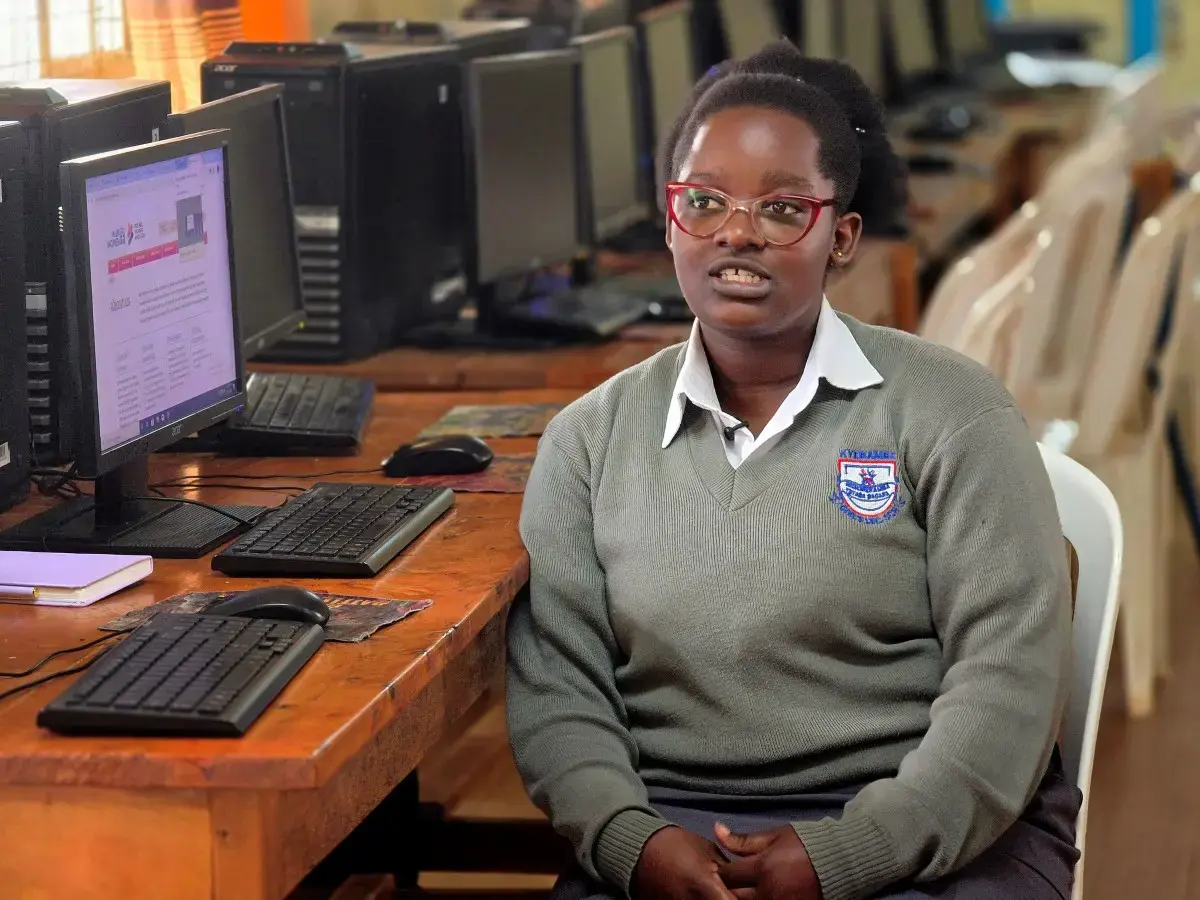
Image
Patience Akongo gives an interview from her school's computer lab

AGCCI rang a bell in my mind… If I give coding my time and heart, I believe I can make it. It’s all about believing in yourself.

—Patience Akongo

Why tech still has a gender problem

Many of us readily admit that our lives are governed by technology. We keep in touch through online platforms, access news and education through websites, and check tomorrow’s weather on smartphone apps.

But women represent just one-third of the people building these convenient, and often critical, technologies. Those that do enter ICT careers are often kept out of leadership positions or pushed out entirely by pervasive gender bias and lack of support. It’s sometimes referred to as a career ladder with a “broken rung” or the “leaky” STEM pipeline. (That’s STEM for science, technology, engineering and maths.)

“What a boy can do, a girl can do best”, said Akongo, with a cheeky, confident smile. “It’s a mindset. I personally believe I can code better than a boy. I have that capability.”

When it comes to AI, Akongo admitted she still has a lot of questions. “AI is something someone designed, maybe they wrote code, to help solve problems and get answers fast – within the blink of an eye.”

It’s real people that design our AI tools, including their flaws. “It’s all about proving those people wrong” about their gender bias, Akongo explained. To reduce gender bias in the technologies we create, women and girls must be seen, heard, and included at every stage.

Image
Patience Akongo working on the computer
Patience Akongo, a participant in the African Girls Can Code Initiative (AGCCI), works in the computer lab at the Kyebambe Girls Secondary School. Photo: UN Women/Solomon Tumwesigye

What happens when girls get access to tech

When asked about her vision of her future, Komukyeya shared: “I just see myself as a better person. I want to be someone who comes up with solutions, who solves problems.”

“One of the reasons I loved learning Arduino and robotics”, Komukyeya said, “is because I want to come up with something like a machine that absorbs carbon dioxide – a portable one you can carry with you in polluted areas.”

“I feel like girls are missing out on a lot. [People believe] that the ‘big’ things, the ‘hard’ things are meant for men. As women, we stand on the side. I want to change that whole idea… and empower girls with coding.” – Victoria Komukyeya

During the AGCCI camps, students form teams and use their new ICT training to solve a local issue. Akongo and her classmates created an informational website to combat drug abuse among youth – sharing hope-inspiring alternatives, including job training resources.

They called their team “The Icons” – a fitting title for young women already reshaping what the future of tech looks like.
Topics

  • Economic empowerment
  • Education
  • Training
  • Information and communications technology (ICT)
  • Youth
  • Africa
  • Uganda

Related content

Image
UNWomen_Placeholder
Press briefing

Middle East escalation threatens food security for an additional 11.7 million women and girls by the end of 2026

2 October 2026
Middle East escalation threatens food security for an additional 11.7 million women and girls by the end of 2026
Image
UNWomen_Placeholder
Press release

Middle East escalation could leave 11.7 million more women and girls facing food insecurity by end-2026

2 October 2026
Middle East escalation could leave 11.7 million more women and girls facing food insecurity by end-2026
Image
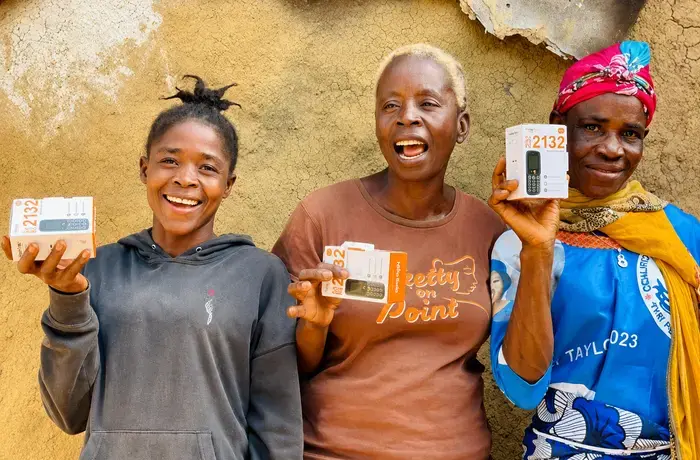
Ma Nowai Kaine (centre) and two other women from Sargent Kollie Town, Bong County, Liberia, hold mobile phones received through the D4WEE Project, implemented by UN Women with support from the Orange Foundation. Photo: UN Women/Aisha Kolubah.
Feature

For rural women in Liberia, digital and economic empowerment go hand-in-hand

1 October 2026
For rural women in Liberia, digital and economic empowerment go hand-in-hand

Footer menu-HQ

  • News and stories
  • Resources
  • What we do
  • How we work
  • Where we are
  • Partnerships
  • Employment
  • Procurement
  • Contact us
  • Executive Board
  • Commission on the Status of Women

Donate button menu [Footer tablet]

  • Donate

Donate button menu [Footer]

  • Donate

Social media menu

  • Facebook
  • Twitter
  • LinkedIn
  • Flickr
  • YouTube
  • Instagram
UN Women - For all women and girls

Footer bottom [Menu]

  • Copyright
  • Information security
  • Privacy notice
  • Report wrongdoing
  • Terms of use
Share this page
  • Share to Facebook
  • Share to Twitter
  • Share to LinkedIn
  • Share to E-mail

Or copy link