Speech: When women lead, peace follows
Remarks by UN Women Executive Director Sima Bahous at the UN Security Council meeting on “Women and peace and security” on 6 October 2025, at the UN Headquarters.
[As delivered.]
We meet on the eve of the twenty-fifth anniversary of UN Security Council resolution 1325—a milestone born of the multilateral system’s conviction that peace is more robust, security more enduring, when women are at the table.
Yet the record of the last 25 years is mixed: bold, admirable commitments have been followed too often by weak implementation and chronic under-investment. Today, 676 million women and girls live within reach of deadly conflict, the highest [number] since the 1990s. It is lamentable, then, that we see today rising military spending and renewed pushback against gender equality and multilateralism. These threaten the very foundations of global peace and security.
This anniversary must be more than a commemoration. Women and girls who live amidst conflict deserve more than commemoration. It must instead be a moment to refocus, recommit, and ensure that the next 25 years deliver much more than the last.

A belief in the core principles of resolution 1325 is shared by women and men everywhere. Whether through our work at country level, including in conflicts, or in the recent Member State commitments for the 30th anniversary of the Beijing Declaration and Platform for Action, we know that our women, peace and security agenda, our conviction for equality, enjoys the support of an overwhelming majority of women and men, and also of Member States.
Even in Afghanistan, UN Women’s ongoing monitoring shows that 92 per cent of Afghans, men and women both, think that girls must be able to attend secondary education. It is also striking that a majority of Afghan women say they remain hopeful that they will one day achieve their aspirations. This, despite everything they endure under Taliban oppression. Their hope is not an idle wish, and it is more than a coping mechanism. It is a political statement. A conviction. An inspiration.
As we meet to discuss the women, peace and security agenda, the painful situation in the Middle East, especially for women and girls, remains on our minds and in our hearts. Two years into the devastating Gaza war, amid the killing, the pain and the loss, a glimmer of hope emerges. I join the Secretary-General in welcoming the positive responses to President Donald Trump’s proposal to end the Gaza war, to implement an immediate and lasting ceasefire to secure the unconditional release of all hostages, and to ensure unhindered humanitarian access. We hope that this will lead to a just and lasting peace for Palestinians and Israelis alike, where all women and girls live with dignity, security, and opportunity.
The trends documented in the Secretary-General’s report should alarm us. It is understandable that some might conclude that the rise and normalization of misogyny currently poisoning our politics and fuelling conflict is unstoppable. It is not. Those who oppose equality do not own the future, we do.
The reality is that globally, suffering and displacement will likely rise in the face of seemingly intractable conflicts and growing instability. And it is a painful fact that we must be prepared for the situation to become worse before it becomes better for women and girls.
This will continue to be exacerbated by short-sighted funding cuts that already undermine education opportunities for Afghan girls; curtail life-saving medical attention for tens of thousands of survivors of rape and sexual violence in Sudan, Haiti and beyond; shutter health clinics across conflict zones; limit access to food for malnourished and starving mothers and their children in Gaza, Mali, Somalia and elsewhere; and fundamentally will erode the chance for peace.
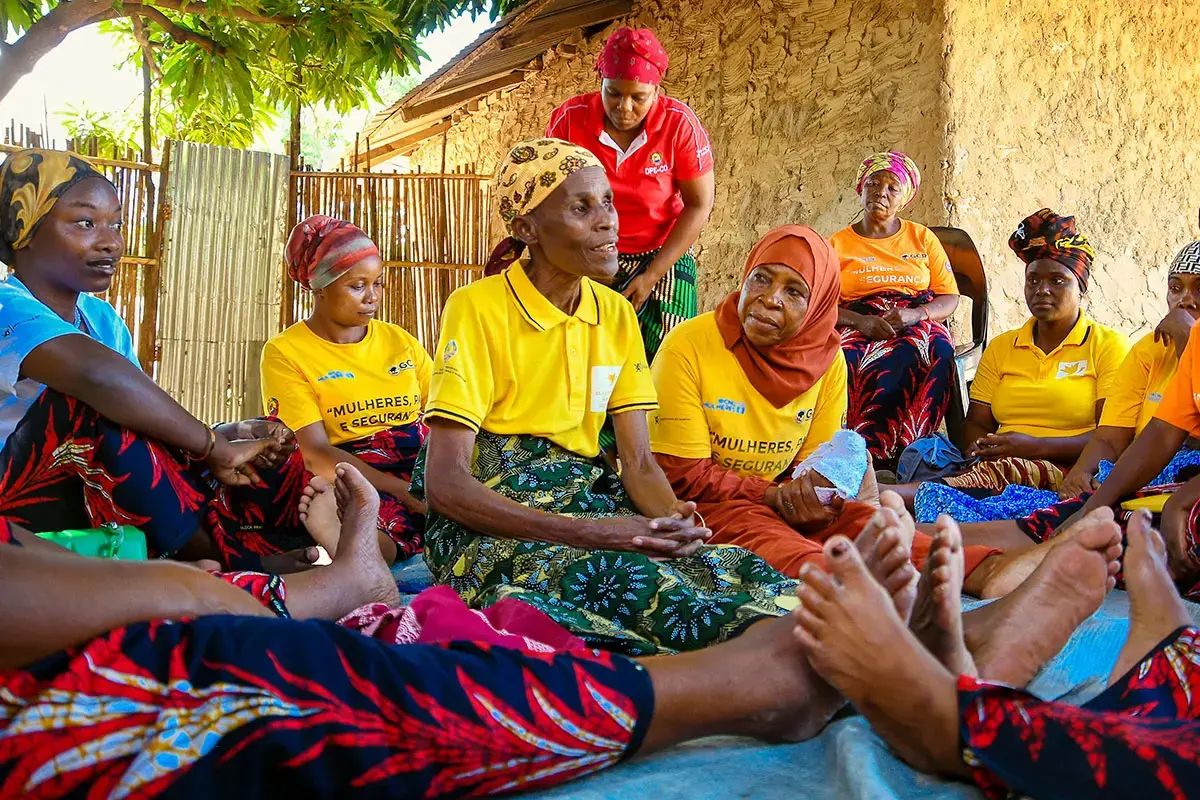
Yet despite the horrors of wars and conflicts, women continue to build peace.
- Women are reducing community violence in Abyei and the Central African Republic, and mobilizing for peace in Yemen, in Sudan, and the Democratic Republic of the Congo.
- In Haiti, women have managed to achieve near parity in the new provisional electoral council and increased the quota for women in the draft constitution.
- In Chad, women’s representation in the National Assembly has doubled.
- In Syria, the interim Constitution ratified this March mandates the Government to guarantee the social, economic, and political rights of women, and protect them from all forms of oppression, injustice, and violence.
- In Ukraine, women have achieved the codification into law of gender-responsive budgeting, including across national relief efforts.
Whether mediating, brokering access to services, driving reconstruction, and more, women’s leadership is the face of resilience—a force for peace.
The Secretary-General has just spoken to UN Women’s recent survey findings, which highlight how current financing trends are endangering the viability and safety of women-led organizations in conflict-affected countries.
We believe there is no alternative but to change course and to invest significantly in women’s organizations on the frontlines of conflict.
The last 25 years have seen an emphasis on investing in transnational security and international legal institutions. This has not been matched by attention to investing in national capacities and social movements.
And while attention to the women, peace and security agenda has been focused in global capitals and in major cities of conflict-affected countries, it must also become localized and reach the remote areas that are worst affected and where it makes the biggest difference. This is true for information, funding, policy implementation, services, and more.
Recent years have seen a much-needed increased level of attention to conflict-related sexual violence than ever before. We have taken huge strides in ending the silence, chipping away at the impunity that emboldens and enables perpetrators. These efforts must be redoubled, giving greater attention to reproductive violence, gender-based persecution in accountability initiatives, and a more comprehensive understanding of atrocities disproportionately affecting women and girls in conflict.
In the next 25 years of the critical women, peace and security agenda, it is crucial that we see funding earmarked, robust quotas implemented, clear instructions and mandates, and accountability measures in place that make failures visible and have consequences.
So, allow me to leave you with five calls to action that need full attention in the coming years:
- First: Affirmative action to ensure women take their rightful place at the peace-making table and consistent support to them as peacekeepers, peacebuilders, and human rights defenders. This must become a hardwired feature of the way we conduct the business of peace.
- Second: Measure the impact of this agenda by the number of women that participate directly in peace and security processes, and by the relief women receive in the form of justice, reparations, services, or asylum.
- Third: End violence against women and girls, address emerging forms of technology-facilitated gender-based violence, and challenge harmful narratives both online and offline.
- Fourth: End impunity for atrocities and crimes against women and girls, respect and uphold international law, silence the guns, and ensure peace is always in the ascendency.
- Fifth: Embed the women, peace and security agenda ever-deeper in the hearts and minds of ordinary people, particularly young people, both boys and girls. It is they who will determine the future of our ambitions, ambitions that must ultimately become theirs too.
Above all, the coming few years should see Security Council resolution 1325 implemented fully, across all contexts.
When women lead, peace follows. We made a promise to them 25 years ago. It is past time to deliver.
I thank you.