Universal menu

  • Global
  • Regions
    • Africa
    • Americas and the Caribbean
    • Arab States
    • Asia and the Pacific
    • Europe and Central Asia
  • Knowledge
  • Data
  • Training
  • Transparency
UN Women - For all women and girls

Main Navigation-HQ

  • Who we are
    • About us
      • About UN Women
      • Business model
      • Guiding documents
      • Worldwide presence
    • Leadership
      • Governance structure
      • Executive leadership
      • Executive Board
      • Accountability
    • Work with us
      • Employment
      • Procurement
      • Calls for proposals
      • Contact us
      • UN Women Strategic Plan 2026–2029
      • UN Women Strategic Plan 2026–2029 - social media image
        UN Women Strategic Plan 2026–2029
  • What we do
    • Focus areas
      • Ending violence against women
      • Peace and security
      • Humanitarian action
      • Leadership and governance
      • Economic empowerment
      • Innovation and technology
      • Women with disabilities
      • Youth
      • HIV and AIDS
    • How we work
      • 2030 Agenda for Sustainable Development
      • Commission on the Status of Women
      • Gender parity in the UN system
      • Intergovernmental support
      • Partnerships
      • Research and data
      • Training Centre
      • Trust funds
      • UN system coordination
      • Gender Equality Accelerators
      • Gender Equality Accelerators artwork
        Gender Equality Accelerators
  • News and stories
    • Latest
      • News
      • Articles and explainers
      • In focus
    • Media center
      • Press materials
      • Media contacts
      • Explainer: Why are women so exhausted? Care work and the mental load
      • Two adults stand at a table changing diapers on baby dolls, with laundry hanging on a clothesline behind them in a home setting.
        Explainer: Why are women so exhausted? Care work and the mental load
      • Press release: Aid cuts dismantle women’s organizations working in humanitarian crises
      • A young Ugandan woman sits with another local woman to talk
        Press release: Aid cuts dismantle women’s organizations working in humanitarian crises
  • Digital library
    • Resources
      • Publications
      • Annual reports
      • Gender snapshot
      • Progress of the world’s women
      • World survey on the role of women in development
    • GenderTerm
      • GenderTerm
      • Reprint permissions
      • UN Women Highlights 2025–2026
      • A smiling woman.
        UN Women Highlights 2025–2026
      • Gender snapshot 2026
      • A diverse group of people represented as simplified silhouettes, arranged against a dark blue background.
        Gender snapshot 2026
  • Get involved
    • How to get involved
      • For ALL Women and Girls
      • International Women's Day
      • 16 Days of Activism to End Violence against Women and Girls
      • UNiTE! Campaign to End Violence against Women
      • Generation Equality
      • He for She
Ask AI
https://84e5cfacd5c7e99f9825edf344450c.1b.environment.api.powerplatform.com/powervirtualagents/botsbyschema/crad4_websiteQA/directline/token?api-version=2022-03-01-preview
1
-
Ask your question here
AI website assistant

Hello, how can I assist you?

AI chatbot responses may be incorrect. Always verify important information.

Donate button menu

Donate

Breadcrumb

  1. Home
  2. News and stories
  3. Statement

Website survey

We want to know how we can improve your experience on this website. Completing this survey takes less than 5 minutes.

TAKE THE SURVEY
Statement

Joint UN statement calling for sexual and reproductive health and rights for all

Statement by UNFPA, WHO, UNICEF, UNAIDS, and UN Women marking World Population Day 2024

11 July 2024
  • Share to Facebook
  • Share to Twitter
  • Share to LinkedIn
  • Share to E-mail

[Also available in Arabic and French.]

In April, at the United Nations Headquarters in New York, governments renewed their commitment and determination to accelerate the implementation of the Programme of Action of the 1994 International Conference on Population and Development (ICPD), the principles of which are embedded in the United Nations Sustainable Development Goals (SDGs), including commitments to ensure universal access to sexual and reproductive health-care services and to advance reproductive rights.

Significant progress has been made over the past three decades. Since 1990, the number of women using modern contraception has doubled. Since 2000, maternal mortality has declined by 34 per cent. By 2022, access to HIV treatment had averted an estimated 20.8 million deaths globally. More recently, however, this progress has stalled and in some instances is reversing. Looking forward, the prospect of continued progress is far from guaranteed. The ongoing effects of the COVID-19 pandemic, persistent and increasing conflict, climate change, rising inequalities and deepening polarization are all undermining access to quality, essential health services. These setbacks demand urgent action.

Women and girls are disproportionately affected by these challenges, hindering their right to make informed decisions and exercise full bodily autonomy without coercion, violence or discrimination—fundamental human rights. Equitable and sustainable access to human rights–based sexual and reproductive health interventions and information remains beyond the reach of many—especially marginalized women, adolescent girls and those living in humanitarian crises and conflict zones. The latest data show that close to half of women of reproductive age cannot make their own informed decisions about whether or when to become pregnant, and many still lack the autonomy and agency to fully exercise their reproductive rights.

On World Population Day, as UN agencies mandated to advance the health and rights of all people and ensure no one is left behind, we call upon the global community, including governments, donors, civil society organizations, and the private sector to strengthen access to a comprehensive package of sexual and reproductive health services as part of universal health coverage, delivered through resilient health systems including at the primary healthcare level. We underscore the need to implement evidence-based, normative guidance to strengthen access to affordable, high quality and rights-based care. To ensure services are acceptable to all, efforts are needed to eliminate stigma and discrimination and dismantle harmful social and gender norms.

We also call for accelerated access to comprehensive sexuality education and strengthened action across social sectors, such as education and gender, to enhance the health and well-being of girls and women throughout their lives. Promoting comprehensive sexual and reproductive health and rights is not only the right thing to do—it is also the smart thing to do. Investing in women’s and girls’ reproductive rights and agency and expanding access to services is proven to have remarkable returns, including in terms of social wellbeing, economic prosperity and peace, which our world so desperately needs. Additional financing from all sources—domestic, international, public, private—is essential to create long-term positive outcomes for women and girls.

We must also urgently support the increasing efforts of young people, women and communities to speak up about sexual and reproductive health concerns and to design and deliver solutions that respond to their needs and to the realities of a changing world, where climate change in particular, affects sexual and reproductive health and rights. An inclusive, bottom-up approach to designing and delivering health interventions with and for communities can deliver more sustainable results and reach those who are furthest left behind.

We urge the public and private sectors to collaborate in exploring cutting-edge technologies like telemedicine, artificial intelligence, big data analytics and predictive modeling to bridge geospatial gaps and expand access to essential services, particularly in remote and underserved areas. At the same time, we call on innovators to address the risks inherent in these new technologies, including gender gaps in access, technology-facilitated gender-based violence, and systematic biases embedded in tech design.

Finally, we call upon governments, communities, civil society organizations and the private sector to unite to prioritize universal access to comprehensive sexual and reproductive health, in ways that advance gender equality and promote the full realization of human rights, in line with the groundbreaking vision of the ICPD Programme of Action. We ask for more than a commitment, more than business as usual—this is an appeal to collaborate and innovate in ways that ensure everyone can realize their rights to health, dignity and security. As we head towards the Summit of the Future at the United Nations General Assembly in September, now is the time to act boldly and decisively, forging a path towards a more just, equitable and sustainable world for all.
Thirty years ago in Cairo, 179 governments adopted a framework that recognized sexual and reproductive health and reproductive rights and the empowerment of women and girls as foundational pillars of sustainable development—the landmark Programme of Action of the International Conference on Population and Development. As UN agencies, we stand together committed to advancing comprehensive sexual and reproductive health and rights, which are integral to everyone’s right to the enjoyment of the highest attainable standard of physical and mental health and essential for the achievement of gender equality.

Topics

  • Health
  • Sexual and reproductive health and rights

Related content

Image
UNWomen_Placeholder
Press briefing

Women’s care work fuels an unaccounted death toll in the fastest-growing Ebola outbreak on record

18 September 2026
Women’s care work fuels an unaccounted death toll in the fastest-growing Ebola outbreak on record
Image
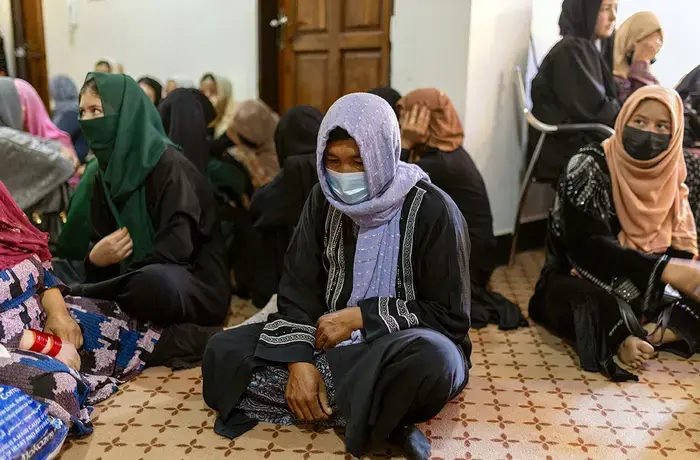
Women sit together on the floor inside an indoor space, with a woman wearing a purple headscarf seated in the foreground.
Feature

Aid cuts, employment bans, movement restrictions: The triple threat to Afghan women

16 July 2026
Aid cuts, employment bans, movement restrictions: The triple threat to Afghan women
Image
Image placeholder with UN Women logo (English) - 3:2 aspect ratio
Statement

UN Women statement: Women and girls account for the majority of laboratory-confirmed Ebola cases in the Democratic Republic of the Congo and Uganda

12 June 2026
UN Women statement: Women and girls account for the majority of laboratory-confirmed Ebola cases in the Democratic Republic of the Congo and Uganda

Footer menu-HQ

  • News and stories
  • Resources
  • What we do
  • How we work
  • Where we are
  • Partnerships
  • Employment
  • Procurement
  • Contact us
  • Executive Board
  • Commission on the Status of Women

Donate button menu [Footer tablet]

  • Donate

Donate button menu [Footer]

  • Donate

Social media menu

  • Facebook
  • Twitter
  • LinkedIn
  • Flickr
  • YouTube
  • Instagram
UN Women - For all women and girls

Footer bottom [Menu]

  • Copyright
  • Information security
  • Privacy notice
  • Report wrongdoing
  • Terms of use
Share this page
  • Share to Facebook
  • Share to Twitter
  • Share to LinkedIn
  • Share to E-mail

Or copy link