
Universal menu

  • Global
  • Regions
    • Africa
    • Americas and the Caribbean
    • Arab States
    • Asia and the Pacific
    • Europe and Central Asia
  • Knowledge
  • Data
  • Training
  • Transparency
UN Women - For all women and girls

Main Navigation-HQ

  • Who we are
    • About us
      • About UN Women
      • Business model
      • Guiding documents
      • Worldwide presence
    • Leadership
      • Governance structure
      • Executive leadership
      • Executive Board
      • Accountability
    • Work with us
      • Employment
      • Procurement
      • Calls for proposals
      • Contact us
      • UN Women Strategic Plan 2026–2029
      • UN Women Strategic Plan 2026–2029 - social media image
        UN Women Strategic Plan 2026–2029
  • What we do
    • Focus areas
      • Ending violence against women
      • Peace and security
      • Humanitarian action
      • Leadership and governance
      • Economic empowerment
      • Innovation and technology
      • Women with disabilities
      • Youth
      • HIV and AIDS
    • How we work
      • 2030 Agenda for Sustainable Development
      • Commission on the Status of Women
      • Gender parity in the UN system
      • Intergovernmental support
      • Partnerships
      • Research and data
      • Training Centre
      • Trust funds
      • UN system coordination
      • Gender Equality Accelerators
      • Gender Equality Accelerators artwork
        Gender Equality Accelerators
  • News and stories
    • Latest
      • News
      • Articles and explainers
      • In focus
    • Media center
      • Press materials
      • Media contacts
      • Explainer: Why are women so exhausted? Care work and the mental load
      • Two adults stand at a table changing diapers on baby dolls, with laundry hanging on a clothesline behind them in a home setting.
        Explainer: Why are women so exhausted? Care work and the mental load
      • Press release: Aid cuts dismantle women’s organizations working in humanitarian crises
      • A young Ugandan woman sits with another local woman to talk
        Press release: Aid cuts dismantle women’s organizations working in humanitarian crises
  • Digital library
    • Resources
      • Publications
      • Annual reports
      • Gender snapshot
      • Progress of the world’s women
      • World survey on the role of women in development
    • GenderTerm
      • GenderTerm
      • Reprint permissions
      • UN Women Highlights 2025–2026
      • A smiling woman.
        UN Women Highlights 2025–2026
      • Gender snapshot 2026
      • A diverse group of people represented as simplified silhouettes, arranged against a dark blue background.
        Gender snapshot 2026
  • Get involved
    • How to get involved
      • For ALL Women and Girls
      • International Women's Day
      • 16 Days of Activism to End Violence against Women and Girls
      • UNiTE! Campaign to End Violence against Women
      • Generation Equality
      • He for She
Ask AI
https://84e5cfacd5c7e99f9825edf344450c.1b.environment.api.powerplatform.com/powervirtualagents/botsbyschema/crad4_websiteQA/directline/token?api-version=2022-03-01-preview
1
-
Ask your question here
AI website assistant

Hello, how can I assist you?

AI chatbot responses may be incorrect. Always verify important information.

Donate button menu

Donate

Breadcrumb

  1. Home
  2. News and stories
  3. Feature story

Website survey

We want to know how we can improve your experience on this website. Completing this survey takes less than 5 minutes.

TAKE THE SURVEY
Feature

E-commerce platform bridges the digital gender divide in Rwanda

15 September 2023
  • Share to Facebook
  • Share to Twitter
  • Share to LinkedIn
  • Share to E-mail

During the COVID-19 pandemic, with many confined to their homes and businesses forced to shutter, digital systems became essential across all parts of life. This moment exposed a stark gender divide: many women-owned businesses operated offline and faced significant challenges when they suddenly needed to transition. But it also presented an opportunity to increase their engagement and participation within the e-commerce sector.

Image
Women business owners take part in training at the ICT Chamber, an implementing partner of the Ihuzo platform, which provides digital skills to iWorkers in Rwanda, enabling them to expand their e-commerce activities. Photo courtesy of Rwanda ICT Chamber.

As a leader and commitment-maker under the Generation Equality Action Coalition on Innovation and Technology, the Government of Rwanda pledged to double the number of women who actively use digital financial services.

With this commitment, coupled with the immediate need for solutions during the pandemic, Access to Finance Rwanda, alongside the Mastercard Foundation, launched the Ihuzo project, a platform that trains and equips workers in small and medium-sized enterprises to expand into e-commerce.

More than 4,000 small and medium-sized enterprises, of which 40 per cent are women-owned, now operate on the Ihuzo platform.

Almost 2,400 people, of whom 35 per cent are women, have been vetted and registered through the programme, enabling them to sell goods online. The platform has also given e-commerce training to more than 2,100 people, including more than 570 women-owned companies, and allows users to tap into different labour platforms operating across diverse sectors of the economy.

Image
Business owners take part in training at the ICT Chamber, an implementing partner of the Ihuzo platform, which provides digital skills to iWorkers in Rwanda, enabling them to expand their e-commerce activities. Photo courtesy of Rwanda ICT Chamber.

“The iHuzo project sought to ultimately catalyse the growth of livelihoods by supporting [micro, small, and medium enterprises’] growth through the digitization of their businesses, and of course, women were part of our target beneficiaries”, said Access to Finance Rwanda CEO Jean Bosco Iyacu.

Iyacu said that the programme’s success had continued even as the pandemic waned, noting that its accomplishments were “possible thanks to the Government’s commitment to establishing a conducive policy and regulatory environment”.

“This initiative came at the perfect time”, said Therese Uwumwanayezu, a trainee at Ihuzu. “In the past I thought that ICT and digital platforms would always be a foreign concept to me, and I never thought twice about learning or making use of them in my business. When I was introduced to the Ihuzo platform, my business and financial management changed completely.”

“I am now able to buy and sell my products online, perform financial transactions, but also tap into other national digital systems”, she added, saying, “My only wish is that more women get introduced to this platform, and benefit in the same way I have.”

Through this initiative, the Government of Rwanda has been able to increase the number of women registered on digital financial systems. More than 55 per cent of Rwandan women are currently registered users of such systems, contributing to their economic autonomy and enabling them to make use of the security, convenience, and opportunities that digital financing offers.

The Government of Rwanda has also agreed to reduce the gender gap across digital technologies within the East African Community. Through the 50 Million African Women Speak digital platform, a hub for women-led businesses across 38 African countries, 40 women entrepreneurs have been selected by the government to take part in trainings to leverage opportunities for economic growth provided by the platform.
This story was developed as part of Generation Equality and the Action Coalition on Technology and Innovation.

Learn more about Generation Equality.

Topics

  • Generation Equality
  • Economic empowerment
  • Employment
  • Entrepreneurship
  • Science and technology for development
  • Africa
  • Rwanda

Related content

Image
UNWomen_Placeholder
Press briefing

Middle East escalation threatens food security for an additional 11.7 million women and girls by the end of 2026

2 October 2026
Middle East escalation threatens food security for an additional 11.7 million women and girls by the end of 2026
Image
UNWomen_Placeholder
Press release

Middle East escalation could leave 11.7 million more women and girls facing food insecurity by end-2026

2 October 2026
Middle East escalation could leave 11.7 million more women and girls facing food insecurity by end-2026
Image
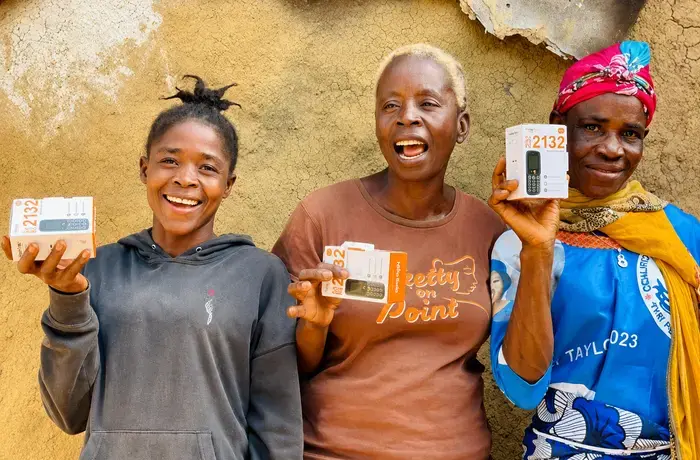
Ma Nowai Kaine (centre) and two other women from Sargent Kollie Town, Bong County, Liberia, hold mobile phones received through the D4WEE Project, implemented by UN Women with support from the Orange Foundation. Photo: UN Women/Aisha Kolubah.
Feature

For rural women in Liberia, digital and economic empowerment go hand-in-hand

1 October 2026
For rural women in Liberia, digital and economic empowerment go hand-in-hand

Footer menu-HQ

  • News and stories
  • Resources
  • What we do
  • How we work
  • Where we are
  • Partnerships
  • Employment
  • Procurement
  • Contact us
  • Executive Board
  • Commission on the Status of Women

Donate button menu [Footer tablet]

  • Donate

Donate button menu [Footer]

  • Donate

Social media menu

  • Facebook
  • Twitter
  • LinkedIn
  • Flickr
  • YouTube
  • Instagram
UN Women - For all women and girls

Footer bottom [Menu]

  • Copyright
  • Information security
  • Privacy notice
  • Report wrongdoing
  • Terms of use
Share this page
  • Share to Facebook
  • Share to Twitter
  • Share to LinkedIn
  • Share to E-mail

Or copy link