Universal menu

  • Global
  • Regions
    • Africa
    • Americas and the Caribbean
    • Arab States
    • Asia and the Pacific
    • Europe and Central Asia
  • Knowledge
  • Data
  • Training
  • Transparency
UN Women - For all women and girls

Main Navigation-HQ

  • Who we are
    • About us
      • About UN Women
      • Business model
      • Guiding documents
      • Worldwide presence
    • Leadership
      • Governance structure
      • Executive leadership
      • Executive Board
      • Accountability
    • Work with us
      • Employment
      • Procurement
      • Calls for proposals
      • Contact us
      • UN Women Strategic Plan 2026–2029
      • UN Women Strategic Plan 2026–2029 - social media image
        UN Women Strategic Plan 2026–2029
  • What we do
    • Focus areas
      • Ending violence against women
      • Peace and security
      • Humanitarian action
      • Leadership and governance
      • Economic empowerment
      • Innovation and technology
      • Women with disabilities
      • Youth
      • HIV and AIDS
    • How we work
      • 2030 Agenda for Sustainable Development
      • Commission on the Status of Women
      • Gender parity in the UN system
      • Intergovernmental support
      • Partnerships
      • Research and data
      • Training Centre
      • Trust funds
      • UN system coordination
      • Gender Equality Accelerators
      • Gender Equality Accelerators artwork
        Gender Equality Accelerators
  • News and stories
    • Latest
      • News
      • Articles and explainers
      • In focus
    • Media center
      • Press materials
      • Media contacts
      • Explainer: Why are women so exhausted? Care work and the mental load
      • Two adults stand at a table changing diapers on baby dolls, with laundry hanging on a clothesline behind them in a home setting.
        Explainer: Why are women so exhausted? Care work and the mental load
      • Press release: Aid cuts dismantle women’s organizations working in humanitarian crises
      • A young Ugandan woman sits with another local woman to talk
        Press release: Aid cuts dismantle women’s organizations working in humanitarian crises
  • Digital library
    • Resources
      • Publications
      • Annual reports
      • Gender snapshot
      • Progress of the world’s women
      • World survey on the role of women in development
    • GenderTerm
      • GenderTerm
      • Reprint permissions
      • UN Women Highlights 2025–2026
      • A smiling woman.
        UN Women Highlights 2025–2026
      • Gender snapshot 2026
      • A diverse group of people represented as simplified silhouettes, arranged against a dark blue background.
        Gender snapshot 2026
  • Get involved
    • How to get involved
      • For ALL Women and Girls
      • International Women's Day
      • 16 Days of Activism to End Violence against Women and Girls
      • UNiTE! Campaign to End Violence against Women
      • Generation Equality
      • He for She
Ask AI
https://84e5cfacd5c7e99f9825edf344450c.1b.environment.api.powerplatform.com/powervirtualagents/botsbyschema/crad4_websiteQA/directline/token?api-version=2022-03-01-preview
1
-
Ask your question here
AI website assistant

Hello, how can I assist you?

AI chatbot responses may be incorrect. Always verify important information.

Donate button menu

Donate

Breadcrumb

  1. Home
  2. News and stories
  3. Feature story

Website survey

We want to know how we can improve your experience on this website. Completing this survey takes less than 5 minutes.

TAKE THE SURVEY
Feature

The long walk home: Displaced Gazans are going back

12 February 2025
  • Share to Facebook
  • Share to Twitter
  • Share to LinkedIn
  • Share to E-mail

"I've been walking for two hours now”, said Hanin Hamaduna, a Gazan journalist and a mother of a 14-year-old boy, as she embarks on a long way back to North Gaza, having been internally displaced by the war. Hers is a journey that is as much about hope and resilience as it is about heartbreak.

She is walking home – to whatever remains of it.  After enduring a devastating 15-month war, she walks with uncertainty, not knowing the fate of her home or the extent of its destruction.

Image
Hanin Hamaduna Photo: Mohammad Abdallah, Gaza

Hamaduna began her journey early morning, at 6.30 a.m., joining thousands of displaced persons returning to the northern part of the Gaza Strip, carrying the weight of war on their backs.

Since the 7 October 2023 attacks on Israel by Hamas and the subsequent devastating war on Gaza, Hamaduna and her family have been displaced more than 10 times within Gaza. Her voice, weary yet defiant, carries the echoes of thousands of others as she walks: “We started from Rashid Street, walking about 7 kilometers. The road is filled with tired faces, but they are smiling." She adds, "[People] can't believe they are going back. Even if our homes are gone, the most important thing is returning to our homeland.”

Image
Hanin Hamaduna, a Gazan journalist and a mother, using a donkey cart to move from one location to another. Photo: Mohammad Abdallah, Gaza

Ninety per cent of Gaza's population has been displaced

Home is more than a structure, it is family, neighbours, identity, a sense of belonging.

Before the war, Hamaduna called the Nasr neighbourhood in central Gaza City her home. But on 14 October 2023, her world changed forever as she was forced to flee with her family.

“It was a heartbreaking scene—walking in crowds, not knowing where we were going or what lay ahead,” she recalled.

Like Hamaduna, 90 per cent of Gaza’s population – close to 2 million people – were displaced, according to OCHA, leaving behind their homes and lives for an uncertain future. Thousands of lives were lost.

Displaced people from Gaza want to return home, to Gaza

Hamaduna survived two attacks during her displacement, escaping with nothing but her life.

The first attack occurred as she was making her way from the south to the north; the Israeli army bombed a bus while she and others were walking. The second happened while she was working at Al-Shuhada Al-Aqsa Hospital, where an airstrike targeted a journalists' tent.

“When I left Gaza, I left behind everything—my home, my work, my entire world,” she said.

Today, Hamaduna returns to what remains of the Nasr neighbourhood, now reduced to rubble. She is among 650,000 displaced people making this journey, according to Gaza’s Ministry of Health. Since the war began, over 1.93 million people out of Gaza’s 2.3 million population have been displaced, each carrying their own story of loss and resilience.

They want to return home, to Gaza.

Women of Gaza and the impact of war

Hamaduna also embodies the story of thousands of women living under the crushing weight of war. According to UN Women statistics from 2024, nearly 1 million women and girls have been displaced. Yet, even in the face of such devastation, they carry a fragile glimmer of hope.

“The houses may be gone, but the streets, the land, and the memories remain,” explained Hamaduna. “It’s important for us to return - to start over.”

Hamaduna checks the time. “Two more hours to go,” she says.  Her voice is tired but determined. Two more hours of walking, to find out what remains of the life she once knew.

“Hopefully, we’ll make it,” she says.
Topics

  • Peace and security
  • Conflict, war
  • Arab States/North Africa
  • Palestine, State of

Related content

Image
UNWomen_Placeholder
Press release

Middle East escalation could leave 11.7 million more women and girls facing food insecurity by end-2026

2 October 2026
Middle East escalation could leave 11.7 million more women and girls facing food insecurity by end-2026
Image
UNWomen_Placeholder
Press briefing

Middle East escalation threatens food security for an additional 11.7 million women and girls by the end of 2026

2 October 2026
Middle East escalation threatens food security for an additional 11.7 million women and girls by the end of 2026
Image
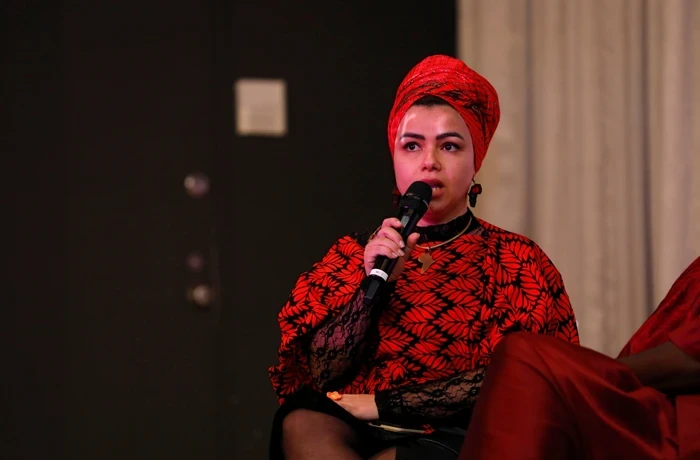
A young woman speaks into a microphone
News

UN Women Leaders Network champions intergenerational leadership at UNGA81

25 September 2026
UN Women Leaders Network champions intergenerational leadership at UNGA81

Footer menu-HQ

  • News and stories
  • Resources
  • What we do
  • How we work
  • Where we are
  • Partnerships
  • Employment
  • Procurement
  • Contact us
  • Executive Board
  • Commission on the Status of Women

Donate button menu [Footer tablet]

  • Donate

Donate button menu [Footer]

  • Donate

Social media menu

  • Facebook
  • Twitter
  • LinkedIn
  • Flickr
  • YouTube
  • Instagram
UN Women - For all women and girls

Footer bottom [Menu]

  • Copyright
  • Information security
  • Privacy notice
  • Report wrongdoing
  • Terms of use
Share this page
  • Share to Facebook
  • Share to Twitter
  • Share to LinkedIn
  • Share to E-mail

Or copy link