
Universal menu

  • Global
  • Regions
    • Africa
    • Americas and the Caribbean
    • Arab States
    • Asia and the Pacific
    • Europe and Central Asia
  • Knowledge
  • Data
  • Training
  • Transparency
UN Women - For all women and girls

Main Navigation-HQ

  • Who we are
    • About us
      • About UN Women
      • Business model
      • Guiding documents
      • Worldwide presence
    • Leadership
      • Governance structure
      • Executive leadership
      • Executive Board
      • Accountability
    • Work with us
      • Employment
      • Procurement
      • Calls for proposals
      • Contact us
      • UN Women Strategic Plan 2026–2029
      • UN Women Strategic Plan 2026–2029 - social media image
        UN Women Strategic Plan 2026–2029
  • What we do
    • Focus areas
      • Ending violence against women
      • Peace and security
      • Humanitarian action
      • Leadership and governance
      • Economic empowerment
      • Innovation and technology
      • Women with disabilities
      • Youth
      • HIV and AIDS
    • How we work
      • 2030 Agenda for Sustainable Development
      • Commission on the Status of Women
      • Gender parity in the UN system
      • Intergovernmental support
      • Partnerships
      • Research and data
      • Training Centre
      • Trust funds
      • UN system coordination
      • Gender Equality Accelerators
      • Gender Equality Accelerators artwork
        Gender Equality Accelerators
  • News and stories
    • Latest
      • News
      • Articles and explainers
      • In focus
    • Media center
      • Press materials
      • Media contacts
      • Explainer: Why are women so exhausted? Care work and the mental load
      • Two adults stand at a table changing diapers on baby dolls, with laundry hanging on a clothesline behind them in a home setting.
        Explainer: Why are women so exhausted? Care work and the mental load
      • Press release: Aid cuts dismantle women’s organizations working in humanitarian crises
      • A young Ugandan woman sits with another local woman to talk
        Press release: Aid cuts dismantle women’s organizations working in humanitarian crises
  • Digital library
    • Resources
      • Publications
      • Annual reports
      • Gender snapshot
      • Progress of the world’s women
      • World survey on the role of women in development
    • GenderTerm
      • GenderTerm
      • Reprint permissions
      • UN Women Highlights 2025–2026
      • A smiling woman.
        UN Women Highlights 2025–2026
      • Gender snapshot 2026
      • A diverse group of people represented as simplified silhouettes, arranged against a dark blue background.
        Gender snapshot 2026
  • Get involved
    • How to get involved
      • For ALL Women and Girls
      • International Women's Day
      • 16 Days of Activism to End Violence against Women and Girls
      • UNiTE! Campaign to End Violence against Women
      • Generation Equality
      • He for She
Ask AI
https://84e5cfacd5c7e99f9825edf344450c.1b.environment.api.powerplatform.com/powervirtualagents/botsbyschema/crad4_websiteQA/directline/token?api-version=2022-03-01-preview
1
-
Ask your question here
AI website assistant

Hello, how can I assist you?

AI chatbot responses may be incorrect. Always verify important information.

Donate button menu

Donate

Breadcrumb

  1. Home
  2. News and stories
  3. News

Website survey

We want to know how we can improve your experience on this website. Completing this survey takes less than 5 minutes.

TAKE THE SURVEY
News

UN Women Leaders Network champions intergenerational leadership at UNGA81

The event’s message was clear: Achieving gender equality depends on the leadership of every generation.

25 September 2026
  • Share to Facebook
  • Share to Twitter
  • Share to LinkedIn
  • Share to E-mail

On the sidelines of the 81st session of the United Nations General Assembly (UNGA81), the UN Women Leaders Network, in partnership with the Government of Iceland, the UN Foundation, and the Council of Women World Leaders, convened a high-level side event bringing together emerging and established women leaders to advance access to leadership and decision-making for women across generations.

The event, “The Power of Intergenerational Leadership”, held on 24 September at Scandinavia House in New York, brought together leaders from politics, academia, civil society, the private sector, and youth groups. The task: to examine how leadership shared across generations can strengthen the rights of women and girls and expand pathways to decision-making.

Image
Two women seated together on a stage
Charlotte Bunch (left) with Dilanaz Güler (right), both members of the UN Women Leaders Network, at a high-level side event on the sidelines of the 81st session of the United Nations General Assembly (UNGA81). Photo: UN Women/Christina Li

The discussion took place at a critical moment for the multilateral system, the implementation of the Beijing+30 Action Agenda, the achievement of Sustainable Development Goal 5, and the global gender equality agenda. Despite decades of global commitments, women remain significantly underrepresented in positions of leadership and decision-making. This representational gap reflects a lack of access to the networks, resources, and institutional opportunities that enable women to lead – barriers that compound across generations.

“We need generations leading together”, said UN Women Executive Director Sima Bahous in her remarks. “Established leaders bring experience, institutional knowledge, political judgment and networks built over decades. Emerging leaders bring new perspectives, new ways of organizing and communicating, and sometimes a very healthy impatience with barriers that others have been told to accept. We need both.”

“Our responsibility is not simply to prepare younger women to inherit the institutions we have built. It is to give them the access, the influence, and the space to help reshape those institutions now.” – UN Women Executive Director Sima Bahous

A fireside chat brought together Founding Director of the Rutgers University Center for Women’s Global Leadership Charlotte Bunch with UN Women National Gender Youth Activist Dilanaz Güler.

Their conversation explored the importance of passing the torch to the next generation. “To me, what has changed is that all of you are in this room and we're all talking about it. There are groups all over the world trying to make a change… That space did not exist before. We had to create that space. And that space is important. But if we don't share that space with each other across generations, across values, we very soon get isolated”, explained Bunch.

Güler added: “Being in the room also does not necessarily mean you'll be able to speak in that room. Or if you're allowed to speak, you won't be taken seriously.”

Image
A young woman speaks into a microphone
Aya Chebbi, Founder of the Nala Feminist Collective and former African Union Special Envoy on Youth. Photo: UN Women/Charlotte Li

Then followed a panel discussion moderated by Anika Jane Dorothy, Global Programs Delivery Lead, Girls Agency Lab and former member of the Generation Equality Youth Task Force. The panel included Aya Chebbi, Founder of the Nala Feminist Collective and former African Union Special Envoy on Youth; Anino Emuwa, Managing Director of Avandis Consulting and Founder of 100 Women @ Davos; and Tarja Halonen, former President of Finland (2000 to 2012).

“I think we need to show up for each other, not just across generations, but young women showing up for young women”, emphasized Chebbi.

“Because patriarchy lied to us and said we have to compete. Yes, we may compete at the ballot box, but once a young woman is empowered, we have to support her,” she added.

The discussion focused on identifying concrete commitments for expanding women’s access to leadership across regions, sectors and generations. 

“Be the first one”, encouraged Halonen. “Whether you are the first woman to be a union lawyer, like I used to be, or the first foreign minister, the first president, the first in Davos or in the African Union, whichever. It’s not very comfortable and I wouldn't call it nice. But it’s interesting and exciting, and somebody has to be the first one.”

The message was clear: Achieving gender equality depends on the leadership of every generation – and on building the structures and institutions that allow established and emerging leaders to advance it together.

About the UN Women Leaders Network

The UN Women Leaders Network is UN Women’s first permanent network of its kind, uniting a global intergenerational and intersectional group of 75 women leaders advocating for gender-equal participation in leadership and decision-making.
Topics

  • 2030 Agenda for Sustainable Development
  • Intergovernmental processes
  • Beijing Platform for Action
  • United Nations General Assembly
  • Leadership and political participation
  • Peace and security
  • UN system coordination
  • UN Women administration

Related content

Image
UNWomen_Placeholder
Press briefing

Middle East escalation threatens food security for an additional 11.7 million women and girls by the end of 2026

2 October 2026
Middle East escalation threatens food security for an additional 11.7 million women and girls by the end of 2026
Image
UNWomen_Placeholder
Press release

Middle East escalation could leave 11.7 million more women and girls facing food insecurity by end-2026

2 October 2026
Middle East escalation could leave 11.7 million more women and girls facing food insecurity by end-2026
Image
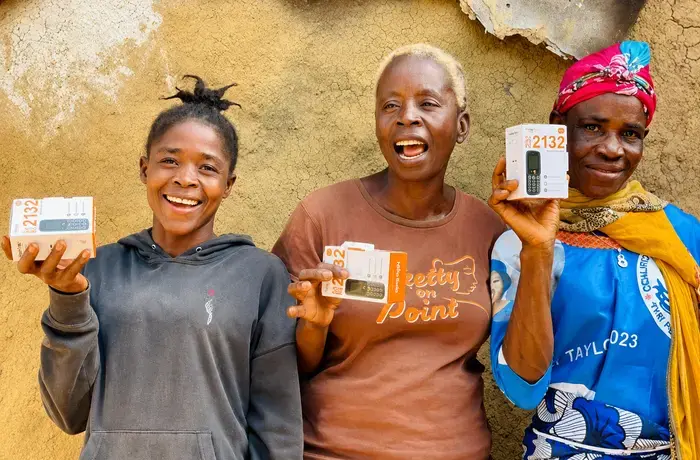
Ma Nowai Kaine (centre) and two other women from Sargent Kollie Town, Bong County, Liberia, hold mobile phones received through the D4WEE Project, implemented by UN Women with support from the Orange Foundation. Photo: UN Women/Aisha Kolubah.
Feature

For rural women in Liberia, digital and economic empowerment go hand-in-hand

1 October 2026
For rural women in Liberia, digital and economic empowerment go hand-in-hand

Footer menu-HQ

  • News and stories
  • Resources
  • What we do
  • How we work
  • Where we are
  • Partnerships
  • Employment
  • Procurement
  • Contact us
  • Executive Board
  • Commission on the Status of Women

Donate button menu [Footer tablet]

  • Donate

Donate button menu [Footer]

  • Donate

Social media menu

  • Facebook
  • Twitter
  • LinkedIn
  • Flickr
  • YouTube
  • Instagram
UN Women - For all women and girls

Footer bottom [Menu]

  • Copyright
  • Information security
  • Privacy notice
  • Report wrongdoing
  • Terms of use
Share this page
  • Share to Facebook
  • Share to Twitter
  • Share to LinkedIn
  • Share to E-mail

Or copy link