In Latin America, we’re not just recognizing care work – we’re rebuilding economies around it
From Brazil to Panama, bold investments in care, backed by UN Women’s expertise and support, are reshaping economies and lives – and showing the world what’s possible.

Every day, women and girls in Latin America spend up to three times more hours on unpaid care work than men: cooking, cleaning, caring for children, and supporting the sick and elderly. Step back, and the scale is staggering: Globally, 12.5 billion hours of unpaid care work are done every single day – mostly by women and girls, often without a break, paycheck, or a choice.
But what if care wasn’t invisible? What if it was shared, valued, and properly supported?
Across Latin America, a care revolution is underway. With UN Women’s expertise and support, 17 countries [1] are working to redesign how care is recognized, funded, and delivered. Governments, private sector companies, women and communities are rewriting the rules, turning what was once considered a woman’s unpaid job into public policy, services, and a shared responsibility.
Because investing in care doesn’t just ease the load – it unlocks the potential of entire societies.
Do you know what a care system is?
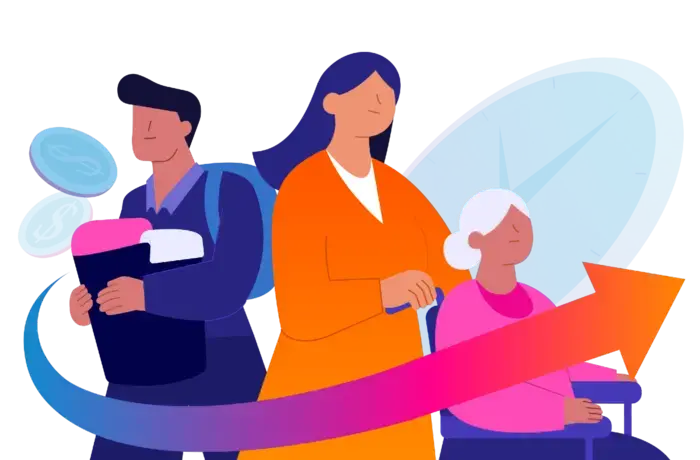
For too long, unpaid care work like cooking, cleaning and looking after the physical and emotional needs of families has fallen mostly on women and girls. But care systems can change that. They turn care work into a visible and shared responsibility supported by:
- Public services like childcare centres, older people’s homes, home visits, and respite care (services designed to provide short-term breaks for caregivers).
- Legal protections like paid parental leave, pensions, healthcare, and decent wages for caregivers.
- Training and professionalization helping both paid and unpaid caregivers gain skills, recognition, and economic independence.
A well-designed care system strengthens families, communities, economies, and entire societies.
The bold new care systems reshaping Latin America’s economies
Across the region, governments are recognizing care as essential public infrastructure, just like schools, hospitals, or roads. And the momentum is growing:
- Cities like Bogotá, Belém, Buenos Aires, Santiago, Monterrey, Quito, and others, are building networks of care services that integrate childcare, elder care, transport, healthcare, and employment.
- In Colombia and Chile, care work is now estimated to contribute 19.6 per cent and 25. 6 per cent of the national GDP respectively, bringing what was once invisible and unaccounted for labour into official economic statistics.
- In Mexico and Peru, access to care is being written into law as a human right.
At the heart of these reforms are the voices of women: community leaders, caregivers, and organizations who are co-creating these new care systems to reflect the real needs of families and caregivers.
“The biggest shift has been putting care at the centre of public policy, not just academic debates. For the first time, care policy in Brazil is being shaped with full participation from both government and civil society.” – Virginia Gontijo, programme lead, UN Women Brazil
To turn on auto-generated English translations, first click the [CC] icon. Then click the settings icon, "Subtitles/CC," "Auto-translate," and scroll down to select "English."
Brazil: From local pilot to national promise
In the norther city of Belém do Pará, Brazil’s first Municipal Care Policy is proving that local action can ignite national change. Backed by UN Women, this bold experiment is showing how care work can be turned into public investment, professional opportunity, and social infrastructure. Belém’s model, launched through the Ver-o-Cuidado project, has already influenced Brazil’s developing National Care Policy and serves as a blueprint for other cities.
- 70 public officials trained in care policy design, now the training has been rolled out nationally via e-learning.
- More than 300 female caregivers, both paid and unpaid, trained to understand their rights, recognize the value of their work, and advocate for better care policies.
- 33 civil society leaders from 16 organizations trained in policy advocacy for care.
- 13 women’s organizations formed the Belém Care Activist Network [2].

On gaining a voice in policymaking:
“It opened a world of opportunities and learning that strengthened my fight for domestic workers’ rights.”
On knowledge as power:
“I never felt my work was valued. But after this project, I feel better prepared to take part in political discussions and make our voices heard.”
“The mental health of women caregivers must be a priority. Not just to survive, but to live with dignity.” – Meredith Cortés Bravo, founder of Apañales, Chile
Chile: Scaling up care with national ambition
Chile is building one of the region’s most ambitious national care systems, Chile Cuida, shaped by the expertise of women like Cortés Bravo, who founded Apañales, a grassroots network supporting caregivers in vulnerable communities, and the lived experience of thousands of women.
Through public consultations and new laws, Chile is aiming to reach 75,000 people in the coming years with UN Women’s technical support to ensure no one is left behind.
- More than 12,000 people – 80 per cent women – shaped Chile’s care system through public dialogue.
- 151 municipalities are already delivering care services through Chile’s Local Support and Care Network (RLAC), with national expansion plans in place by 2026.
- 57 women caregivers in Valparaíso now earn a monthly wage for caring for family members with severe dependency.
- 300 caregivers trained in labour rights across three regions.
- Local innovations like Renca te Cuida and STGO te Cuida are tailoring care services to urban communities.

On the invisibility of unpaid care work:
“Our system is designed as if women didn’t do care work. And that forces us to choose between raising children or working.”
On why grassroots support matters:
“When you invest in a women’s organization you strengthen a living network, a tree with many branches that reaches places no office or institutional programme ever could.”
“The caregiver diploma marked a before and after, because it helped us understand more deeply the importance of providing quality care to our older adults – their rights and benefits.” – Daniela Alejandra Shirley, home-based care assistant, Juan Díaz, Panama
Panama: Elevating both paid and unpaid care work
Panama is transforming how care is valued by professionalizing paid care roles while rebalancing the load of unpaid care work that women and girls carry. A pilot in Juan Díaz, a neighbourhood in southern Panama City, is leading the way with plans to roll out the programme on a national scale.
- Panama’s national care law, passed in 2024, creates a framework to expand care services, building infrastructure, and professionalizing care work through training, while aiming to reduce the unequal care responsibilities that have long fallen on women.
- Juan Díaz’s Local Care Plan is already expanding services for children, older adults, and people with disabilities.
- More than 120 caregivers trained through Panama’s first diploma for elder care – promoting professionalization and recognition.
- 100 caregivers in Juan Díaz, David, and La Chorrera will be trained and certified to support people with disabilities by 2026.

On care as a profession:
“This diploma validates my knowledge, but above all, it honours my commitment to care and the well-being of others.”
On restoring dignity for older people:
“I understood that they (older people) are not just ‘waiting for the end’ – they are still an active part of our society and deserve all the care and dignity we can give them.”
Why care systems are essential economic infrastructure
A well-designed care system doesn’t just help women and families balance paid work and caregiving, it is a critical pillar of economic and social infrastructure. When countries invest in care, they:
- Create new jobs – as many as 300 million new jobs globally by 2035 – especially for women
- Create green jobs that are energy-light, community-focused, and essential for well-being
- Help more women enter or stay in the labor market
- Boost economic productivity and economic growth
- Improve public healthcare
- Support children’s education and development
- Build resilience against crises – from pandemics to climate disasters
- More paid care jobs mean higher incomes, increased tax revenues, and strengthened welfare systems.
When governments recognize care as essential public infrastructure, they are building the economy of the future.
Latin America is showing what it means to build economies that put people – not profits – at the centre. These aren’t minor adjustments. They are deep societal shifts, turning centuries of unpaid, invisible labour into public policy, community services, and national investment.
And while much remains to be done, these pioneering care systems are proving one thing:
When we value care, we unlock a stronger, fairer future for everyone.