Universal menu

  • Global
  • Regions
    • Africa
    • Americas and the Caribbean
    • Arab States
    • Asia and the Pacific
    • Europe and Central Asia
  • Knowledge
  • Data
  • Training
  • Transparency
UN Women - For all women and girls

Main Navigation-HQ

  • Who we are
    • About us
      • About UN Women
      • Business model
      • Guiding documents
      • Worldwide presence
    • Leadership
      • Governance structure
      • Executive leadership
      • Executive Board
      • Accountability
    • Work with us
      • Employment
      • Procurement
      • Calls for proposals
      • Contact us
      • UN Women Strategic Plan 2026–2029
      • UN Women Strategic Plan 2026–2029 - social media image
        UN Women Strategic Plan 2026–2029
  • What we do
    • Focus areas
      • Ending violence against women
      • Peace and security
      • Humanitarian action
      • Leadership and governance
      • Economic empowerment
      • Innovation and technology
      • Women with disabilities
      • Youth
      • HIV and AIDS
    • How we work
      • 2030 Agenda for Sustainable Development
      • Commission on the Status of Women
      • Gender parity in the UN system
      • Intergovernmental support
      • Partnerships
      • Research and data
      • Training Centre
      • Trust funds
      • UN system coordination
      • Gender Equality Accelerators
      • Gender Equality Accelerators artwork
        Gender Equality Accelerators
  • News and stories
    • Latest
      • News
      • Articles and explainers
      • In focus
    • Media center
      • Press materials
      • Media contacts
      • Explainer: Why are women so exhausted? Care work and the mental load
      • Two adults stand at a table changing diapers on baby dolls, with laundry hanging on a clothesline behind them in a home setting.
        Explainer: Why are women so exhausted? Care work and the mental load
      • Press release: Aid cuts dismantle women’s organizations working in humanitarian crises
      • A young Ugandan woman sits with another local woman to talk
        Press release: Aid cuts dismantle women’s organizations working in humanitarian crises
  • Digital library
    • Resources
      • Publications
      • Annual reports
      • Gender snapshot
      • Progress of the world’s women
      • World survey on the role of women in development
    • GenderTerm
      • GenderTerm
      • Reprint permissions
      • UN Women Highlights 2025–2026
      • A smiling woman.
        UN Women Highlights 2025–2026
      • Gender snapshot 2026
      • A diverse group of people represented as simplified silhouettes, arranged against a dark blue background.
        Gender snapshot 2026
  • Get involved
    • How to get involved
      • For ALL Women and Girls
      • International Women's Day
      • 16 Days of Activism to End Violence against Women and Girls
      • UNiTE! Campaign to End Violence against Women
      • Generation Equality
      • He for She
Ask AI
https://84e5cfacd5c7e99f9825edf344450c.1b.environment.api.powerplatform.com/powervirtualagents/botsbyschema/crad4_websiteQA/directline/token?api-version=2022-03-01-preview
1
-
Ask your question here
AI website assistant

Hello, how can I assist you?

AI chatbot responses may be incorrect. Always verify important information.

Donate button menu

Donate

Breadcrumb

  1. Home
  2. News and stories
  3. Feature story

Website survey

We want to know how we can improve your experience on this website. Completing this survey takes less than 5 minutes.

TAKE THE SURVEY
Feature

Displaced women return home in Lebanon: ‘I saw destruction everywhere’

Across Lebanon, women and girls navigate continued displacement, loss, and returns home – often multiple times – as uncertainty remains part of daily life.

23 April 2026
  • Share to Facebook
  • Share to Twitter
  • Share to LinkedIn
  • Share to E-mail

More than a million people were forced to flee their homes following the March 2026 escalation of conflict in Lebanon. Among them were an estimated 620,000 women and girls, around 1 in 4 women and girls across the country, including those from Lebanese, Palestinian, and Syrian communities. For many, this was, and continues to be, a recurring cycle of displacement.

Despite a 10-day ceasefire announced on 16 April, conditions across Lebanon remain deeply challenging. Families continue to move between shelters and homes – the result of continued uncertainty and the fear of having to flee again.

Image
A woman wearing an apron and gloves stands in a community kitchen
Ghofran Abou Khalil, 35, works at the Sibline Training Centre community kitchen. She had been displaced four times: The first within Syria, then to Tripoli, then to Borj al-Chemali camp in Lebanon, and then to Sibline. Photo: UN Women/Georges Roukoz

How is conflict impacting women and girls in Lebanon?

At least 260 women have been reportedly killed and 1,150 injured in Lebanon between 2 March and 16 April 2026. As of 14 April, there have been 133 attacks on health care across the country. Even before the recent escalation, around 70,000 women in Lebanon needed maternal health services. Disruptions to health care, combined with displacement, have increased risks for women and girls, particularly those requiring urgent or ongoing care.

A community kitchen supports displaced families and provides a sense of security to displaced women

The Sibline Training Centre – supported by UNWRA – was set up in March to provide shelter to people who have been displaced. At the Centre, a community kitchen supported by UN Women prepares around 3,000 hot meals each day for families sheltering there. By early April, 48 women were employed on a short-term basis. The kitchen provides lifesaving support to displaced families, and a vital source of income and stability for those working within it.

Image
Two women stand over large cooking pots in a community kitchen
Hadeel Moussa, 22, works at the Sibaline Centre community kitchen. Hadeel and her 11-month-old daughter fled from, and later returned to, the Borj al-Cemali camp in Southern Lebanon. It was the second time she has been displaced in the past two years. Photo: UN Women/Georges Roukoz

Repeated displacement and uncertain returns home for families in Lebanon

Thirty-five-year-old Ghofran Abou Khalil was one of the women working in the kitchen. She had been displaced four times. The first within Syria, then to Tripoli, then to Borj al-Chemali camp in Lebanon, and then to Sibline.

“My area was under threat of bombing. I had to leave at night, with my daughters. I forgot my medications, but I took my daughter’s favourite toy, a Panda. My husband thought it would be easier for shelters to accept women and children”, says Ghofran. Aside from the toy panda and the clothes they were wearing when they fled, Ghofran and her children struggled without additional clothing, heating, and basics like baby milk.

When the ceasefire was announced on 16 April, Ghofran returned to her home and husband in the Borj al-Chemali camp. “It was hard to find a car to take me and my daughters back – we waited more than five hours. On the way, I cried a lot. I saw destruction everywhere – blood, people mourning their loved ones, others returning to ruined homes. I saw the bombed bridge in Qassmieh. It was mentally exhausting and left me deeply saddened”, says Ghofran. “The situation is still unclear, and I don’t feel safe, but it’s better than staying in a shelter. I also wanted to pick up clothes and essential items in case the escalation starts again”, she explains.

Hadeel Moussa, 22, also fled the Borj al-Cemali camp in Southern Lebanon with her 11-month-old daughter. It was the second time she’d been displaced in the past two years. Her husband stayed behind. “I waited for hours in the street at 3:00 a.m. before finding a place on a bus”, she says. Like Ghofran, Hadeel has returned to the Borj al-Chemali camp. She shares the same fears the situation could escalate again and is keeping an emergency bag packed and ready. “The situation is still devastating but being at home feels better than living in a shelter”.

Why displacement in Lebanon affects women and girls differently?

Displacement puts the safety and well-being of women and girls at further risk and intensifies economic insecurity. Women and girls often also carry a greater share of responsibility for sustaining families, including caring for children and elderly, going without food so others can eat, and holding households together under huge strain. The kitchen has helped alleviate some of these pressures for women like Ghofran who described her job as “a string of hope” where she felt appreciated.

Faten Ali’s journey follows the same pattern of movement between shelter and home, and loss. Faten’s brother was killed and her home destroyed during the 2024 conflict. After arriving in Sibline in March 2026, Faten, 39, joined the community kitchen. She described it as “one of the best things that happened” to her. “The laughter and friendships make things easier,” she says.

Following the announcement of the ceasefire agreement, Faten travelled to the South to check on her home, which is still standing with minor damage. “This gave me hope”, she says. “But it is still not safe to stay in the southern villages, like for many other families, so we returned to the shelter”.

Back at the shelter, she continues her work in the kitchen.

Image
A woman poses for a portrait wearing a black dress and gray headscarf
Faten Ali’s journey follows the same pattern of movement between shelter and home, and loss. Faten’s brother was killed and her home destroyed during the 2024 conflict. After arriving in Sibline in March 2026, Faten, 39, joined the community kitchen. Photo: UN Women/Georges Roukoz

What is UN Women doing in Lebanon?

UN Women has scaled up its response to meet the urgent needs of women and girls across Lebanon. We are on the ground working through women-led organizations to deliver protection services, psychosocial support, and livelihood support – including by combining life-saving food assistance with short-term, cash-for-work opportunities for displaced women and girls, and through their meaningful engagement in meal preparation and distribution.

UN Women is working to ensure that the needs of all women, men, girls and boys are met in equal measure in the humanitarian response, and we are amplifying women’s voices and leadership in decision-making.

What is UN Women calling for?

UN Women calls for the ceasefire agreement in Lebanon to be upheld to prevent further harm and ensure it delivers real protection for women and girls, and in full compliance with international humanitarian law.

This means guaranteeing unimpeded humanitarian access, protecting civilians and aid workers, and ensuring that lifesaving, gender-responsive services reach those most affected. It also requires meaningful inclusion of women in peace and recovery efforts, alongside urgent investment in livelihoods, social protection, and services that address rising inequalities and caregiving burdens. Protecting civic space and preventing further militarization are critical to sustaining the ceasefire and avoiding renewed escalation, while increased, flexible funding must support gender-responsive recovery and strengthen the resilience of women, their families and communities across Lebanon.


The community kitchen was established by UN Women in partnership with INITIATE and supported by the Government of Australia (DFAT).
 

Topics

  • Humanitarian action
  • Peace and security
  • Conflict, war
  • Arab States/North Africa
  • Lebanon

Related content

Image
UNWomen_Placeholder
Press briefing

Middle East escalation threatens food security for an additional 11.7 million women and girls by the end of 2026

2 October 2026
Middle East escalation threatens food security for an additional 11.7 million women and girls by the end of 2026
Image
UNWomen_Placeholder
Press release

Middle East escalation could leave 11.7 million more women and girls facing food insecurity by end-2026

2 October 2026
Middle East escalation could leave 11.7 million more women and girls facing food insecurity by end-2026
Image
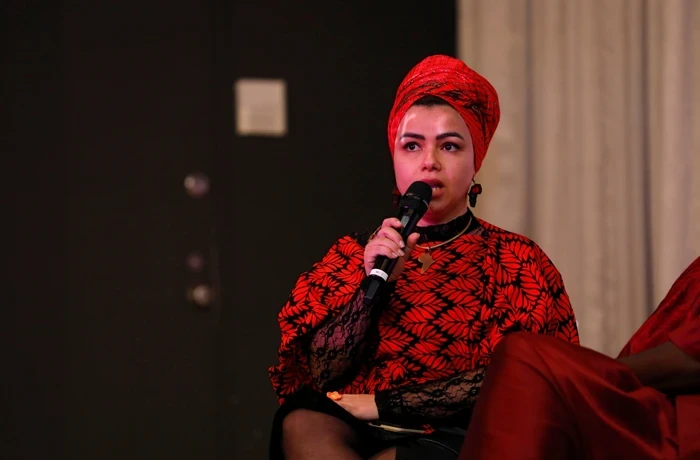
A young woman speaks into a microphone
News

UN Women Leaders Network champions intergenerational leadership at UNGA81

25 September 2026
UN Women Leaders Network champions intergenerational leadership at UNGA81

Footer menu-HQ

  • News and stories
  • Resources
  • What we do
  • How we work
  • Where we are
  • Partnerships
  • Employment
  • Procurement
  • Contact us
  • Executive Board
  • Commission on the Status of Women

Donate button menu [Footer tablet]

  • Donate

Donate button menu [Footer]

  • Donate

Social media menu

  • Facebook
  • Twitter
  • LinkedIn
  • Flickr
  • YouTube
  • Instagram
UN Women - For all women and girls

Footer bottom [Menu]

  • Copyright
  • Information security
  • Privacy notice
  • Report wrongdoing
  • Terms of use
Share this page
  • Share to Facebook
  • Share to Twitter
  • Share to LinkedIn
  • Share to E-mail

Or copy link