
Universal menu

  • Global
  • Regions
    • Africa
    • Americas and the Caribbean
    • Arab States
    • Asia and the Pacific
    • Europe and Central Asia
  • Knowledge
  • Data
  • Training
  • Transparency
UN Women - For all women and girls

Main Navigation-HQ

  • Who we are
    • About us
      • About UN Women
      • Business model
      • Guiding documents
      • Worldwide presence
    • Leadership
      • Governance structure
      • Executive leadership
      • Executive Board
      • Accountability
    • Work with us
      • Employment
      • Procurement
      • Calls for proposals
      • Contact us
      • UN Women Strategic Plan 2026–2029
      • UN Women Strategic Plan 2026–2029 - social media image
        UN Women Strategic Plan 2026–2029
  • What we do
    • Focus areas
      • Ending violence against women
      • Peace and security
      • Humanitarian action
      • Leadership and governance
      • Economic empowerment
      • Innovation and technology
      • Women with disabilities
      • Youth
      • HIV and AIDS
    • How we work
      • 2030 Agenda for Sustainable Development
      • Commission on the Status of Women
      • Gender parity in the UN system
      • Intergovernmental support
      • Partnerships
      • Research and data
      • Training Centre
      • Trust funds
      • UN system coordination
      • Gender Equality Accelerators
      • Gender Equality Accelerators artwork
        Gender Equality Accelerators
  • News and stories
    • Latest
      • News
      • Articles and explainers
      • In focus
    • Media center
      • Press materials
      • Media contacts
      • Explainer: Why are women so exhausted? Care work and the mental load
      • Two adults stand at a table changing diapers on baby dolls, with laundry hanging on a clothesline behind them in a home setting.
        Explainer: Why are women so exhausted? Care work and the mental load
      • Press release: Aid cuts dismantle women’s organizations working in humanitarian crises
      • A young Ugandan woman sits with another local woman to talk
        Press release: Aid cuts dismantle women’s organizations working in humanitarian crises
  • Digital library
    • Resources
      • Publications
      • Annual reports
      • Gender snapshot
      • Progress of the world’s women
      • World survey on the role of women in development
    • GenderTerm
      • GenderTerm
      • Reprint permissions
      • UN Women Highlights 2025–2026
      • A smiling woman.
        UN Women Highlights 2025–2026
      • Gender snapshot 2026
      • A diverse group of people represented as simplified silhouettes, arranged against a dark blue background.
        Gender snapshot 2026
  • Get involved
    • How to get involved
      • For ALL Women and Girls
      • International Women's Day
      • 16 Days of Activism to End Violence against Women and Girls
      • UNiTE! Campaign to End Violence against Women
      • Generation Equality
      • He for She
Ask AI
https://84e5cfacd5c7e99f9825edf344450c.1b.environment.api.powerplatform.com/powervirtualagents/botsbyschema/crad4_websiteQA/directline/token?api-version=2022-03-01-preview
1
-
Ask your question here
AI website assistant

Hello, how can I assist you?

AI chatbot responses may be incorrect. Always verify important information.

Donate button menu

Donate

Breadcrumb

  1. Home
  2. News and stories
  3. Feature story

Website survey

We want to know how we can improve your experience on this website. Completing this survey takes less than 5 minutes.

TAKE THE SURVEY
Feature

One month after the Nepal floods, women are running community kitchens, feeding their communities, and rebuilding their lives

25 September 2026
  • Share to Facebook
  • Share to Twitter
  • Share to LinkedIn
  • Share to E-mail
Head Chef Reshma Ranjit (centre) stands with her team at UN Women’s Community Kitchen in Indrayani Basic School, Bidur-1, Nuwakot, just weeks after the Bhotekoshi floods in Nepal swept away their homes and communities. 18 September 2026. Photo: UN Women/Srijana Bhatta

Basic Hero Banner

In the afternoon, Reshma Ranjit, stirs a large pot of haluwa, a sweet, creamy pudding-like dessert, in the community kitchen at Indrayani Basic School in Bidur Municipality-1, Nuwakot, Nepal. 

Around her, more women prepare meals for families staying at a holding centre after the Bhotekoshi floods swept away their homes and communities on 26 August 2026.

Image
A woman, wearing food-safe attire, pours ingredients into a pot
Head Chef Reshma Ranjit prepares meals at UN Women’s Community Kitchen. 18 September 2026. Photo: UN Women/Srijana Bhatta

Just weeks earlier, Ranjit, 30, was running a catering business with her husband, a business they had built for nearly a decade. Twelve days before the flood, she had taken a loan of NPR 1.2 million – equivalent to almost USD 8,000 – to purchase new equipment and expand the business.

Then the flood came. It swept through the Bhotekoshi and Trishuli river corridors, killing thousands of people, destroying homes and infrastructure across Rasuwa, Nuwakot, and other affected districts, and taking with it everything that people had worked for.

Image
A street lined with buildings, rendered unrecognizable by mud and destruction
Glimpses of the destruction caused by the 26 August floods. Photo: UN Women/Srijana Bhatta

According to the United Nations, at least 43,000 women and girls need humanitarian assistance across the 17 most affected municipalities. 

In all disasters, women and girls face the greatest impacts, including increased risk of violence and exploitation. Women also take on much greater unpaid care responsibilities than men, are forced to travel even further to secure water, and fall quicker and more deeply into poverty.

“The flood took everything I had, all my newly purchased utensils, my lifelong savings and hard work, my catering business, my dreams. The business that took almost a decade to build went away in the blink of an eye.” – Reshma Ranjit

Shortly after the floods, Ranjit got straight back into the kitchen and is now the head chef of a UN Women-supported community kitchen, working alongside other women from local women’s groups affected by the floods. Together, they prepare meals for displaced families.

Image
Two chefs serve food to local women standing in line
Head Chef Reshma Ranjit serves meals with her colleague at UN Women’s Community Kitchen. 18 September 2026. Photo: UN Women/Srijana Bhatta

For families displaced from their homes, preparing a daily meal can be a major undertaking. The kitchen offers cooked meals to people who cannot access food or cooking facilities, while creating temporary paid work for women facing the immediate financial hit of a disaster.

UN Women, in partnership with Rural Oriented Youth Movement Nepal (ROYM), National Indigenous Women Forum (NIWF), and four local women’s groups, has established four community kitchens in Nuwakot and Rasuwa districts. Another partner organization, Feminist Dalit Organization (FEDO) will soon be setting up additional kitchens.

Image
A woman wearing a blue UN Women vest stands with chefs as they prepare meals
A UN Women team member speaks with the chefs as they prepare meals at UN Women’s Community Kitchen. 18 September 2026. Photo: UN Women/Srijana Bhatta

UN Women’s community kitchens are designed to operate for one to three months post-disaster. In a community where 100 people need access to food, a community kitchen operating for the span of one month can serve up to 9,000 meals.

Together, the kitchens set up after the flood have reached 1,145 people, serving four meals per day. More than 15,000 meals have been served in just two weeks.

Working with women’s rights organizations and local women’s groups also means drawing on local knowledge and community relationships to organize food preparation and reach affected families.

Image
A woman chops garlic
A chef prepares meals. 9 September 2026. UN Women/Srijana Bhatta

Earning while helping others

When Sannani BK heard that the flood was coming, she sent her children away in a vehicle as quickly as she could, hoping that even if something happened to her, they would be safe. Sannani BK’s brother died in the floods and she now cares for her brother’s children as well as her own.

After the flood, “I had nowhere to go and no one to talk to”, says BK.

“The community kitchen has given me a place where I can share my grief, work alongside my sisters from the community, and support others who are going through the same experience. In times like these, having a warm, cooked meal means so much.” – Sannani BK

“The income I earn from working in the kitchen”, explains BK, “is also helping me meet the immediate needs of my children and my brother’s children, whom I am caring for now.”

For women like Ranjit and BK, the temporary income does not resolve the losses caused by the disaster, but it helps them meet immediate expenses while longer-term recovery support is being put in place.

Image
A woman washes a large serving platter while the sun shines on her face
A chef washes dishes after serving meals. 18 September 2026. Photo: UN Women/Srijana Bhatta

It has been one month since the floods swept through, and the women are still standing, supporting one another as they recover. “We have lost everything, but we have not lost hope”, says Ranjit.

In an emergency, sometimes recovery begins with something as simple as a meal, and with women helping ensure that their communities have one.
Topics

  • 2030 Agenda for Sustainable Development
  • Climate change
  • Economic empowerment
  • Employment
  • Humanitarian action
  • Crisis response and recovery
  • Asia and the Pacific
  • Nepal

Related content

Image
UNWomen_Placeholder
Press briefing

Middle East escalation threatens food security for an additional 11.7 million women and girls by the end of 2026

2 October 2026
Middle East escalation threatens food security for an additional 11.7 million women and girls by the end of 2026
Image
UNWomen_Placeholder
Press release

Middle East escalation could leave 11.7 million more women and girls facing food insecurity by end-2026

2 October 2026
Middle East escalation could leave 11.7 million more women and girls facing food insecurity by end-2026
Image
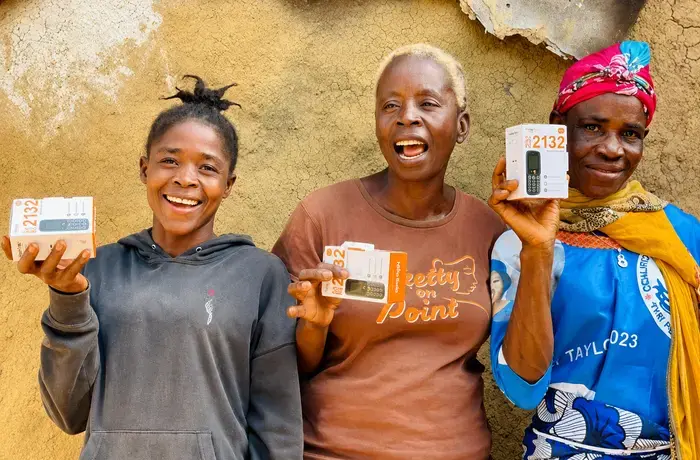
Ma Nowai Kaine (centre) and two other women from Sargent Kollie Town, Bong County, Liberia, hold mobile phones received through the D4WEE Project, implemented by UN Women with support from the Orange Foundation. Photo: UN Women/Aisha Kolubah.
Feature

For rural women in Liberia, digital and economic empowerment go hand-in-hand

1 October 2026
For rural women in Liberia, digital and economic empowerment go hand-in-hand

Footer menu-HQ

  • News and stories
  • Resources
  • What we do
  • How we work
  • Where we are
  • Partnerships
  • Employment
  • Procurement
  • Contact us
  • Executive Board
  • Commission on the Status of Women

Donate button menu [Footer tablet]

  • Donate

Donate button menu [Footer]

  • Donate

Social media menu

  • Facebook
  • Twitter
  • LinkedIn
  • Flickr
  • YouTube
  • Instagram
UN Women - For all women and girls

Footer bottom [Menu]

  • Copyright
  • Information security
  • Privacy notice
  • Report wrongdoing
  • Terms of use
Share this page
  • Share to Facebook
  • Share to Twitter
  • Share to LinkedIn
  • Share to E-mail

Or copy link