Universal menu

  • Global
  • Regions
    • Africa
    • Americas and the Caribbean
    • Arab States
    • Asia and the Pacific
    • Europe and Central Asia
  • Knowledge
  • Data
  • Training
  • Transparency
UN Women - For all women and girls

Main Navigation-HQ

  • Who we are
    • About us
      • About UN Women
      • Business model
      • Guiding documents
      • Worldwide presence
    • Leadership
      • Governance structure
      • Executive leadership
      • Executive Board
      • Accountability
    • Work with us
      • Employment
      • Procurement
      • Calls for proposals
      • Contact us
      • UN Women Strategic Plan 2026–2029
      • UN Women Strategic Plan 2026–2029 - social media image
        UN Women Strategic Plan 2026–2029
  • What we do
    • Focus areas
      • Ending violence against women
      • Peace and security
      • Humanitarian action
      • Leadership and governance
      • Economic empowerment
      • Innovation and technology
      • Women with disabilities
      • Youth
      • HIV and AIDS
    • How we work
      • 2030 Agenda for Sustainable Development
      • Commission on the Status of Women
      • Gender parity in the UN system
      • Intergovernmental support
      • Partnerships
      • Research and data
      • Training Centre
      • Trust funds
      • UN system coordination
      • Gender Equality Accelerators
      • Gender Equality Accelerators artwork
        Gender Equality Accelerators
  • News and stories
    • Latest
      • News
      • Articles and explainers
      • In focus
    • Media center
      • Press materials
      • Media contacts
      • Explainer: Why are women so exhausted? Care work and the mental load
      • Two adults stand at a table changing diapers on baby dolls, with laundry hanging on a clothesline behind them in a home setting.
        Explainer: Why are women so exhausted? Care work and the mental load
      • Press release: Aid cuts dismantle women’s organizations working in humanitarian crises
      • A young Ugandan woman sits with another local woman to talk
        Press release: Aid cuts dismantle women’s organizations working in humanitarian crises
  • Digital library
    • Resources
      • Publications
      • Annual reports
      • Gender snapshot
      • Progress of the world’s women
      • World survey on the role of women in development
    • GenderTerm
      • GenderTerm
      • Reprint permissions
      • UN Women Highlights 2025–2026
      • A smiling woman.
        UN Women Highlights 2025–2026
      • Gender snapshot 2026
      • A diverse group of people represented as simplified silhouettes, arranged against a dark blue background.
        Gender snapshot 2026
  • Get involved
    • How to get involved
      • For ALL Women and Girls
      • International Women's Day
      • 16 Days of Activism to End Violence against Women and Girls
      • UNiTE! Campaign to End Violence against Women
      • Generation Equality
      • He for She
Ask AI
https://84e5cfacd5c7e99f9825edf344450c.1b.environment.api.powerplatform.com/powervirtualagents/botsbyschema/crad4_websiteQA/directline/token?api-version=2022-03-01-preview
1
-
Ask your question here
AI website assistant

Hello, how can I assist you?

AI chatbot responses may be incorrect. Always verify important information.

Donate button menu

Donate

Breadcrumb

  1. Home
  2. News and stories
  3. Interview

Website survey

We want to know how we can improve your experience on this website. Completing this survey takes less than 5 minutes.

TAKE THE SURVEY
Interview

For ALL Women and Girls: Sandra Patricia Aguilar Carabalí believes that women’s leadership is key to protecting Colombia’s environment and peace

22 January 2025
  • Share to Facebook
  • Share to Twitter
  • Share to LinkedIn
  • Share to E-mail

#ForAllWomenAndGirls is a rallying call for action on the 30th anniversary of the Beijing Declaration and Platform for Action. Sandra Patricia Aguilar Carabalí leads youth and women’s resistance in northern Cauca, Colombia, a region marked by violence and environmental challenges.

Image
Sandra Aguilar participating in the Global Summit of Children and Youth for Biodiversity in the framework of COP16.
Sandra Aguilar participating in the Global Summit of Children and Youth for Biodiversity in the framework of COP16. Photo: UN Women/Luis Ponce

Women’s leadership in climate justice in Cauca

“Environmental sustainability is essential for lasting peace in Cauca, because the territory and its natural resources are the heart of our identity and survival,” says Sandra Patricia Aguilar Carabalí.

As president of the Cauca Department Youth Network (REDEJOCA), she trains and empowers women and youth to protect and restore the rivers that indigenous communities of northern Cauca, Colombia, depend on. The Quinamayó, Palo, and Desbaratado rivers flow into one of Colombia’s most important waterways, the Cauca River, a lifeline for millions of people. The rivers have suffered years of environmental degradation because of industrial waste, pollution, conflict, and lack of waste management.

“Today many homes do not have drinking water,” shares Aguilar Carabalí. Diseases have spread among the communities relying on these rivers.

The environmental crisis is compounded for women in her community, she adds, as they are the ones providing water, preparing food, and caring for their families: “Many women must travel longer distances in potentially dangerous conditions to collect water, which not only jeopardizes their safety but also robs them of time that they could have used for education, work, or rest.

Cauca is one of the most biodiverse departments in Colombia. The conflict between illegal groups has led to the plunder of natural resources, land grab, and relentless violence.

“Historically, women have played a fundamental role in peacebuilding, working within their communities to preserve the environment,” explains Aguilar Carabalí. “Through their traditional knowledge and leadership, they have cared for biodiversity, restored ecosystems, and created sustainable initiatives. Protecting the environment is not only an act of conservation for them, but also an act of resistance to the violence and inequality in the region.”

By protecting the environment, environmental defenders like Aguilar Carabalí and others build sustainable livelihoods for communities and reduce the risk of conflicts.

“Peace and the environment are intrinsically connected in Cauca, and working for both is essential to guarantee a more just and equitable future for our communities.”

Challenges faced by environmental defenders

“One of the biggest challenges we face is the lack of institutional support for women-led community initiatives,” says Aguilar Carabalí. “Another major challenge is the impact of extractive economic activities, such as illegal mining and monocultures, which not only destroy our ecosystems but also generate serious risks to the health and well-being of our communities, especially for women and girls.”

She also highlights the constant threats, violence and intimidation that women environmental defenders face. A recent Global Witness report shows that an estimated 196 land and environmental defenders were killed in 2023, and for the second year running, Colombia ranked as the most dangerous place for environmental defenders, with a record 79 killed.

Today, Aguilar Carabalí is part of UN Women’s groundbreaking programme, “Women Changing Their World”, funded by the Government of Germany and implemented in partnership with the Government of Colombia. The programme strengthens the voice, capacity and influence of women environmental defenders in Colombia in local environmental governance.

She dreams of “a Cauca where rivers are once again the heart of community life, and women and youth are the protagonists of a sustainable future.”

The Beijing Declaration and Platform for Action – a call for action and hope for young feminists

“The Beijing Declaration and Platform for Action are a constant call to action and hope,” says Aguilar Carabalí.

She was a student of law when she first learned about the Beijing Declaration and Platform for Action and realized how they had marked a turning point in the global movement for women’s rights. “The Beijing Platform for Action represents a roadmap that reminds us that gender equality is a collective struggle that crosses generations. As a young activist, it connects me to the legacy of women who have been trailblazers before me.”

The commitments made in the Beijing Declaration and Platform for Action, adopted by 189 governments in 1995, including Colombia, resonate with Aguilar Carabalí’s struggles today.

 “The gender inequalities and social injustices they sought to address persist in many parts of the world – violence against women, gaps in education and employment, lack of political representation, and limited access to comprehensive health services are issues that still require urgent attention,” she says. “In the current context of climate and social crises, its vision of empowering women as change agents is more crucial than ever.”

“The Platform is not just a historical document. It is a living guide for transformative action,” she adds.

Aguilar Carabalí sees the confluence of technology, youth and gender equality movements as a powerful push forward.

“To fully achieve the vision of the Beijing Platform for Action, youth movements must continue to strengthen intergenerational alliances, demand the implementation of public policies based on the commitments made, and use their creativity to mobilize more people into collective action.”

Get involved: For ALL Women And Girls

The world cannot wait for another 30 years to fulfill the promise of gender equality. Today we stand stronger, more united, more diverse, and determined to become the first generation to achieve gender equality.

On the 30th anniversary of the Beijing Declaration and Platform for Action, join UN Women’s global campaign #ForAllWomenAndGirls.
Read more
Image
For ALL women and girls web banner

Explore 30 years of action for women's rights

4
5
Image of a woman with her thumbs up
Announcement

International Women’s Day 2025 – For ALL women and girls: Rights. Equality. Empowerment.

20 December 2024
Image
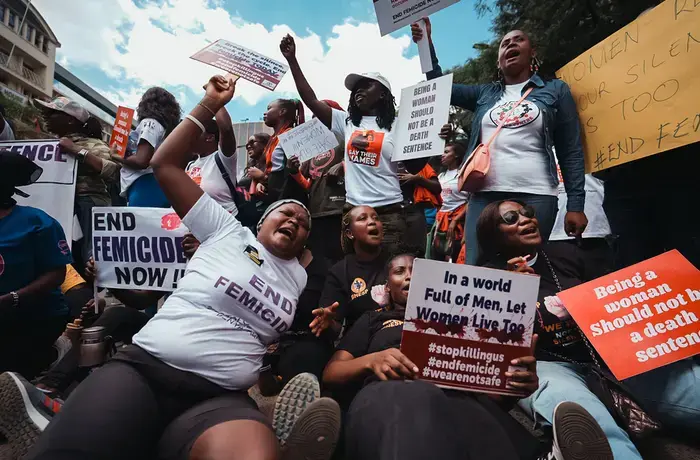
Women participate in a protest against femicide in Kenya in January 2024. At least 500 women and girls have been murdered in Kenya since 2016, despite the country's efforts to prevent gender-based violence.  Photo: William Kane Olwit
Explainer

The Beijing Declaration and Platform for Action at 30, and why that matters for gender equality

24 January 2025
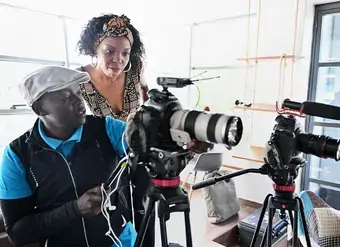
Adelle Onyango (in brown) interacts with a guest during a shoot for her Legally Clueless podcast in Nairobi.
Interview

For ALL Women and Girls: Adelle Onyango on the power of women in media

22 January 2025
Image
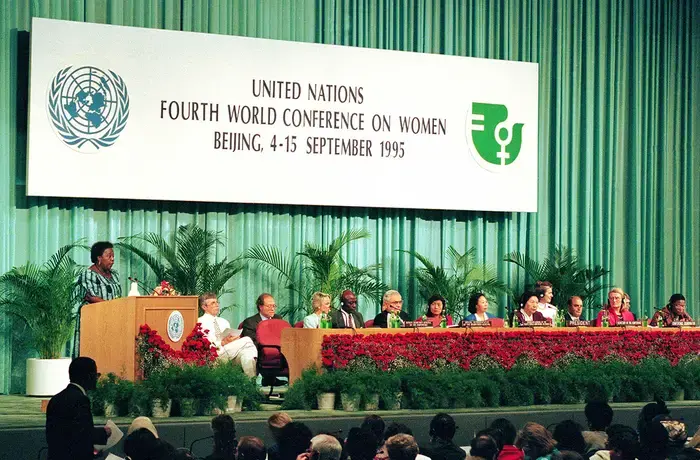
Gertrude Mongella (left, standing at the podium), Secretary-General of the Conference, addresses the session on 04 September 1995.  Photo: UN Photo/Milton Grant
Explainer

The Beijing Declaration and Platform for Action at 30: How it transformed the fight against gender-based violence

25 November 2024
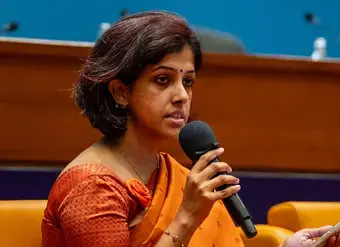
Pritha Chatterjee, from Breakthrough, India, speaks at a roundtable during the Beijing+30 Review event in Bangkok, Thailand.
Interview

For ALL Women and Girls: Pritha Chatterjee wants “a world free of violence”

22 January 2025

Topics

  • 2030 Agenda for Sustainable Development
  • Sustainable Development Goals (SDGs)
  • Environmental protection
  • Economic empowerment
  • Rural women
  • Intergovernmental processes
  • Beijing Platform for Action
  • Latin America and the Caribbean
  • Colombia

Footer menu-HQ

  • News and stories
  • Resources
  • What we do
  • How we work
  • Where we are
  • Partnerships
  • Employment
  • Procurement
  • Contact us
  • Executive Board
  • Commission on the Status of Women

Donate button menu [Footer tablet]

  • Donate

Donate button menu [Footer]

  • Donate

Social media menu

  • Facebook
  • Twitter
  • LinkedIn
  • Flickr
  • YouTube
  • Instagram
UN Women - For all women and girls

Footer bottom [Menu]

  • Copyright
  • Information security
  • Privacy notice
  • Report wrongdoing
  • Terms of use
Share this page
  • Share to Facebook
  • Share to Twitter
  • Share to LinkedIn
  • Share to E-mail

Or copy link