Universal menu

  • Global
  • Regions
    • Africa
    • Americas and the Caribbean
    • Arab States
    • Asia and the Pacific
    • Europe and Central Asia
  • Knowledge
  • Data
  • Training
  • Transparency
UN Women - For all women and girls

Main Navigation-HQ

  • Who we are
    • About us
      • About UN Women
      • Business model
      • Guiding documents
      • Worldwide presence
    • Leadership
      • Governance structure
      • Executive leadership
      • Executive Board
      • Accountability
    • Work with us
      • Employment
      • Procurement
      • Calls for proposals
      • Contact us
      • UN Women Strategic Plan 2026–2029
      • UN Women Strategic Plan 2026–2029 - social media image
        UN Women Strategic Plan 2026–2029
  • What we do
    • Focus areas
      • Ending violence against women
      • Peace and security
      • Humanitarian action
      • Leadership and governance
      • Economic empowerment
      • Innovation and technology
      • Women with disabilities
      • Youth
      • HIV and AIDS
    • How we work
      • 2030 Agenda for Sustainable Development
      • Commission on the Status of Women
      • Gender parity in the UN system
      • Intergovernmental support
      • Partnerships
      • Research and data
      • Training Centre
      • Trust funds
      • UN system coordination
      • Gender Equality Accelerators
      • Gender Equality Accelerators artwork
        Gender Equality Accelerators
  • News and stories
    • Latest
      • News
      • Articles and explainers
      • In focus
    • Media center
      • Press materials
      • Media contacts
      • Explainer: Why are women so exhausted? Care work and the mental load
      • Two adults stand at a table changing diapers on baby dolls, with laundry hanging on a clothesline behind them in a home setting.
        Explainer: Why are women so exhausted? Care work and the mental load
      • Press release: Aid cuts dismantle women’s organizations working in humanitarian crises
      • A young Ugandan woman sits with another local woman to talk
        Press release: Aid cuts dismantle women’s organizations working in humanitarian crises
  • Digital library
    • Resources
      • Publications
      • Annual reports
      • Gender snapshot
      • Progress of the world’s women
      • World survey on the role of women in development
    • GenderTerm
      • GenderTerm
      • Reprint permissions
      • UN Women Highlights 2025–2026
      • A smiling woman.
        UN Women Highlights 2025–2026
      • Gender snapshot 2026
      • A diverse group of people represented as simplified silhouettes, arranged against a dark blue background.
        Gender snapshot 2026
  • Get involved
    • How to get involved
      • For ALL Women and Girls
      • International Women's Day
      • 16 Days of Activism to End Violence against Women and Girls
      • UNiTE! Campaign to End Violence against Women
      • Generation Equality
      • He for She
Ask AI
https://84e5cfacd5c7e99f9825edf344450c.1b.environment.api.powerplatform.com/powervirtualagents/botsbyschema/crad4_websiteQA/directline/token?api-version=2022-03-01-preview
1
-
Ask your question here
AI website assistant

Hello, how can I assist you?

AI chatbot responses may be incorrect. Always verify important information.

Donate button menu

Donate

Breadcrumb

  1. Home
  2. News and stories
  3. Announcement

Website survey

We want to know how we can improve your experience on this website. Completing this survey takes less than 5 minutes.

TAKE THE SURVEY
Announcement

International Women’s Day 2025 – For ALL women and girls: Rights. Equality. Empowerment.

20 December 2024
  • Share to Facebook
  • Share to Twitter
  • Share to LinkedIn
  • Share to E-mail

On 8 March 2025, join us to celebrate International Women’s Day under the theme, “For ALL women and girls: Rights. Equality. Empowerment.”

This year’s theme calls for action that can unlock equal rights, power and opportunities for all and a feminist future where no one is left behind. Central to this vision is empowering the next generation—youth, particularly young women and adolescent girls—as catalysts for lasting change.

Image
Image of a woman with her thumbs up

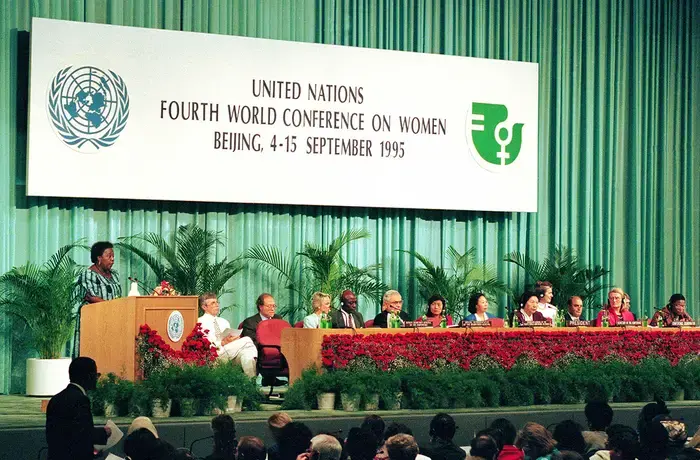
The year 2025 is a pivotal moment in the global pursuit of gender equality and women’s empowerment, as it marks the 30th anniversary of the Beijing Declaration and Platform for Action. Adopted at the Fourth World Conference on Women in 1995 in Beijing, China, by 189 governments, the Beijing Declaration and Platform for Action remains the most progressive and widely endorsed blueprint for women’s and girls’ rights worldwide. The Platform guides policies, programmes and investment that impact critical areas of our lives, such as: education, health, peace, media, political participation, economic empowerment, and the elimination of violence against women and girls. Addressing these issues, along with emerging priorities around climate justice and the power of digital technologies, is urgent, with just five years left to achieve the Sustainable Development Goals.

The 30th anniversary of the Beijing Declaration and Platform for Action also comes amid growing insecurity and compounding crises, diminishing trust in democracy and shrinking civic space. Last year alone, 612 million women and girls lived amidst the brutal realities of armed conflict, a disturbing 50 percent increase in just a decade.

Under the banner of UN Women’s global campaign to mark the 30th anniversary of the Beijing Declaration and Platform for Action, “For ALL Women and Girls”, this year’s International Women’s Day is a rallying cry to take action in three key areas:

  1. Advance women’s and girls’ rights: Fight relentlessly for women’s and girls’ full range of human rights, challenging all forms of violence, discrimination, and exploitation.
  2. Promote gender equality: Address systemic barriers, dismantle patriarchy, transform entrenched inequities, and elevate the voices of marginalized women and girls, including young people, to ensure inclusivity and empowerment.
  3. Foster empowerment: Redefine power structures by ensuring inclusive access to education, employment, leadership, and decision-making spaces. Prioritize opportunities for young women and girls to lead and innovate.

Engage media, corporate leaders, governments, community leaders, civil society and youth, and others with influence to take action in your communities. Ask leaders to take action and invest in promoting women’s rights and gender equality. Share International Women’s Day stories and messages on digital platforms, using the hashtag #ForAllWomenAndGirls to spark dialogue and inspire action.

Together, we can be the generation to close the gap to achieve gender equality. 

 The Beijing Declaration and Platform for Action transformed the women’s rights agenda. 

  1. Legal Protection: Before 1995, only 12 countries had legal sanctions against domestic violence. Today, there are 1,583 legislative measures in place across 193 countries, including 354 targeting domestic violence specifically. These laws represent a collective refusal to tolerate abuse and impunity.
  2. Access to services: The Beijing Platform for Action demanded essential services like shelters, legal aid, counseling, and healthcare for survivors of violence. These services have expanded globally, offering critical lifelines for countless women and girls.
  3. Youth engagement: The Beijing agenda inspired a new wave of young feminists who are now shaping movements for gender justice, leveraging digital platforms, and driving activism for equality.
  4. Changing social norms: The agreement adopted at the Fourth World Conference on Women agenda ignited women’s rights movements worldwide, challenging harmful stereotypes, ideas and practices, and paving the way for gender equal policies, laws, and institutions.
  5. Women’s participation in peace: The Beijing Platform for Action emphasized the need to increase women’s full and equal participation at all levels of conflict resolution and prevention, including at decision-making levels. Today, there are 112 countries with National Action Plans on women, peace and security – a significant increase from only 19 in 2010. These National Action Plans have been key in facilitating women’s participation in peacebuilding and post-conflict recovery, enabling their access to decision-making positions, and paving the way for new laws to address sexual violence in conflict.

Despite significant progress for women’s rights since the adoption of the Beijing Platform for Action in 1995, the world is experiencing new and overlapping crises and the erosion of rights. This International Women’s Day, join UN Women to march forward for women’s rights. The world cannot afford a step back.

Get involved: For ALL Women And Girls

The world cannot wait for another 30 years to fulfill the promise of gender equality. Today we stand stronger, more united, more diverse, and determined to become the first generation to achieve gender equality.

On the 30th anniversary of the Beijing Declaration and Platform for Action, join UN Women’s global campaign #ForAllWomenAndGirls.
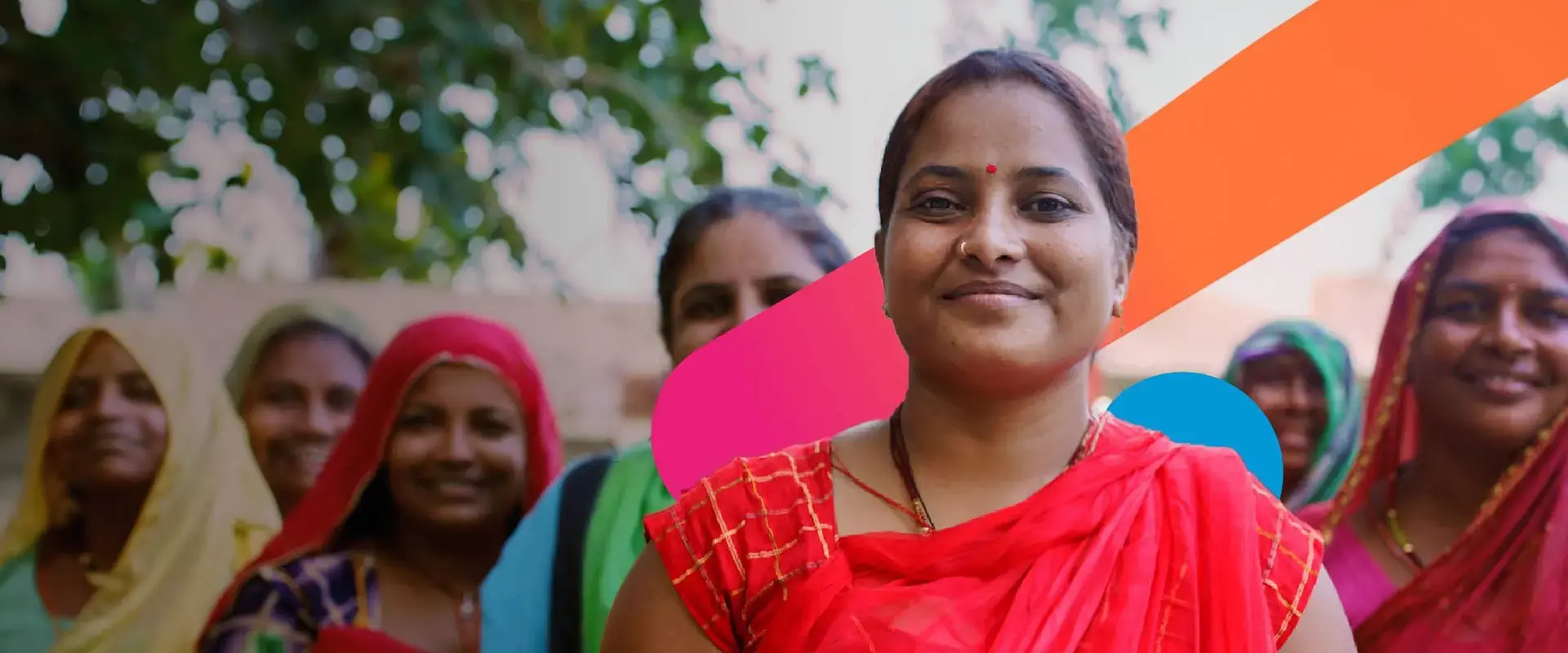
Read more
Image
For ALL women and girls web banner

Explore 30 years of action for women's rights

4
6
Image
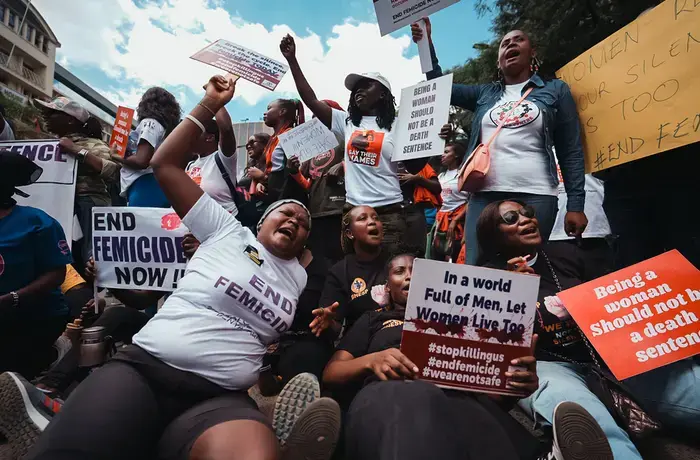
Women participate in a protest against femicide in Kenya in January 2024. At least 500 women and girls have been murdered in Kenya since 2016, despite the country's efforts to prevent gender-based violence.  Photo: William Kane Olwit
Explainer

The Beijing Declaration and Platform for Action at 30, and why that matters for gender equality

24 January 2025
UN Women Deputy Executive Director Nyaradzayi Gumbonzvanda speaking at the high-level Generation Equality dialogue on the margins of the Summit of the Future, hosted by UN Women on 22 September 2024. Photo: UN Women/Ryan Brown
Interview

Women’s rights then and now: “We have the power to transform the world” - Interview with Nyaradzayi Gumbonzvanda

22 January 2025
Sandra Aguilar participating in the Global Summit of Children and Youth for Biodiversity in the framework of COP16.
Interview

For ALL Women and Girls: Sandra Patricia Aguilar Carabalí believes that women’s leadership is key to protecting Colombia’s environment and peace

22 January 2025
Image
Gertrude Mongella (left, standing at the podium), Secretary-General of the Conference, addresses the session on 04 September 1995.  Photo: UN Photo/Milton Grant
Explainer

The Beijing Declaration and Platform for Action at 30: How it transformed the fight against gender-based violence

25 November 2024
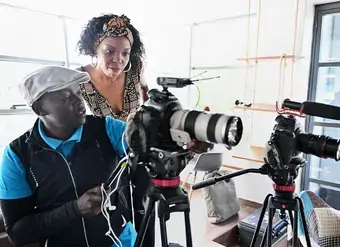
Adelle Onyango (in brown) interacts with a guest during a shoot for her Legally Clueless podcast in Nairobi.
Interview

For ALL Women and Girls: Adelle Onyango on the power of women in media

22 January 2025
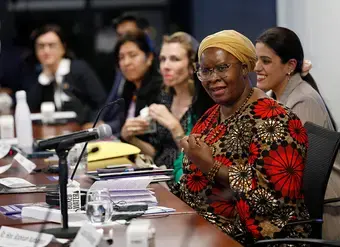
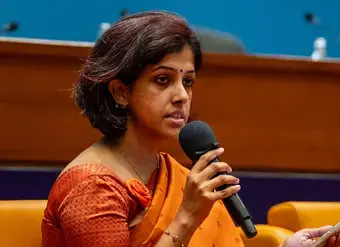
Pritha Chatterjee, from Breakthrough, India, speaks at a roundtable during the Beijing+30 Review event in Bangkok, Thailand.
Interview

For ALL Women and Girls: Pritha Chatterjee wants “a world free of violence”

22 January 2025

Topics

  • Gender equality and women’s empowerment
  • Human rights
  • Women’s rights
  • Intergovernmental processes
  • Beijing Platform for Action

Footer menu-HQ

  • News and stories
  • Resources
  • What we do
  • How we work
  • Where we are
  • Partnerships
  • Employment
  • Procurement
  • Contact us
  • Executive Board
  • Commission on the Status of Women

Donate button menu [Footer tablet]

  • Donate

Donate button menu [Footer]

  • Donate

Social media menu

  • Facebook
  • Twitter
  • LinkedIn
  • Flickr
  • YouTube
  • Instagram
UN Women - For all women and girls

Footer bottom [Menu]

  • Copyright
  • Information security
  • Privacy notice
  • Report wrongdoing
  • Terms of use
Share this page
  • Share to Facebook
  • Share to Twitter
  • Share to LinkedIn
  • Share to E-mail

Or copy link