
Universal menu

  • Global
  • Regions
    • Africa
    • Americas and the Caribbean
    • Arab States
    • Asia and the Pacific
    • Europe and Central Asia
  • Knowledge
  • Data
  • Training
  • Transparency
UN Women - For all women and girls

Main Navigation-HQ

  • Who we are
    • About us
      • About UN Women
      • Business model
      • Guiding documents
      • Worldwide presence
    • Leadership
      • Governance structure
      • Executive leadership
      • Executive Board
      • Accountability
    • Work with us
      • Employment
      • Procurement
      • Calls for proposals
      • Contact us
      • UN Women Strategic Plan 2026–2029
      • UN Women Strategic Plan 2026–2029 - social media image
        UN Women Strategic Plan 2026–2029
  • What we do
    • Focus areas
      • Ending violence against women
      • Peace and security
      • Humanitarian action
      • Leadership and governance
      • Economic empowerment
      • Innovation and technology
      • Women with disabilities
      • Youth
      • HIV and AIDS
    • How we work
      • 2030 Agenda for Sustainable Development
      • Commission on the Status of Women
      • Gender parity in the UN system
      • Intergovernmental support
      • Partnerships
      • Research and data
      • Training Centre
      • Trust funds
      • UN system coordination
      • Gender Equality Accelerators
      • Gender Equality Accelerators artwork
        Gender Equality Accelerators
  • News and stories
    • Latest
      • News
      • Articles and explainers
      • In focus
    • Media center
      • Press materials
      • Media contacts
      • Explainer: Why are women so exhausted? Care work and the mental load
      • Two adults stand at a table changing diapers on baby dolls, with laundry hanging on a clothesline behind them in a home setting.
        Explainer: Why are women so exhausted? Care work and the mental load
      • Press release: Aid cuts dismantle women’s organizations working in humanitarian crises
      • A young Ugandan woman sits with another local woman to talk
        Press release: Aid cuts dismantle women’s organizations working in humanitarian crises
  • Digital library
    • Resources
      • Publications
      • Annual reports
      • Gender snapshot
      • Progress of the world’s women
      • World survey on the role of women in development
    • GenderTerm
      • GenderTerm
      • Reprint permissions
      • UN Women Highlights 2025–2026
      • A smiling woman.
        UN Women Highlights 2025–2026
      • Gender snapshot 2026
      • A diverse group of people represented as simplified silhouettes, arranged against a dark blue background.
        Gender snapshot 2026
  • Get involved
    • How to get involved
      • For ALL Women and Girls
      • International Women's Day
      • 16 Days of Activism to End Violence against Women and Girls
      • UNiTE! Campaign to End Violence against Women
      • Generation Equality
      • He for She
Ask AI
https://84e5cfacd5c7e99f9825edf344450c.1b.environment.api.powerplatform.com/powervirtualagents/botsbyschema/crad4_websiteQA/directline/token?api-version=2022-03-01-preview
1
-
Ask your question here
AI website assistant

Hello, how can I assist you?

AI chatbot responses may be incorrect. Always verify important information.

Donate button menu

Donate

Breadcrumb

  1. Home
  2. News and stories
  3. Interview

Website survey

We want to know how we can improve your experience on this website. Completing this survey takes less than 5 minutes.

TAKE THE SURVEY
Interview

Women’s rights then and now: "Beijing 1995 changed our lives"

6 March 2025
  • Share to Facebook
  • Share to Twitter
  • Share to LinkedIn
  • Share to E-mail

#ForAllWomenAndGirls is a rallying call for action on the 30th anniversary of the Beijing Declaration and Platform for Action.  Moni Pizani Orsini, UN Women Representative in Mexico, remembers attending the 1995 conference and reflects on its relevance today.

Image
Moni Pizani Orsini, UN Women Representative in Mexico at the Country Office. UN Women / Dzilam Méndez

30 Years After Beijing: Moni Pizani Orsini shares reflections from the 1995 World Conference on Women

"Beijing changed our lives!” claims Moni Pizani Orsini. Her voice reflects conviction. She is referring to the Fourth World Conference on Women that took place in Beijing, China, in 1995. It was a milestone for women’s rights then, and fulfilling the commitments made by governments 30 years ago could usher in many more milestones today.

"We travelled across the country, encouraging people to participate," she recalls. Long before she worked with UN Women, Pizani Orsini, a native of Venezuela, together with many others, prepared for months leading up to the conference, strategizing and organizing other women. As a result, 35 women from civil society groups, including her, and 12 Venezuelan government representatives attended the Fourth World Conference on Women in Beijing.

More than 17,000 participants were at the 1995 conference, including government delegates from 189 countries and civil society. In a parallel NGO Forum in Huairou, 73 kilometers from the main venue in Beijing, some 30,000 participants gathered to discuss and influence the Beijing Declaration and Platform for Action. Many women’s rights activists went back and forth between the two spaces, and it wasn’t an easy journey.  

"There were torrential rains; we walked long distances and struggled for space," shares Pizani Orsini. But they were determined, and unified in their hope and activism. 

One of the most memorable moments for Pizani Orsini was a protest led by women’s rights activists. "We occupied the stairs of the conference venue," she reminisces. The debates were intense and passionate, women’s rights activists aspired for progress and wouldn’t take no for an answer, she added.

They demanded at least 30 percent female participation in elected positions, which became a rallying call for action to establish gender quotas for parity in politics and decision-making.
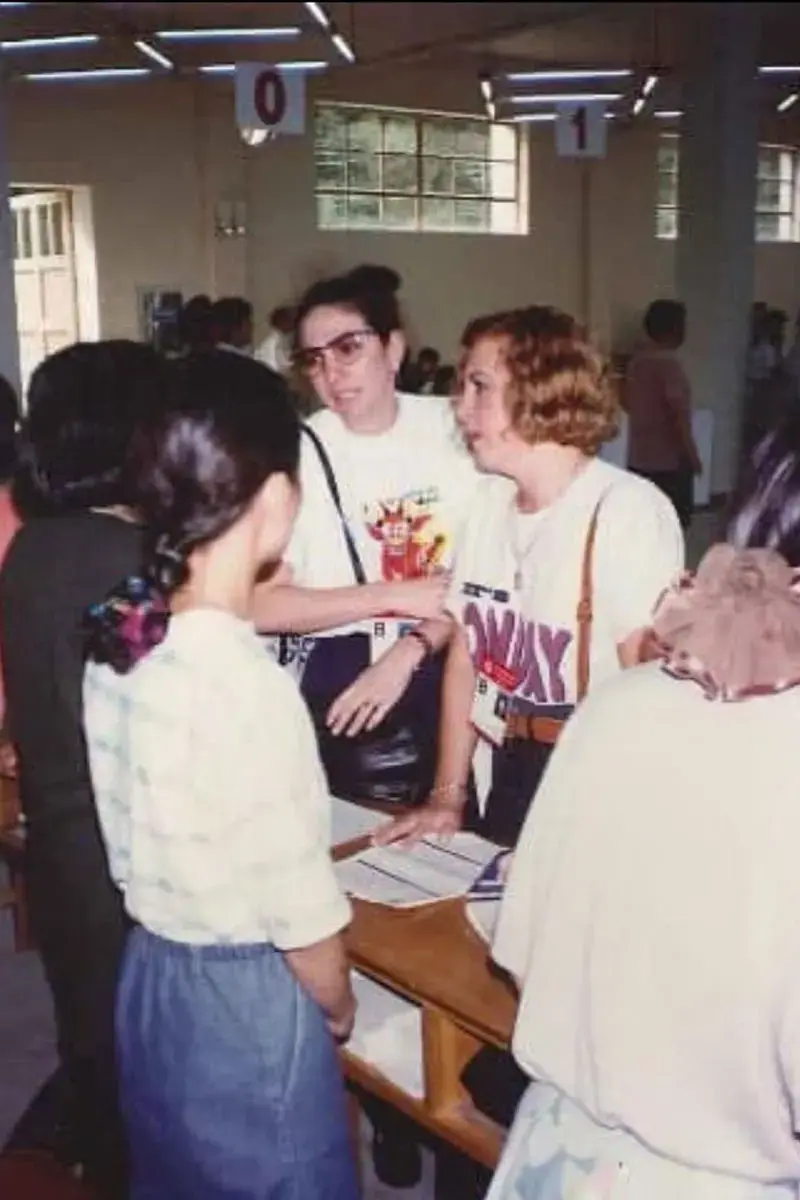
Image
 In the center, Moni Pizani Orsini at the Fourth World Conference on Women in Beijing in 1995. Photo Courtesy of Moni Pizani Orsini

"Beijing changed our lives!” 

—Moni Pizani Orsini.

From Beijing 1995 to Today: Progress, Challenges, and What’s Next

Three decades after the revolutionary plan for gender equality was agreed upon at the Beijing Conference, Pizani Orsini says its agenda is very much alive and urgent today, and "there is still a long way to go”.

A copy of the Beijing Declaration and Platform for Action still sits on top of her desk, and she refers to it often.

"Today, there are more women presidents, ministers, congress women, entrepreneurs, and academics than there were 30 years ago," Pizani Orsini says, reminding us of the progress made.

“Women in power and decision making” was one of the 12 critical areas addressed by the Beijing Platform for Action, and it has seen much traction in the Latin America and the Caribbean region since 1995. Mexico, where Pizani Orsini leads the UN Women office, has a woman president for the first time, in addition to a new Ministry of Women, a gender-equal federal cabinet, and equal legislative representation, both at the federal and state levels. As of today, 40 percent of Mexican states have women governors.

Image
In the centre, to the left, Moni Pizani Orsini, at the Sixth Regional Conference on Women of Latin America and the Caribbean, held in Mar del Plata, Argentina, in 1994. Photograph: personal archive of Moni Pizani Orsini

Pizani Orsini is looking forward to the Sixteenth Regional Conference on Women, taking place in Mexico City from 12 to 15 August this year. “It’s the first time in history that a Regional Conference on Women will be hosted by a female president,” she says.

"The Beijing Declaration remains our battle horse," she adds. The agenda is yet to be implemented fully, and the stakes are high for all women and girls, everywhere. If the commitments made by governments in the Beijing Declaration and Platform for Action were fulfilled, the world could end poverty and gender-based violence, boost sustainable economies, and have a better chance at protecting the environment.

For Pizani Orsini, the fight for gender equality belongs to all people, of all ages. "We cannot leave all the responsibility to young people; us, who are no longer so young, must continue fighting," she says.  

For ALL Women and Girls: “Lead by example”

Having worked for gender equality and women’s rights for a lifetime, Pizani Orsini has a message for activists: "Lead by example. There is no better preaching than showing through our actions what we stand for.”

“And, give space to young women. Encourage them to get involved, share experiences with them, and trust their vision.”

In her leadership role, Pizani Orsini tries to create intergenerational dialogues so that activists can learn from one another and discover new ideas.

“Women's rights are fragile and always at risk,” she cautions. There is no better time than now to join the fight for a more equal future.
Topics

  • Beijing Platform for Action
  • Latin America and the Caribbean
  • Venezuela, Bolivarian Republic of

Related content

Image
UNWomen_Placeholder
Press release

Middle East escalation could leave 11.7 million more women and girls facing food insecurity by end-2026

2 October 2026
Middle East escalation could leave 11.7 million more women and girls facing food insecurity by end-2026
Image
UNWomen_Placeholder
Press briefing

Middle East escalation threatens food security for an additional 11.7 million women and girls by the end of 2026

2 October 2026
Middle East escalation threatens food security for an additional 11.7 million women and girls by the end of 2026
Image
A young woman speaks into a microphone
News

UN Women Leaders Network champions intergenerational leadership at UNGA81

25 September 2026
UN Women Leaders Network champions intergenerational leadership at UNGA81

Footer menu-HQ

  • News and stories
  • Resources
  • What we do
  • How we work
  • Where we are
  • Partnerships
  • Employment
  • Procurement
  • Contact us
  • Executive Board
  • Commission on the Status of Women

Donate button menu [Footer tablet]

  • Donate

Donate button menu [Footer]

  • Donate

Social media menu

  • Facebook
  • Twitter
  • LinkedIn
  • Flickr
  • YouTube
  • Instagram
UN Women - For all women and girls

Footer bottom [Menu]

  • Copyright
  • Information security
  • Privacy notice
  • Report wrongdoing
  • Terms of use
Share this page
  • Share to Facebook
  • Share to Twitter
  • Share to LinkedIn
  • Share to E-mail

Or copy link