Universal menu

  • Global
  • Regions
    • Africa
    • Americas and the Caribbean
    • Arab States
    • Asia and the Pacific
    • Europe and Central Asia
  • Knowledge
  • Data
  • Training
  • Transparency
UN Women - For all women and girls

Main Navigation-HQ

  • Who we are
    • About us
      • About UN Women
      • Business model
      • Guiding documents
      • Worldwide presence
    • Leadership
      • Governance structure
      • Executive leadership
      • Executive Board
      • Accountability
    • Work with us
      • Employment
      • Procurement
      • Calls for proposals
      • Contact us
      • UN Women Strategic Plan 2026–2029
      • UN Women Strategic Plan 2026–2029 - social media image
        UN Women Strategic Plan 2026–2029
  • What we do
    • Focus areas
      • Ending violence against women
      • Peace and security
      • Humanitarian action
      • Leadership and governance
      • Economic empowerment
      • Innovation and technology
      • Women with disabilities
      • Youth
      • HIV and AIDS
    • How we work
      • 2030 Agenda for Sustainable Development
      • Commission on the Status of Women
      • Gender parity in the UN system
      • Intergovernmental support
      • Partnerships
      • Research and data
      • Training Centre
      • Trust funds
      • UN system coordination
      • Gender Equality Accelerators
      • Gender Equality Accelerators artwork
        Gender Equality Accelerators
  • News and stories
    • Latest
      • News
      • Articles and explainers
      • In focus
    • Media center
      • Press materials
      • Media contacts
      • Explainer: Why are women so exhausted? Care work and the mental load
      • Two adults stand at a table changing diapers on baby dolls, with laundry hanging on a clothesline behind them in a home setting.
        Explainer: Why are women so exhausted? Care work and the mental load
      • Press release: Aid cuts dismantle women’s organizations working in humanitarian crises
      • A young Ugandan woman sits with another local woman to talk
        Press release: Aid cuts dismantle women’s organizations working in humanitarian crises
  • Digital library
    • Resources
      • Publications
      • Annual reports
      • Gender snapshot
      • Progress of the world’s women
      • World survey on the role of women in development
    • GenderTerm
      • GenderTerm
      • Reprint permissions
      • UN Women Highlights 2025–2026
      • A smiling woman.
        UN Women Highlights 2025–2026
      • Gender snapshot 2026
      • A diverse group of people represented as simplified silhouettes, arranged against a dark blue background.
        Gender snapshot 2026
  • Get involved
    • How to get involved
      • For ALL Women and Girls
      • International Women's Day
      • 16 Days of Activism to End Violence against Women and Girls
      • UNiTE! Campaign to End Violence against Women
      • Generation Equality
      • He for She
Ask AI
https://84e5cfacd5c7e99f9825edf344450c.1b.environment.api.powerplatform.com/powervirtualagents/botsbyschema/crad4_websiteQA/directline/token?api-version=2022-03-01-preview
1
-
Ask your question here
AI website assistant

Hello, how can I assist you?

AI chatbot responses may be incorrect. Always verify important information.

Donate button menu

Donate

Breadcrumb

  1. Home
  2. News and stories
  3. News

Website survey

We want to know how we can improve your experience on this website. Completing this survey takes less than 5 minutes.

TAKE THE SURVEY
News

At least 557,000 women in Gaza are facing severe food insecurity

27 June 2024
  • Share to Facebook
  • Share to Twitter
  • Share to LinkedIn
  • Share to E-mail

A high risk of famine persists across the Gaza Strip as long as the ongoing conflict continues and humanitarian access remains restricted, according to a new report by the Integrated Food Security Phase Classification (IPC).

Food insecurity affects women in Gaza in multiple ways. UN Women estimates that at least 557,000 women in Gaza are facing severe food insecurity, and find themselves facing old and new gender-based vulnerabilities.

Image
A family is seen sitting around a bowl of beans in their tent in Rafah, in the south of the Gaza Strip.
A family is seen sitting around a bowl of beans in their tent in Rafah, in the south of the Gaza Strip. Photo: UNICEF/Abed Zagout

The situation is particularly concerning for mothers and adult women, who often prioritize feeding others over themselves and report greater difficulty accessing food compared to men, leading many to skip meals or reduce their intake to ensure their children are fed. Amid the conflict, women’s care burden is increased, their access to services is limited, their health and food security are compromised, and they face higher risks of being subjected to all types of gender-based violence.

Here are five key facts explaining how food insecurity affects women in Gaza, based on a recent UN Women survey of people across the Gaza Strip1:

  1. Care burden: Women struggle to protect their children's physical and mental well-being while bearing increased caregiving and domestic responsibilities, particularly in tents and overcrowded households. Seventy-seven per cent of male and female survey respondents reported that caring for children, including feeding and physical care, is primarily a mother's responsibility.
  2. Physical health and weight loss: Food insecurity and malnutrition are widespread in Gaza. Seven out of 10 women interviewed by UN Women reported weight loss in the last 30 days, and more than half experience frequent dizziness.
  3. Food assistance: Over 80 per cent of female respondents rely on food assistance as their primary source of food, yet 87.3 per cent believe that food assistance is not distributed fairly based on family size. Previous evidence collected by UN Women suggests that mothers often eat last and least, skipping meals to feed their children. Additionally, 83.5 per cent stated that the assistance did not meet their household needs.
  4. Complications in pregnancy, childbirth, and postpartum: Pregnant and lactating women face heightened health risks due to insufficient medical care and nutrition. Seventy-six per cent of pregnant women reported anemia, and 99 per cent face challenges accessing necessary nutritional products and supplements, endangering maternal and infant health. Among households with breastfeeding mothers, 55 per cent reported health conditions impeding their ability to breastfeed, and 99 per cent faced challenges securing enough breastmilk, compromising infant survival, growth, and development.
  5. Kitchen access and unsafe cooking methods: Only one-third of respondents reported having access to a kitchen where they can cook meals. Additionally, 69 per cent rely on unsafe cooking methods, such as using wood and other waste materials, which increases health risks. Women, who traditionally handle meal preparation, are exposed to hazardous smoke and pollutants, leading to respiratory and other health issues.

“When we were living in Gaza City, because of the war, suddenly we did not have food anymore,” said one 16-year-old girl interviewed as part of UN Women’s survey. “There were no vegetables in the market and no food at all. We had to eat the worst things.”

“For example, white flour was not available; we had to mix wheat flour with animal fodder,” she said. “Since it was the first time for us to eat animal fodder, our stomachs were in pain. Everyone suffered from stomach pain. We had days where there was no food at all, we felt tired and exhausted. Also, there were no hospitals, and some days we could not leave the house because of the bombing.”

Recommended actions

  • Allow for humanitarian access: Ensure unimpeded access to all populations across the Gaza Strip.
  • Provide lifesaving humanitarian assistance: Address the extremely high severity and magnitude of acute food insecurity and alarming WASH and health conditions through the restoration of health, nutrition, and WASH services, and the provision of safe, nutritious, and sufficient humanitarian food assistance to all the people in need. All aid supplies, including medicines, fuel, and other necessities, should be allowed to enter and move throughout the Gaza Strip.
  • Provide malnutrition prevention services and treatment: Deliver acute malnutrition treatment services, while maintaining and protecting stabilization centres and outpatient treatment. Promote and support breastfeeding, and provide ready to use infant formula for non-breastfed infants. Provide complementary foods and micronutrient supplements for young children, pregnant and breastfeeding women, the chronically ill, and the elderly.
  • Restore production and market systems: Restore the functioning of market infrastructure and bakeries, combined with cash-based interventions where feasible. Rehabilitate food production systems as soon as possible, including horticulture, livestock, and fishing. Commercial good delivery should continue, however not at the expense of humanitarian assistance.

1. UN Women survey of 295 men and 305 women across the Gaza Strip, April 2024
Topics

  • Peace and security
  • Conflict, war
  • Arab States/North Africa
  • Palestine, State of

Related content

Image
UNWomen_Placeholder
Press release

Middle East escalation could leave 11.7 million more women and girls facing food insecurity by end-2026

2 October 2026
Middle East escalation could leave 11.7 million more women and girls facing food insecurity by end-2026
Image
UNWomen_Placeholder
Press briefing

Middle East escalation threatens food security for an additional 11.7 million women and girls by the end of 2026

2 October 2026
Middle East escalation threatens food security for an additional 11.7 million women and girls by the end of 2026
Image
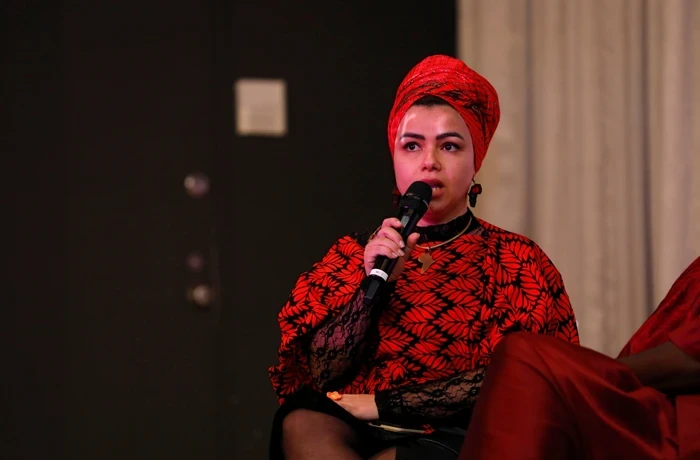
A young woman speaks into a microphone
News

UN Women Leaders Network champions intergenerational leadership at UNGA81

25 September 2026
UN Women Leaders Network champions intergenerational leadership at UNGA81

Footer menu-HQ

  • News and stories
  • Resources
  • What we do
  • How we work
  • Where we are
  • Partnerships
  • Employment
  • Procurement
  • Contact us
  • Executive Board
  • Commission on the Status of Women

Donate button menu [Footer tablet]

  • Donate

Donate button menu [Footer]

  • Donate

Social media menu

  • Facebook
  • Twitter
  • LinkedIn
  • Flickr
  • YouTube
  • Instagram
UN Women - For all women and girls

Footer bottom [Menu]

  • Copyright
  • Information security
  • Privacy notice
  • Report wrongdoing
  • Terms of use
Share this page
  • Share to Facebook
  • Share to Twitter
  • Share to LinkedIn
  • Share to E-mail

Or copy link