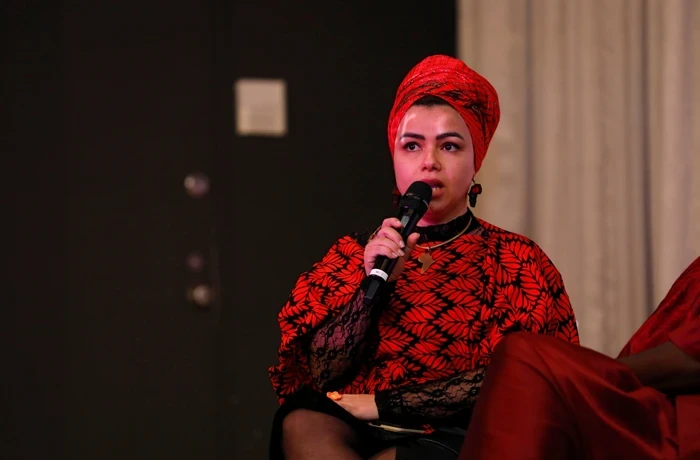
Media briefing by Maryse Guimond, UN Women Special Representative in Palestine, about her visit to Gaza
Maryse Guimond spoke at the noon briefing at the United Nations Headquarters from Jerusalem about her visit to Gaza in June
I have recently finished a one-week mission inside Gaza. In my six years in this job I visited Gaza more than 50 times, many times during previous escalations, including the war of 2021, but this time nothing prepared me for the total destruction and inhumanity I saw. What I witnessed defied my worst fears for the women and girls I have been working with for many years.
It was unbearable to witness the daily escalation of violence and destruction of a war on women with no end in sight. Wars are never gender-neutral but, no doubt, in Gaza, one million women and young girls are bearing the worst brunt of nine months of war. They are losing their lives, they are sick, hungry, exhausted, holding families together despite their constant fear and loss.
Each woman I met was a story of loss. More than 10,000 women have lost their lives. More than 6,000 families lost their mothers. Nearly one million women and girls have lost their homes, their loved ones, their life memories. Gaza is more than two million stories of loss.
A displaced woman explained to me why it was so important for her to go to her apartment in Gaza City as soon as there would be a ceasefire. While she was aware that it had been seriously damaged, she wanted to see what she could salvage, collect some of her family’s belongings and memories. I have heard this wish expressed multiple times. Unfortunately, after my departure from Gaza she was informed that her apartment had been burned down, nothing could be salvaged. No home to go back to.
Women in Gaza are living in constant movement, constant fear, being constantly chased. There are no safe places to be a woman in Gaza. Nine out of 10 people living in Gaza are displaced. Nearly 1 million women and girls have been displaced five, seven times, moving to areas that are increasingly smaller and where they are targets of attacks and bombing. They move with no cash, with no possessions, with no clue how and where they are going to live. Many women told me they will not move again as it does not make much difference for their safety or survival. Since I left Gaza, there have been eight new waves of displacement with no guarantee of any safety for anyone.
As I arrived in Gaza and the fence closed behind me at Kerem Shalom crossing, I could not recognize the Gaza I knew. I entered a world of devastation and total deprivation. Homes, hospitals, shops, schools, universities have been destroyed. Crowds of men, women, and children trying to survive in makeshift tents and overcrowded shelters surrounded by rubble and total destruction.
Amidst the continued sounds of fighting and drones, I saw lives shattered, homes destroyed, and communities and families torn apart. Women asked me, ‘when can we go back to our homes?’ Boys and girls were asking me when will this war be over, and I had no answer for them.
I cannot underline enough the impact that this war has had on women and girls. I barely recognized some women whom I knew before the war. The last nine months is embedded on their faces and their bodies. UN Women data shows that 557,000 women are suffering acute food insecurity, more than half a million women are severely hungry, eating the last and the least in their families, skipping meals and not eating healthy food for months and months.
But the message I bring from Gaza is not only about devastation and death. The women of Gaza show remarkable strength and humanity in their struggle for survival, with hope and solidarity amidst the devastation. I have met amazing women who are taking care of their families and communities in the face of starvation, death, disease, displacement.
I met heroic women-led organizations protecting the rights and dignity of the people of Gaza, despite the lack of funding and access to basic supplies and services. They remain active inside Gaza despite extremely difficult conditions and urgently need support to continue their work.
UN Women recently published a Gender Alert on the impact of the war on 25 women-led organizations in the OPT, with 18 based in Gaza. These organizations, with over 1,500 personnel, provide essential services like shelter site management, hygiene kits, food parcels, and psychosocial support, despite the challenges of war, destruction, and reduced funding. They need financial support to sustain their efforts but they also need an increase of women’s representation in the decision-making tables in every step of the humanitarian assistance, from planning to final delivery. And they need them now!
To quote the representative of a women’s organization, "The question is not what women need; the question should be what they don’t need”. Women don’t want to die, they don’t want to bury their loved ones, they don’t want to be left alone to suffer. My experience in Gaza clarified the gravity of this message.
I would like to end by echoing the UN Secretary-General and sister UN agencies: Gaza needs peace; Gaza needs full access to humanitarian assistance through the opening of land crossings. We need a ceasefire now, and all hostages must be released.