Universal menu

  • Global
  • Regions
    • Africa
    • Americas and the Caribbean
    • Arab States
    • Asia and the Pacific
    • Europe and Central Asia
  • Knowledge
  • Data
  • Training
  • Transparency
UN Women - For all women and girls

Main Navigation-HQ

  • Who we are
    • About us
      • About UN Women
      • Business model
      • Guiding documents
      • Worldwide presence
    • Leadership
      • Governance structure
      • Executive leadership
      • Executive Board
      • Accountability
    • Work with us
      • Employment
      • Procurement
      • Calls for proposals
      • Contact us
      • UN Women Strategic Plan 2026–2029
      • UN Women Strategic Plan 2026–2029 - social media image
        UN Women Strategic Plan 2026–2029
  • What we do
    • Focus areas
      • Ending violence against women
      • Peace and security
      • Humanitarian action
      • Leadership and governance
      • Economic empowerment
      • Innovation and technology
      • Women with disabilities
      • Youth
      • HIV and AIDS
    • How we work
      • 2030 Agenda for Sustainable Development
      • Commission on the Status of Women
      • Gender parity in the UN system
      • Intergovernmental support
      • Partnerships
      • Research and data
      • Training Centre
      • Trust funds
      • UN system coordination
      • Gender Equality Accelerators
      • Gender Equality Accelerators artwork
        Gender Equality Accelerators
  • News and stories
    • Latest
      • News
      • Articles and explainers
      • In focus
    • Media center
      • Press materials
      • Media contacts
      • Explainer: Why are women so exhausted? Care work and the mental load
      • Two adults stand at a table changing diapers on baby dolls, with laundry hanging on a clothesline behind them in a home setting.
        Explainer: Why are women so exhausted? Care work and the mental load
      • Press release: Aid cuts dismantle women’s organizations working in humanitarian crises
      • A young Ugandan woman sits with another local woman to talk
        Press release: Aid cuts dismantle women’s organizations working in humanitarian crises
  • Digital library
    • Resources
      • Publications
      • Annual reports
      • Gender snapshot
      • Progress of the world’s women
      • World survey on the role of women in development
    • GenderTerm
      • GenderTerm
      • Reprint permissions
      • UN Women Highlights 2025–2026
      • A smiling woman.
        UN Women Highlights 2025–2026
      • Gender snapshot 2026
      • A diverse group of people represented as simplified silhouettes, arranged against a dark blue background.
        Gender snapshot 2026
  • Get involved
    • How to get involved
      • For ALL Women and Girls
      • International Women's Day
      • 16 Days of Activism to End Violence against Women and Girls
      • UNiTE! Campaign to End Violence against Women
      • Generation Equality
      • He for She
Ask AI
https://84e5cfacd5c7e99f9825edf344450c.1b.environment.api.powerplatform.com/powervirtualagents/botsbyschema/crad4_websiteQA/directline/token?api-version=2022-03-01-preview
1
-
Ask your question here
AI website assistant

Hello, how can I assist you?

AI chatbot responses may be incorrect. Always verify important information.

Donate button menu

Donate

Breadcrumb

  1. Home
  2. News and stories
  3. Press release

Website survey

We want to know how we can improve your experience on this website. Completing this survey takes less than 5 minutes.

TAKE THE SURVEY
Press release

Four years after Taliban takeover, Afghans overwhelmingly back girls’ education

New UN Women report finds 92 per cent of Afghans support girls’ secondary schooling.

29 August 2025
  • Share to Facebook
  • Share to Twitter
  • Share to LinkedIn
  • Share to E-mail

Kabul – Despite the ongoing ban on girls’ secondary education, Afghans across gender and socioeconomic backgrounds almost universally support girls’ right to learn, according to a new UN Women Gender Alert.

The alert looks at the current situation for women and girls across ten key areas, including education and employment, safety and mobility, shedding light on the impact of the crystallizing system of restrictions four years after the Taliban takeover.

Image
Afghan women sit on a classroom floor and listen closely to a teacher
Women attend a business training class, which was supported by UN Women. Photo: UN Women/Sayed Habib Bidell

In a nationwide, door-to-door survey of more than 2,000 Afghans, 92 per cent said it was “important” for girls to continue their schooling, with support cutting across rural and urban communities.

Among rural populations, 87 per cent of men and 95 per cent of women supported girls’ schooling, while in urban areas the figure was 95 per cent for both men and women.

“This is almost always the first thing girls tell us – they are desperate to learn and just want the chance to gain an education,” said UN Women’s Special Representative in Afghanistan, Susan Ferguson.

“Families also say they want their daughters to have that dream. They know that literacy and learning can change the trajectory of a girl’s life, in a country where half the population is living in poverty.”

In areas where the Taliban ban on women working for NGOs is reportedly enforced, in a separate UN Women telesurvey from July and August 2025, 97 per cent of women surveyed reported that the ban has had a negative impact on their day-to-day lives.

More than half of NGOs in Afghanistan are now reporting it has affected their ability to reach women and girls with vital services.

Other key findings in UN Women’s Afghanistan Gender Alert include:

  • Despite the systemic and on-going limitations on their lives, 40 per cent of Afghan women still imagine a future where change and equality are possible – even as nearly every avenue for public participation has closed.
  • Almost three-quarters of women across all regions of the country described their mental health as “bad” or “very bad”, in a telesurvey conducted in July and August 2025.
  • Three-quarters of women report having no influence over decisions in their communities; half said they had no influence within their extended family and one-quarter within their household, according to consultations conducted by UN Women, UNAMA and the International Organization for Migration (IOM) in April 2025.
  • 14 per cent of women reported leaving their homes only once a week, compared to 2 per cent of men, and only 41 per cent of women left their homes at least once a day, compared to 88 per cent of men, in consultations conducted by UN Women, UNAMA and IOM in June 2025.

Gender alert: Four years of Taliban rule: Afghan women resist as restrictions tighten

Gender alert: Four years of Taliban rule: Afghan women resist as restrictions tighten
Read the report
Download

Topics

  • Education
  • Human rights
  • Women’s rights
  • Peace and security
  • Asia and the Pacific
  • Afghanistan

Related content

Image
UNWomen_Placeholder
Press briefing

Middle East escalation threatens food security for an additional 11.7 million women and girls by the end of 2026

2 October 2026
Middle East escalation threatens food security for an additional 11.7 million women and girls by the end of 2026
Image
UNWomen_Placeholder
Press release

Middle East escalation could leave 11.7 million more women and girls facing food insecurity by end-2026

2 October 2026
Middle East escalation could leave 11.7 million more women and girls facing food insecurity by end-2026
Image
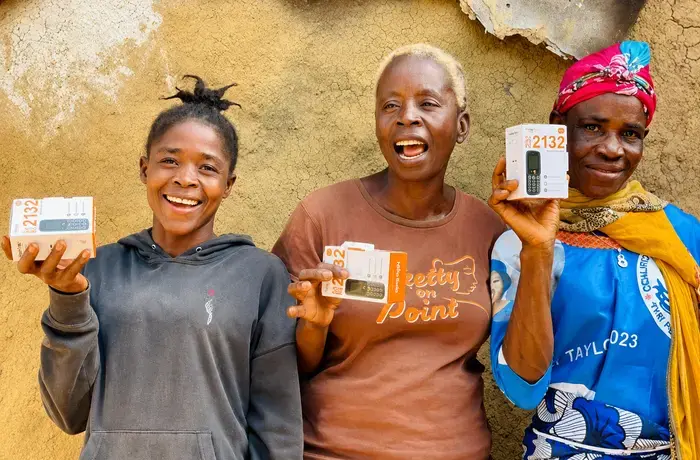
Ma Nowai Kaine (centre) and two other women from Sargent Kollie Town, Bong County, Liberia, hold mobile phones received through the D4WEE Project, implemented by UN Women with support from the Orange Foundation. Photo: UN Women/Aisha Kolubah.
Feature

For rural women in Liberia, digital and economic empowerment go hand-in-hand

1 October 2026
For rural women in Liberia, digital and economic empowerment go hand-in-hand

Footer menu-HQ

  • News and stories
  • Resources
  • What we do
  • How we work
  • Where we are
  • Partnerships
  • Employment
  • Procurement
  • Contact us
  • Executive Board
  • Commission on the Status of Women

Donate button menu [Footer tablet]

  • Donate

Donate button menu [Footer]

  • Donate

Social media menu

  • Facebook
  • Twitter
  • LinkedIn
  • Flickr
  • YouTube
  • Instagram
UN Women - For all women and girls

Footer bottom [Menu]

  • Copyright
  • Information security
  • Privacy notice
  • Report wrongdoing
  • Terms of use
Share this page
  • Share to Facebook
  • Share to Twitter
  • Share to LinkedIn
  • Share to E-mail

Or copy link