Universal menu

  • Global
  • Regions
    • Africa
    • Americas and the Caribbean
    • Arab States
    • Asia and the Pacific
    • Europe and Central Asia
  • Knowledge
  • Data
  • Training
  • Transparency
UN Women - For all women and girls

Main Navigation-HQ

  • Who we are
    • About us
      • About UN Women
      • Business model
      • Guiding documents
      • Worldwide presence
    • Leadership
      • Governance structure
      • Executive leadership
      • Executive Board
      • Accountability
    • Work with us
      • Employment
      • Procurement
      • Calls for proposals
      • Contact us
      • UN Women Strategic Plan 2026–2029
      • UN Women Strategic Plan 2026–2029 - social media image
        UN Women Strategic Plan 2026–2029
  • What we do
    • Focus areas
      • Ending violence against women
      • Peace and security
      • Humanitarian action
      • Leadership and governance
      • Economic empowerment
      • Innovation and technology
      • Women with disabilities
      • Youth
      • HIV and AIDS
    • How we work
      • 2030 Agenda for Sustainable Development
      • Commission on the Status of Women
      • Gender parity in the UN system
      • Intergovernmental support
      • Partnerships
      • Research and data
      • Training Centre
      • Trust funds
      • UN system coordination
      • Gender Equality Accelerators
      • Gender Equality Accelerators artwork
        Gender Equality Accelerators
  • News and stories
    • Latest
      • News
      • Articles and explainers
      • In focus
    • Media center
      • Press materials
      • Media contacts
      • Explainer: Why are women so exhausted? Care work and the mental load
      • Two adults stand at a table changing diapers on baby dolls, with laundry hanging on a clothesline behind them in a home setting.
        Explainer: Why are women so exhausted? Care work and the mental load
      • Press release: Aid cuts dismantle women’s organizations working in humanitarian crises
      • A young Ugandan woman sits with another local woman to talk
        Press release: Aid cuts dismantle women’s organizations working in humanitarian crises
  • Digital library
    • Resources
      • Publications
      • Annual reports
      • Gender snapshot
      • Progress of the world’s women
      • World survey on the role of women in development
    • GenderTerm
      • GenderTerm
      • Reprint permissions
      • UN Women Highlights 2025–2026
      • A smiling woman.
        UN Women Highlights 2025–2026
      • Gender snapshot 2026
      • A diverse group of people represented as simplified silhouettes, arranged against a dark blue background.
        Gender snapshot 2026
  • Get involved
    • How to get involved
      • For ALL Women and Girls
      • International Women's Day
      • 16 Days of Activism to End Violence against Women and Girls
      • UNiTE! Campaign to End Violence against Women
      • Generation Equality
      • He for She
Ask AI
https://84e5cfacd5c7e99f9825edf344450c.1b.environment.api.powerplatform.com/powervirtualagents/botsbyschema/crad4_websiteQA/directline/token?api-version=2022-03-01-preview
1
-
Ask your question here
AI website assistant

Hello, how can I assist you?

AI chatbot responses may be incorrect. Always verify important information.

Donate button menu

Donate

Breadcrumb

  1. Home
  2. News and stories
  3. Press release

Website survey

We want to know how we can improve your experience on this website. Completing this survey takes less than 5 minutes.

TAKE THE SURVEY
Press release

Nearly 160,000 women and girls impacted by Nepal flash floods

Flood survivors now face severe shortages of food and water, disrupted health and protection services, and heightened risks of violence and exploitation. These risks are particularly acute for women and girls.

28 August 2026
  • Share to Facebook
  • Share to Twitter
  • Share to LinkedIn
  • Share to E-mail

Kathmandu – An estimated 157,050 women and girls living in Nepal’s Rasuwa and Nuwakot districts have been directly and indirectly affected by flash floods that swept through communities on 26 August 2026.

More than 500 people have been killed and nearly 1,000 remain unaccounted. Some 10,000 homes have been washed away, while critical infrastructure has been destroyed. With search and rescue operations still under way, the full scale of the disaster is continuing to emerge.

Survivors now face severe shortages of food and water, disrupted health and protection services, and heightened risks of violence and exploitation. These risks are particularly acute for women and girls.

Image
A village is devastated by floods, thick with mud and debris
The aftermath of the recent flash flood in Nepal witnessed from the grounds of Nuwakot. Photo: UN Women/Srijana Bhatta

“The full scale of these horrific floods is still emerging”, said Patricia Fernandez-Pacheco, UN Women Representative to Nepal. “What we do know is that existing risks for women and girls skyrocket when disasters hit. More women and girls are exploited and abused. More women and girls go hungry and without medicine when resources are scarce. There is even evidence from previous disasters to suggest women are more likely to die than men.”

In all disasters, women and girls are impacted disproportionately. In addition to increased risks of violence and exploitation, women take on vastly greater unpaid care responsibilities than men, are forced to travel even further to secure water, and fall quicker and more deeply into poverty.

Women also experience barriers to accessing information and assistance. Across Rasuwa, Nuwakot, Dhading Gorkha and Chitwan districts, approximately one in three women is illiterate, making it harder to access information on relief efforts, complete registration processes, and independently claim assistance.

One in three households across Bagmati Province is headed by a woman, out of which one third rely on already strained remittances.

Within the Government of Nepal’s overall response, and in partnership with UN agencies, women's rights organizations and humanitarian partners, UN Women is working to ensure women and girls can access essential services and protection, and that the response addresses their needs.

UN Women is also working to ensure women can access response and recovery assistance independently and participate equally in recovery, including through direct livelihood support, reducing unpaid care responsibilities, and removing barriers related to documentation, property ownership, language, and mobility.

As part of our response, UN Women is mobilizing resources for its Community Kitchen initiative, a women-led emergency response mechanism providing immediate food assistance while creating opportunities for women’s leadership, livelihoods, and longer-term recovery.

UN Women is urgently appealing for USD 2 million to ensure women and girls affected by the floods can access the assistance and protection they need, including those who are displaced, or at heightened risk of violence, trafficking, and exploitation.

“We urgently need resources to reach women and girls who are cut off, at risk and struggling to meet their most basic needs. A response that meets the needs of women and girls can help prevent further harm and ensure women and girls are able to recover with safety, dignity and agency”, said Fernandez-Pacheco.

About UN Women

UN Women exists to advance women’s rights, gender equality and the empowerment of all women and girls. As the lead UN entity on gender equality, we shift laws, institutions, social behaviours and services to close the gender gap and build an equal world for all women and girls. We keep the rights of women and girls at the centre of global progress – always, everywhere. Because gender equality is not just what we do. It is who we are.

Note to editors

Contact the UN Women Media Team at [ Click to reveal ] 
Topics

  • 2030 Agenda for Sustainable Development
  • Climate change
  • Humanitarian action
  • Crisis response and recovery
  • Disaster risk reduction
  • Asia and the Pacific
  • Nepal

Related content

Image
UNWomen_Placeholder
Press briefing

Middle East escalation threatens food security for an additional 11.7 million women and girls by the end of 2026

2 October 2026
Middle East escalation threatens food security for an additional 11.7 million women and girls by the end of 2026
Image
UNWomen_Placeholder
Press release

Middle East escalation could leave 11.7 million more women and girls facing food insecurity by end-2026

2 October 2026
Middle East escalation could leave 11.7 million more women and girls facing food insecurity by end-2026
Image
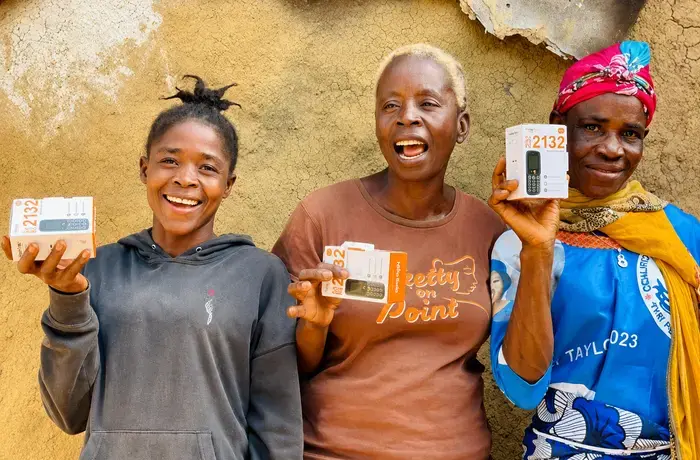
Ma Nowai Kaine (centre) and two other women from Sargent Kollie Town, Bong County, Liberia, hold mobile phones received through the D4WEE Project, implemented by UN Women with support from the Orange Foundation. Photo: UN Women/Aisha Kolubah.
Feature

For rural women in Liberia, digital and economic empowerment go hand-in-hand

1 October 2026
For rural women in Liberia, digital and economic empowerment go hand-in-hand

Footer menu-HQ

  • News and stories
  • Resources
  • What we do
  • How we work
  • Where we are
  • Partnerships
  • Employment
  • Procurement
  • Contact us
  • Executive Board
  • Commission on the Status of Women

Donate button menu [Footer tablet]

  • Donate

Donate button menu [Footer]

  • Donate

Social media menu

  • Facebook
  • Twitter
  • LinkedIn
  • Flickr
  • YouTube
  • Instagram
UN Women - For all women and girls

Footer bottom [Menu]

  • Copyright
  • Information security
  • Privacy notice
  • Report wrongdoing
  • Terms of use
Share this page
  • Share to Facebook
  • Share to Twitter
  • Share to LinkedIn
  • Share to E-mail

Or copy link