Universal menu

  • Global
  • Regions
    • Africa
    • Americas and the Caribbean
    • Arab States
    • Asia and the Pacific
    • Europe and Central Asia
  • Knowledge
  • Data
  • Training
  • Transparency
UN Women - For all women and girls

Main Navigation-HQ

  • Who we are
    • About us
      • About UN Women
      • Business model
      • Guiding documents
      • Worldwide presence
    • Leadership
      • Governance structure
      • Executive leadership
      • Executive Board
      • Accountability
    • Work with us
      • Employment
      • Procurement
      • Calls for proposals
      • Contact us
      • UN Women Strategic Plan 2026–2029
      • UN Women Strategic Plan 2026–2029 - social media image
        UN Women Strategic Plan 2026–2029
  • What we do
    • Focus areas
      • Ending violence against women
      • Peace and security
      • Humanitarian action
      • Leadership and governance
      • Economic empowerment
      • Innovation and technology
      • Women with disabilities
      • Youth
      • HIV and AIDS
    • How we work
      • 2030 Agenda for Sustainable Development
      • Commission on the Status of Women
      • Gender parity in the UN system
      • Intergovernmental support
      • Partnerships
      • Research and data
      • Training Centre
      • Trust funds
      • UN system coordination
      • Gender Equality Accelerators
      • Gender Equality Accelerators artwork
        Gender Equality Accelerators
  • News and stories
    • Latest
      • News
      • Articles and explainers
      • In focus
    • Media center
      • Press materials
      • Media contacts
      • Explainer: Why are women so exhausted? Care work and the mental load
      • Two adults stand at a table changing diapers on baby dolls, with laundry hanging on a clothesline behind them in a home setting.
        Explainer: Why are women so exhausted? Care work and the mental load
      • Press release: Aid cuts dismantle women’s organizations working in humanitarian crises
      • A young Ugandan woman sits with another local woman to talk
        Press release: Aid cuts dismantle women’s organizations working in humanitarian crises
  • Digital library
    • Resources
      • Publications
      • Annual reports
      • Gender snapshot
      • Progress of the world’s women
      • World survey on the role of women in development
    • GenderTerm
      • GenderTerm
      • Reprint permissions
      • UN Women Highlights 2025–2026
      • A smiling woman.
        UN Women Highlights 2025–2026
      • Gender snapshot 2026
      • A diverse group of people represented as simplified silhouettes, arranged against a dark blue background.
        Gender snapshot 2026
  • Get involved
    • How to get involved
      • For ALL Women and Girls
      • International Women's Day
      • 16 Days of Activism to End Violence against Women and Girls
      • UNiTE! Campaign to End Violence against Women
      • Generation Equality
      • He for She
Ask AI
https://84e5cfacd5c7e99f9825edf344450c.1b.environment.api.powerplatform.com/powervirtualagents/botsbyschema/crad4_websiteQA/directline/token?api-version=2022-03-01-preview
1
-
Ask your question here
AI website assistant

Hello, how can I assist you?

AI chatbot responses may be incorrect. Always verify important information.

Donate button menu

Donate

Breadcrumb

  1. Home
  2. News and stories
  3. Press release

Website survey

We want to know how we can improve your experience on this website. Completing this survey takes less than 5 minutes.

TAKE THE SURVEY
Press release

One in three institutions built to advance gender equality stripped of power in just two years, new UN report reveals

The UN warns that a deliberate political retreat from gender equality is reversing decades of progress, and calls for equal power for women everywhere.

17 September 2026
  • Share to Facebook
  • Share to Twitter
  • Share to LinkedIn
  • Share to E-mail

The Gender Snapshot 2026 report, released today by UN Women and the United Nations Department of Economic and Social Affairs (UN DESA), shows that where women hold real power, outcomes improve across every dimension of the 2030 Agenda for Sustainable Development – from peace to education, and from poverty to climate action. Yet the very institutions built over decades to advance gender equality are being systematically weakened, stalling or reversing progress at precisely the moment when the world cannot afford to go backwards.

The findings of the Gender Snapshot 2026 report reveal a political retreat from gender equality that is crosscutting, measurable, and compounding. One in three institutional mechanisms for gender equality has had its institutional power eroded over the past two years. Around one in four have seen their operating budgets cut over the same period, and nearly one in 10 have lost control of their budget altogether. Funding for gender equality has fallen to its lowest level since 2021, with funding for women’s rights organizations most impacted. Meanwhile, amid funding cuts, 42 per cent of UN entities report a weakening of their gender equality efforts.

The concentration of political power remains stark: Six in seven countries are led by men. Women continue to face systemic barriers at every stage. The cost of running for office can exceed 100 times a country’s average per-capita income, excluding many women before the race even begins. In some countries, as many as eight in 10 women running for office face violence in public life. And when women do reach cabinet, they are still disproportionately steered away from the portfolios that command the highest security and economic power. Close to nine in 10 defense ministers and more than eight in 10 finance ministers are men.

As women continue to face barriers to equal participation and influence, decades of political and legal gains on gender equality are increasingly being contested and, in some cases, dismantled. Not one single indicator on the Sustainable Development Goal for gender equality (SDG 5) is on track to be met by 2030.

“The evidence is clear: When women lead, societies are stronger, economies are more resilient and outcomes are better for everyone. Yet as long as power remains concentrated in institutions that systematically exclude women, societies will continue to fall short of their full potential. Equality cannot be achieved without equal access to power – because equality without power is not equality at all”, said UN Women Executive Director Sima Bahous.

“The data leave no room for ambiguity: At current rates, gender equality remains 171 years away. What the Gender Snapshot 2026 shows is that this is not inevitable – it is the result of choices, made visible through data. Investing in gender equality, institutions, and the statistical systems that hold them to account is not a cost. It is the fastest route back to the 2030 Agenda’s promise of equal power for all”, said United Nations Under-Secretary-General for Economic and Social Affairs Li Junhua.

The pattern extends beyond government. Women hold only six per cent of corporate Chief Executive Officer positions globally and lead fewer than 20 per cent of the highest courts, leaving the decisions shaping business, law, employment, and the global economy overwhelmingly in the hands of men.

The findings of the report come at a consequential moment for the multilateral system. World leaders are gathering for the 81st Session of the UN General Assembly (UNGA81) as the United Nations moves towards selecting its tenth Secretary-General – a position that no woman has held in the UN’s 80-year history. As governments debate the future of multilateralism, the report argues that no vision for the future of the world is credible without women and girls having an equal share of power in shaping it.

UN Women and UN DESA are calling for a reversal of the political retreat on gender equality – and for power to be shared more equally. That means ensuring women have an equal voice in political and economic decisions, properly funding gender equality institutions, protecting women’s rights organizations and civic space, and ensuring women have equal power to shape the decisions that affect economies, peace and security, technology, and public life.

Progress on the Sustainable Development Goals: The gender snapshot 2026

Publication cover.
Read the report
Download

The Gender Snapshot report is the world’s leading source of data on gender equality and the 2030 Agenda for Sustainable Development. Drawing from more than 100 data sources, it tracks progress for women and girls across all 17 Sustainable Development Goals (SDGs). 

*Data refer to all gender equality mechanisms. Institutional Mechanisms for Gender Equality or gender equality mechanisms refer to state-based structures mandated to advance gender equality and the empowerment of women and girls (e.g., ministry of women and child development, directorate of gender equality). These mechanisms are responsible for promoting the rights, status, and well-being of women and girls, and for addressing discriminatory gender norms.

Media contacts

UN Women Media Team, [ Click to reveal ]

Sharon Birch, UN Department of Global Communications, [ Click to reveal ] 

Helen Rosengren, UN Department of Economic and Social Affairs, [ Click to reveal ]
Topics

  • 2030 Agenda for Sustainable Development
  • Sustainable Development Goals (SDGs)
  • Gender equality and women’s empowerment
  • Gender statistics
  • Gender data gaps
  • Leadership and political participation

Related content

Image
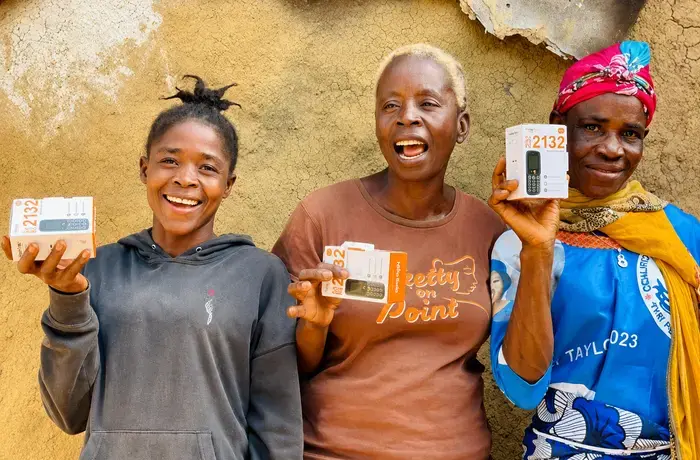
Ma Nowai Kaine (centre) and two other women from Sargent Kollie Town, Bong County, Liberia, hold mobile phones received through the D4WEE Project, implemented by UN Women with support from the Orange Foundation. Photo: UN Women/Aisha Kolubah.
Feature

For rural women in Liberia, digital and economic empowerment go hand-in-hand

1 October 2026
For rural women in Liberia, digital and economic empowerment go hand-in-hand
Image
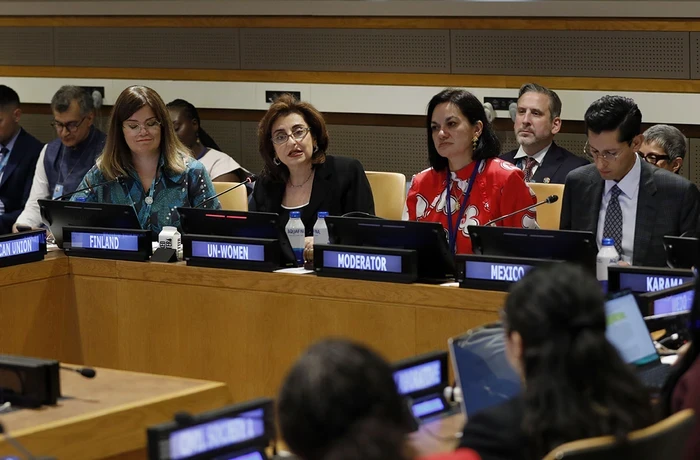
UN Women Executive Director Sima Bahous speaks at the High-Level Dialogue on Reinvigorating Feminist Multilateralism held at the UN Headquarters during the High-Level week of the 81st session of the UN General Assembly on 25 September 2026.  Photo: UN Women/Ryan Brown
Speech

Speech: Multilateralism will only remain fit for purpose if it shares power, centres women’s leadership, and delivers for the people it serves

25 September 2026
Speech: Multilateralism will only remain fit for purpose if it shares power, centres women’s leadership, and delivers for the people it serves
Image
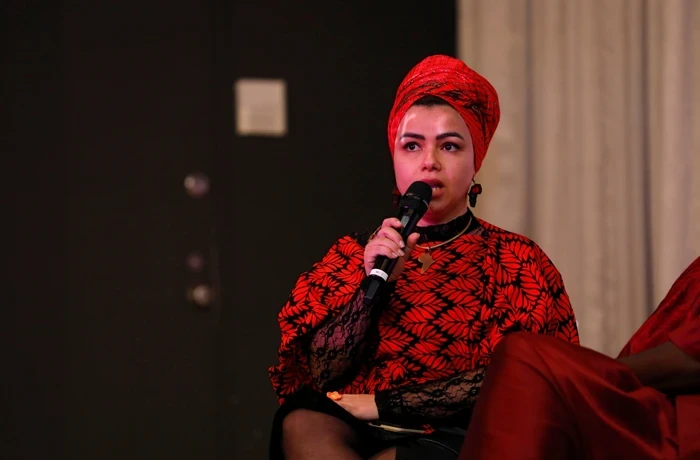
A young woman speaks into a microphone
News

UN Women Leaders Network champions intergenerational leadership at UNGA81

25 September 2026
UN Women Leaders Network champions intergenerational leadership at UNGA81

Footer menu-HQ

  • News and stories
  • Resources
  • What we do
  • How we work
  • Where we are
  • Partnerships
  • Employment
  • Procurement
  • Contact us
  • Executive Board
  • Commission on the Status of Women

Donate button menu [Footer tablet]

  • Donate

Donate button menu [Footer]

  • Donate

Social media menu

  • Facebook
  • Twitter
  • LinkedIn
  • Flickr
  • YouTube
  • Instagram
UN Women - For all women and girls

Footer bottom [Menu]

  • Copyright
  • Information security
  • Privacy notice
  • Report wrongdoing
  • Terms of use
Share this page
  • Share to Facebook
  • Share to Twitter
  • Share to LinkedIn
  • Share to E-mail

Or copy link