Speech: Call for action: Urgent humanitarian response for Gaza
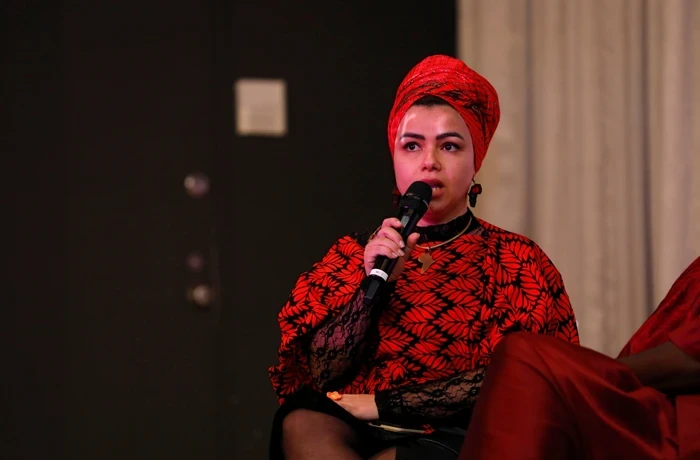
Remarks by UN Women Executive Director Sima Bahous at the Conference “Call for Action: Urgent Humanitarian Response for Gaza,” in Sweimeh, Jordan.
[As delivered.]
I thank Jordan and Egypt for convening us today for this urgent call to action.
The unimaginable has been unfolding in Gaza in front of our eyes. While war spares no one, it impacts women and girls differently.
There are countless statistics to describe the cascading crises happening in Gaza. It is, in many ways, a war also on women.
Yet the most powerful voice for peace, humanitarian assistance, recovery and hope is Gazan women themselves. It is their voice, resilience and courage that must echo through our response. Just last week, a Gazan woman sent a voice message to our meeting, she said:
“Gazan women like all women around the world, do not want to bury their children. They do not want their bodies to remain under the rubble. They do not want to starve. And they do not want the world to look away.”
Speaking of recovery feels almost absurd in the face of what is happening mere kilometers from us today. But it is important that we are here, that we are not looking away.
For the last nine months, UN Women’s gendered analysis of the war in Gaza (UN Women Gender Alerts) has shown the systematic deterioration of the basic living conditions for the whole population, and for women and girls.
More than 10,000 women have been killed by Israeli forces to date, including 6,000 mothers, leaving behind more than 19,000 orphaned children.
These heartbreaking statistics are likely an underestimate of the true scale of the tragedy. Women report to us that they go without food. In 95 per cent of families where meals are skipped, our data shows that mothers are the ones to go hungry. Gaza’s entire population of 2.3 million is teetering on the brink of starvation. Women give birth without medical support, often without anesthesia.
Over one million women and girls in Gaza lack access to safe water and other essential sanitation items that preserve their dignity.
Women cannot sleep; they have multiple health issues; they feel anxious and depressed, deeply traumatized, many report being dizzy from the lack of food. These are realities we cannot turn away from.
We must explore solutions, in the immediate term, and in the eventual recovery.
First and foremost, we need an all-inclusive recovery approach, and for this to work, we need women.
There can be no recovery without women. We may think that this is a given, that it is implied, but we see time and time again that women´s voices are marginalized, their agency overlooked, in early recovery efforts.
We need women´s voices and their agency if we are to ensure that our early recovery interventions work: from emergency livelihoods support, to cash assistance, to debris clearance, to support to the private sector, the rehabilitation of infrastructure and more.
When the dust settles, Palestinians in Gaza will return to their harsh status quo including underdevelopment and unemployment. With limited space for recovery and healing.
The impact of these harsh realities is much harder on women.
The profound suffering Gazan women and girls endured will echo through generations if we fail to act. It is imperative that all recovery efforts include comprehensive psychosocial services to enable all women and girls to heal, access to shelter, even for those women without property deeds or documents, economic opportunities to rebuild their lives, return to schools and universities, and to protect social cohesion and restore the well being of their communities and country.
Destruction is gender blind, but reconstruction does not have to be. We need to be clear that women´s inclusion is non-negotiable.
It is not an afterthought, it is a pre-requisite. We need constant advocacy for their rights and inclusion.
We also need Gazan women and Palestinian organisations to lead recovery efforts – they are our ‘nexus’. UN Women’s fourth gender alert released yesterday sheds light on these organizations. They have been bombed and their staff killed, yet they are relentless and unwavering.
They have rapidly expanded and shifted their priorities towards life-saving assistance and emergency relief.
I urge all humanitarian and development partners to ensure funding for gender equality in their contributions to the Gaza response.
We need flexible funding for the advocacy efforts, for cash assistance, and for the lifesaving work gender equality advocates are providing. If we fail, we will fail to meet the needs of all of the population.
I also salute my friend and colleague, Philippe and his entire UNRWA team, who continue to be our beacon of hope and resilience amid unprecedented circumstances.
UNRWA remains a lifeline for Palestinians in Gaza, the West Bank, and the region, their services are indispensable, and their courage commendable.
I end my intervention with a call for peace. We need the bombs to stop, we need the bloodshed to end, we need to heal. The need for a permanent ceasefire, unhindered, immediate and gender-responsive humanitarian access, the release of hostages, and a return to a two-state solution have never been more urgent.
I hope that Security Council Resolution 2735, adopted yesterday, will help us all move forward on recovery responses for all Gazans including women and girls without delay.
My message as the Executive Director of UN Women is simple – Gazan women should be at the heart of our call to action and in all efforts towards peace. No response will be long lasting or sustainable, without women.
I thank you.