Universal menu

  • Global
  • Regions
    • Africa
    • Americas and the Caribbean
    • Arab States
    • Asia and the Pacific
    • Europe and Central Asia
  • Knowledge
  • Data
  • Training
  • Transparency
UN Women - For all women and girls

Main Navigation-HQ

  • Who we are
    • About us
      • About UN Women
      • Business model
      • Guiding documents
      • Worldwide presence
    • Leadership
      • Governance structure
      • Executive leadership
      • Executive Board
      • Accountability
    • Work with us
      • Employment
      • Procurement
      • Calls for proposals
      • Contact us
      • UN Women Strategic Plan 2026–2029
      • UN Women Strategic Plan 2026–2029 - social media image
        UN Women Strategic Plan 2026–2029
  • What we do
    • Focus areas
      • Ending violence against women
      • Peace and security
      • Humanitarian action
      • Leadership and governance
      • Economic empowerment
      • Innovation and technology
      • Women with disabilities
      • Youth
      • HIV and AIDS
    • How we work
      • 2030 Agenda for Sustainable Development
      • Commission on the Status of Women
      • Gender parity in the UN system
      • Intergovernmental support
      • Partnerships
      • Research and data
      • Training Centre
      • Trust funds
      • UN system coordination
      • Gender Equality Accelerators
      • Gender Equality Accelerators artwork
        Gender Equality Accelerators
  • News and stories
    • Latest
      • News
      • Articles and explainers
      • In focus
    • Media center
      • Press materials
      • Media contacts
      • Explainer: Why are women so exhausted? Care work and the mental load
      • Two adults stand at a table changing diapers on baby dolls, with laundry hanging on a clothesline behind them in a home setting.
        Explainer: Why are women so exhausted? Care work and the mental load
      • Press release: Aid cuts dismantle women’s organizations working in humanitarian crises
      • A young Ugandan woman sits with another local woman to talk
        Press release: Aid cuts dismantle women’s organizations working in humanitarian crises
  • Digital library
    • Resources
      • Publications
      • Annual reports
      • Gender snapshot
      • Progress of the world’s women
      • World survey on the role of women in development
    • GenderTerm
      • GenderTerm
      • Reprint permissions
      • UN Women Highlights 2025–2026
      • A smiling woman.
        UN Women Highlights 2025–2026
      • Gender snapshot 2026
      • A diverse group of people represented as simplified silhouettes, arranged against a dark blue background.
        Gender snapshot 2026
  • Get involved
    • How to get involved
      • For ALL Women and Girls
      • International Women's Day
      • 16 Days of Activism to End Violence against Women and Girls
      • UNiTE! Campaign to End Violence against Women
      • Generation Equality
      • He for She
Ask AI
https://84e5cfacd5c7e99f9825edf344450c.1b.environment.api.powerplatform.com/powervirtualagents/botsbyschema/crad4_websiteQA/directline/token?api-version=2022-03-01-preview
1
-
Ask your question here
AI website assistant

Hello, how can I assist you?

AI chatbot responses may be incorrect. Always verify important information.

Donate button menu

Donate

Breadcrumb

  1. Home
  2. News and stories
  3. Speech

Website survey

We want to know how we can improve your experience on this website. Completing this survey takes less than 5 minutes.

TAKE THE SURVEY
Speech

Speech: When women lead and power is shared, everyone moves forward

Opening remarks by UN Under-Secretary-General and UN Women Executive Director Sima Bahous at global launch of “Progress on the Sustainable Development Goals: The gender snapshot 2026”, Japan Society, New York, 23 September 2026.

23 September 2026
UN Women Executive Director Sima Bahous
  • Share to Facebook
  • Share to Twitter
  • Share to LinkedIn
  • Share to E-mail

[As delivered.]

It is an honour to launch the 2026 SDG Gender Snapshot with our colleagues at UN DESA and in the presence of our dear Deputy Secretary-General, Amina Mohammad.

This year’s report, as the DSG said it, is about power: who holds it, what keeps women from it, and what becomes possible when women lead. It gives us reason for hope and reason for urgency.

Image
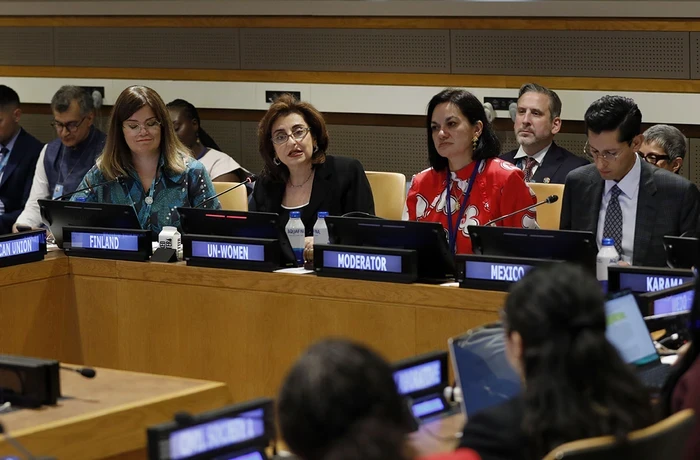
UN Under-Secretary-General and UN Women Executive Director Sima Bahous delivers opening remarks at the global launch of “Progress on the Sustainable Development Goals: The gender snapshot 2026”, Japan Society, New York, 23 September 2026. Photo: UN Women/Ryan Brown.

Women’s leadership strengthens institutions; we know that very well. It builds peace, and it improves lives. Yet women remain shut out of too many decisions that shape our future. Only one in seven countries is led by a woman. Women remain underrepresented in decisions on finance and defence, in the world’s highest courts and at the head of major companies.

And for women who seek public office or who seek change, violence can make the path harder still. In some countries, as many as eight in ten women candidates face violence during their campaigns.

Meanwhile, the digital future is taking shape around us. Women must have an equal hand in designing it, in building it, and in growing it, including in artificial intelligence. Yet they hold fewer than one in seven senior AI leadership roles – one in seven. If women are missing from the decisions that shape technology, we risk carrying old inequalities in a new era, a fast-developing era.

The institutions created to advance equality need strength too. In just two years, one in three national gender equality mechanisms has lost institutional power. Funding for women’s organizations has fallen by 28 per cent. And we cannot ask them to drive change without the means to do it.

These findings demand action, our action. And the report shows us why action is worth taking. When women participate meaningfully in peace talks, agreements are more equitable and durable. Where women have a stronger voice in parliament, children see better health outcomes.

These gains reach far beyond women themselves. They show us where to go next.

So, Excellencies, give gender equality mechanisms the authority and resources to deliver. Remove the barriers to women’s leadership in parliaments, in courts, in public institutions, and in boardrooms. Protect women from violence in public life. Deliver funding directly to women’s organizations, especially in crises.

UN Women is, of course, ready to advance this work with you. Our mandate connects global commitments with national action. Across more than 100 countries, we help turn evidence into laws, into policies, into budgets, and into services. We help turn commitment into change.

We focus on four important pillars for women and girls throughout the world: women’s leadership roles and roles in decision-making; economic empowerment for women and economic justice; zero violence in every aspect of life, whether it is political, whether it is domestic, whether it is in wars, whether there is gender-based violence in crisis, et cetera, and also in women, peace and security and humanitarian settings. These are important priorities for women and girls today, and which UN Women prioritizes in every single country and every single place where these are needed in every part of the world.

So, I ask Member States to make these priorities real in the decisions you take also, the institutions that you choose to strengthen, and the resources you commit. I ask donors and foundations to help reverse the decline in funding for women’s organizations.

And I must say, I thank you, too, for sustaining your support for UN Women in a very difficult financial period. Maybe you heard me saying this before during this UNGA: This year we saw UN Women’s finances decrease by less than one per cent, thanks to all of you for your support and for continuing the fight for gender equality and to embrace women and girls across the world. Really, thank you!

And I ask parliaments, courts, ministries, private sector, and public sector boards to publish gender data. What we can see, when we can see who holds power, we can act to share it more equally.

And to the young women here: your leadership is needed now. Your voice and, indeed, as the DSG reminded us, your pen belong wherever decisions about the future are made. Help us build institutions worthy of your ambition. Come and help us do that together.

These are choices we can make now. With less than four years to deliver on the 2030 Agenda, every decision to share power and invest in equality matters. CSW71, with its focus on the Sustainable Development Goals, next March, will be an opportunity to take stock and strengthen our resolve to deliver.

The numbers in this report are not our destiny. And yes, we know the DSG hates the numbers that we bring every year on how many years we have to go until gender equality is realized. I asked my team not to use the 171 this time, at least in my speeches, to honour the request, but since she used it today, I want to say yes, it is 171! Actually, these are just projections, and I must say that, as the DSG was saying, we really need to move forward and look at these numbers that are just projections and calls to action.

So, the numbers are not really our destiny, they are actually our call to action, our call to accelerate, accelerate, accelerate. Because the 171 years needed, the report tells us, is if we continue to work at the pace that we are working at today. But, should we accelerate, then better results and better numbers will appear in our report.

We also know what works. We know what must change. And together, we have the resolve to change it and to continue to push forward for gender equality and women’s empowerment. Because when women lead and power is shared, everyone moves forward. So, let us make that the defining story of the years ahead and the defining story of this UNGA 81.

I thank you all for being here and thank you for sharing your thoughts and recommendations as we move forward tonight.

Thank you.
Topics

  • 2030 Agenda for Sustainable Development
  • Sustainable Development Goals (SDGs)
  • Gender equality and women’s empowerment
  • Intergovernmental processes
  • United Nations General Assembly
  • Leadership and political participation
  • Political empowerment
  • UN Women administration
  • Executive Director

Related content

Image
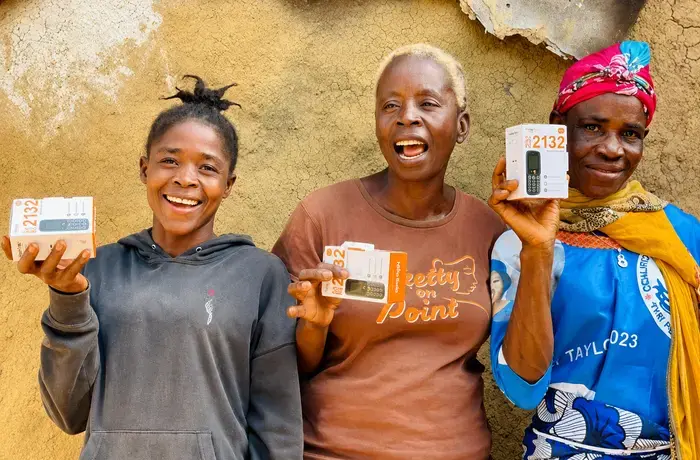
Ma Nowai Kaine (centre) and two other women from Sargent Kollie Town, Bong County, Liberia, hold mobile phones received through the D4WEE Project, implemented by UN Women with support from the Orange Foundation. Photo: UN Women/Aisha Kolubah.
Feature

For rural women in Liberia, digital and economic empowerment go hand-in-hand

1 October 2026
For rural women in Liberia, digital and economic empowerment go hand-in-hand
Image
UN Women Executive Director Sima Bahous speaks at the High-Level Dialogue on Reinvigorating Feminist Multilateralism held at the UN Headquarters during the High-Level week of the 81st session of the UN General Assembly on 25 September 2026.  Photo: UN Women/Ryan Brown
Speech

Speech: Multilateralism will only remain fit for purpose if it shares power, centres women’s leadership, and delivers for the people it serves

25 September 2026
Speech: Multilateralism will only remain fit for purpose if it shares power, centres women’s leadership, and delivers for the people it serves
Image
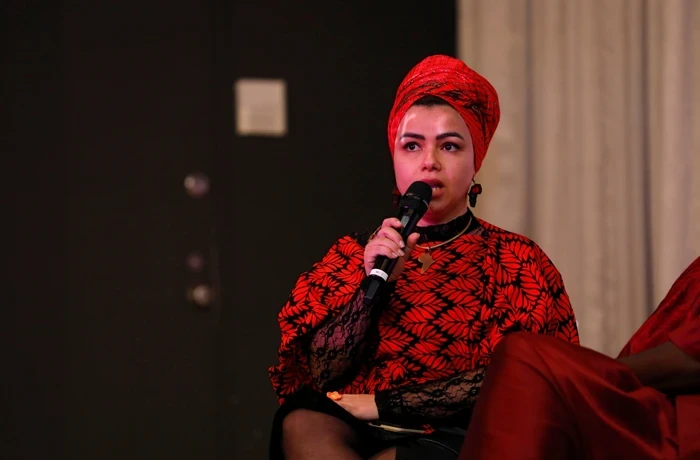
A young woman speaks into a microphone
News

UN Women Leaders Network champions intergenerational leadership at UNGA81

25 September 2026
UN Women Leaders Network champions intergenerational leadership at UNGA81

Footer menu-HQ

  • News and stories
  • Resources
  • What we do
  • How we work
  • Where we are
  • Partnerships
  • Employment
  • Procurement
  • Contact us
  • Executive Board
  • Commission on the Status of Women

Donate button menu [Footer tablet]

  • Donate

Donate button menu [Footer]

  • Donate

Social media menu

  • Facebook
  • Twitter
  • LinkedIn
  • Flickr
  • YouTube
  • Instagram
UN Women - For all women and girls

Footer bottom [Menu]

  • Copyright
  • Information security
  • Privacy notice
  • Report wrongdoing
  • Terms of use
Share this page
  • Share to Facebook
  • Share to Twitter
  • Share to LinkedIn
  • Share to E-mail

Or copy link