Universal menu

  • Global
  • Regions
    • Africa
    • Americas and the Caribbean
    • Arab States
    • Asia and the Pacific
    • Europe and Central Asia
  • Knowledge
  • Data
  • Training
  • Transparency
UN Women - For all women and girls

Main Navigation-HQ

  • Who we are
    • About us
      • About UN Women
      • Business model
      • Guiding documents
      • Worldwide presence
    • Leadership
      • Governance structure
      • Executive leadership
      • Executive Board
      • Accountability
    • Work with us
      • Employment
      • Procurement
      • Calls for proposals
      • Contact us
      • UN Women Strategic Plan 2026–2029
      • UN Women Strategic Plan 2026–2029 - social media image
        UN Women Strategic Plan 2026–2029
  • What we do
    • Focus areas
      • Ending violence against women
      • Peace and security
      • Humanitarian action
      • Leadership and governance
      • Economic empowerment
      • Innovation and technology
      • Women with disabilities
      • Youth
      • HIV and AIDS
    • How we work
      • 2030 Agenda for Sustainable Development
      • Commission on the Status of Women
      • Gender parity in the UN system
      • Intergovernmental support
      • Partnerships
      • Research and data
      • Training Centre
      • Trust funds
      • UN system coordination
      • Gender Equality Accelerators
      • Gender Equality Accelerators artwork
        Gender Equality Accelerators
  • News and stories
    • Latest
      • News
      • Articles and explainers
      • In focus
    • Media center
      • Press materials
      • Media contacts
      • Explainer: Why are women so exhausted? Care work and the mental load
      • Two adults stand at a table changing diapers on baby dolls, with laundry hanging on a clothesline behind them in a home setting.
        Explainer: Why are women so exhausted? Care work and the mental load
      • Press release: Aid cuts dismantle women’s organizations working in humanitarian crises
      • A young Ugandan woman sits with another local woman to talk
        Press release: Aid cuts dismantle women’s organizations working in humanitarian crises
  • Digital library
    • Resources
      • Publications
      • Annual reports
      • Gender snapshot
      • Progress of the world’s women
      • World survey on the role of women in development
    • GenderTerm
      • GenderTerm
      • Reprint permissions
      • UN Women Highlights 2025–2026
      • A smiling woman.
        UN Women Highlights 2025–2026
      • Gender snapshot 2026
      • A diverse group of people represented as simplified silhouettes, arranged against a dark blue background.
        Gender snapshot 2026
  • Get involved
    • How to get involved
      • For ALL Women and Girls
      • International Women's Day
      • 16 Days of Activism to End Violence against Women and Girls
      • UNiTE! Campaign to End Violence against Women
      • Generation Equality
      • He for She
Ask AI
https://84e5cfacd5c7e99f9825edf344450c.1b.environment.api.powerplatform.com/powervirtualagents/botsbyschema/crad4_websiteQA/directline/token?api-version=2022-03-01-preview
1
-
Ask your question here
AI website assistant

Hello, how can I assist you?

AI chatbot responses may be incorrect. Always verify important information.

Donate button menu

Donate

Breadcrumb

  1. Home
  2. News and stories
  3. Feature story

Website survey

We want to know how we can improve your experience on this website. Completing this survey takes less than 5 minutes.

TAKE THE SURVEY
Feature

Gender bonds: A promising solution to accelerate SDG5

12 May 2023
  • Share to Facebook
  • Share to Twitter
  • Share to LinkedIn
  • Share to E-mail

With the Sustainable Development Agenda deadline only seven years away, there is still much work to be done to achieve SDG5, which calls for gender equality and the empowerment of all women and girls. UN Women research indicates that at the current rate of progress, it will take centuries to reach this goal. However, gender bonds offer a promising solution for direct financing towards projects that reduce gender inequalities and promote women's empowerment. 

A year ago, UN Women and the Luxembourg Stock Exchange (LuxSE) joined forces to promote sustainable financing for gender equality. The partnership aims to raise awareness on gender bonds and encourage greater capital allocations towards tackling the economic and social inequalities that persist between women and men across the globe. To accelerate progress on this crucial issue, the partners have launched a new Case Study Series called "Innovative Financing for Gender Equality via Bonds." The series aims to catalyze action among bond investors and issuers by providing key information on the use of this financing instrument to reduce gender inequalities and promote women's empowerment. 

Here are three things to know about gender bonds: 

Image
Gender bonds: A promising solution to accelerate SDG5

Gender bonds can accelerate gender equality and women's empowerment projects.

The approaching 2030 deadline for the Sustainable Development Agenda has led to increased interest in sustainable bonds as a means of mobilizing private capital. According to global guidance from the International Capital Market Association, the International Finance Corporation, and UN Women, issuers of sustainable bonds can integrate gender equality objectives into the bond's use of proceeds or key performance indicators. To achieve this, the guidance recommends connecting bonds to policies and programmes that enhance women's well-being and reduce inequalities, as well as tracking and verifying the bond's impact. These bonds are known as "gender bonds" if they focus exclusively on gender equality. The market has also seen the introduction of social or sustainability bonds that pursue broader objectives in addition to reducing gender gaps. 

Gender bonds can tackle diverse issues related to gender equality.

Around the world, investors are using gender bonds to finance interventions targeted at specific gender equality issues, such as financing loans for women-owned small businesses or increasing procurement spending from black women-owned businesses. In Spain, a subnational government raised capital via a sustainability bond to improve services to victims of gender-based violence. In Tanzania, a commercial bank issued a gender bond to finance small businesses and committed to reporting on jobs created for women. Themes that are essential for progress towards SDG5 and that could be leveraged more by bond issuers include: increased investment in the care economy, elimination of the gender pay gap, supporting social protection measures for workers in the informal economy, or increasing the offering of assistance services to victims of violence against women. 

Gender bonds can channel new resources to organizations that make gender equality a strategic priority.

To be effective, these bonds need to be linked to credible strategies, programmes, and policies that ambitiously tackle gender inequality. Investors in thematic bonds will review additional information to assess their expected contribution to sustainable development, along with the risk profile of the bond issuer. It is important to raise the level of ambition in tackling gender inequality, act on commitments, and report on the effective reduction of the identified gaps. 

Sustainable bonds that integrate SDG5 objectives have attracted interest from investors worldwide. See for example, the global reach of gender-focused bonds in a new market study by the Luxembourg Stock Exchange released in parallel to the case study series. Gender-focused bonds are in demand and interest is growing in introducing gender equality objectives as a core element of sustainability financing in regions such as Europe, the Americas, Asia, the Pacific, and Africa. 
Topics

  • 2030 Agenda for Sustainable Development
  • Sustainable Development Goals (SDGs)
  • Financing for gender equality

Related content

Image
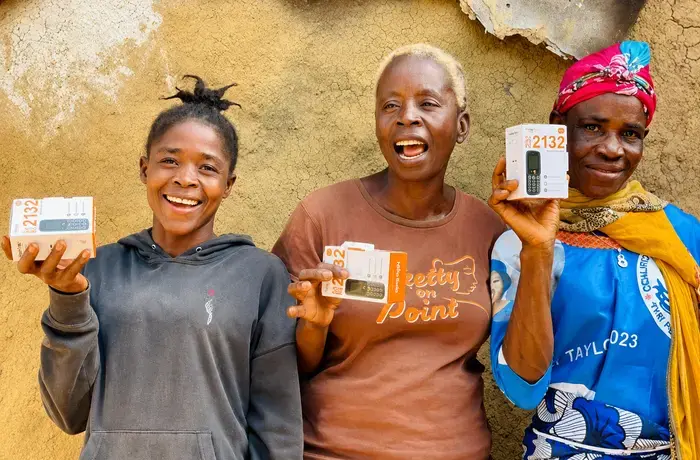
Ma Nowai Kaine (centre) and two other women from Sargent Kollie Town, Bong County, Liberia, hold mobile phones received through the D4WEE Project, implemented by UN Women with support from the Orange Foundation. Photo: UN Women/Aisha Kolubah.
Feature

For rural women in Liberia, digital and economic empowerment go hand-in-hand

1 October 2026
For rural women in Liberia, digital and economic empowerment go hand-in-hand
Image
A young woman speaks into a microphone
News

UN Women Leaders Network champions intergenerational leadership at UNGA81

25 September 2026
UN Women Leaders Network champions intergenerational leadership at UNGA81
Image
Five women chefs stand together, arms folded, and pose for a photo
Feature

One month after the Nepal floods, women are running community kitchens, feeding their communities, and rebuilding their lives

25 September 2026
One month after the Nepal floods, women are running community kitchens, feeding their communities, and rebuilding their lives

Footer menu-HQ

  • News and stories
  • Resources
  • What we do
  • How we work
  • Where we are
  • Partnerships
  • Employment
  • Procurement
  • Contact us
  • Executive Board
  • Commission on the Status of Women

Donate button menu [Footer tablet]

  • Donate

Donate button menu [Footer]

  • Donate

Social media menu

  • Facebook
  • Twitter
  • LinkedIn
  • Flickr
  • YouTube
  • Instagram
UN Women - For all women and girls

Footer bottom [Menu]

  • Copyright
  • Information security
  • Privacy notice
  • Report wrongdoing
  • Terms of use
Share this page
  • Share to Facebook
  • Share to Twitter
  • Share to LinkedIn
  • Share to E-mail

Or copy link