Universal menu

  • Global
  • Regions
    • Africa
    • Americas and the Caribbean
    • Arab States
    • Asia and the Pacific
    • Europe and Central Asia
  • Knowledge
  • Data
  • Training
  • Transparency
UN Women - For all women and girls

Main Navigation-HQ

  • Who we are
    • About us
      • About UN Women
      • Business model
      • Guiding documents
      • Worldwide presence
    • Leadership
      • Governance structure
      • Executive leadership
      • Executive Board
      • Accountability
    • Work with us
      • Employment
      • Procurement
      • Calls for proposals
      • Contact us
      • UN Women Strategic Plan 2026–2029
      • UN Women Strategic Plan 2026–2029 - social media image
        UN Women Strategic Plan 2026–2029
  • What we do
    • Focus areas
      • Ending violence against women
      • Peace and security
      • Humanitarian action
      • Leadership and governance
      • Economic empowerment
      • Innovation and technology
      • Women with disabilities
      • Youth
      • HIV and AIDS
    • How we work
      • 2030 Agenda for Sustainable Development
      • Commission on the Status of Women
      • Gender parity in the UN system
      • Intergovernmental support
      • Partnerships
      • Research and data
      • Training Centre
      • Trust funds
      • UN system coordination
      • Gender Equality Accelerators
      • Gender Equality Accelerators artwork
        Gender Equality Accelerators
  • News and stories
    • Latest
      • News
      • Articles and explainers
      • In focus
    • Media center
      • Press materials
      • Media contacts
      • Explainer: Why are women so exhausted? Care work and the mental load
      • Two adults stand at a table changing diapers on baby dolls, with laundry hanging on a clothesline behind them in a home setting.
        Explainer: Why are women so exhausted? Care work and the mental load
      • Press release: Aid cuts dismantle women’s organizations working in humanitarian crises
      • A young Ugandan woman sits with another local woman to talk
        Press release: Aid cuts dismantle women’s organizations working in humanitarian crises
  • Digital library
    • Resources
      • Publications
      • Annual reports
      • Gender snapshot
      • Progress of the world’s women
      • World survey on the role of women in development
    • GenderTerm
      • GenderTerm
      • Reprint permissions
      • UN Women Highlights 2025–2026
      • A smiling woman.
        UN Women Highlights 2025–2026
      • Gender snapshot 2026
      • A diverse group of people represented as simplified silhouettes, arranged against a dark blue background.
        Gender snapshot 2026
  • Get involved
    • How to get involved
      • For ALL Women and Girls
      • International Women's Day
      • 16 Days of Activism to End Violence against Women and Girls
      • UNiTE! Campaign to End Violence against Women
      • Generation Equality
      • He for She
Ask AI
https://84e5cfacd5c7e99f9825edf344450c.1b.environment.api.powerplatform.com/powervirtualagents/botsbyschema/crad4_websiteQA/directline/token?api-version=2022-03-01-preview
1
-
Ask your question here
AI website assistant

Hello, how can I assist you?

AI chatbot responses may be incorrect. Always verify important information.

Donate button menu

Donate

Breadcrumb

  1. Home
  2. News and stories
  3. Feature story

Website survey

We want to know how we can improve your experience on this website. Completing this survey takes less than 5 minutes.

TAKE THE SURVEY
Feature

The fatherhood programme challenging gender norms

Meet fathers from Egypt, Jordan, and Morocco who are embracing the joys of caregiving – to the benefit of their families and themselves.

18 June 2026
  • Share to Facebook
  • Share to Twitter
  • Share to LinkedIn
  • Share to E-mail

In many families, fathers share in the joys of parenthood, but far fewer share in the responsibilities.

UN Women’s Dare to Care programme is challenging that. The regional initiative in the Arab States region – funded by Sweden, Germany, and the Basque Country region – addresses long-held social norms that impede men’s involvement in caregiving and empowers fathers to take more active roles at home, especially around childcare.

Through social activities, mentorship, and peer support, these fathers have discovered the transformative power of being more engaged in care work: Couples who participate are reporting less gender inequality in how they spend their time – translating into more freedom and flexibility for mothers; fathers are gaining confidence and purpose; and children are benefiting from stronger emotional bonds with their fathers.

And these fathers aren’t keeping this progress to themselves. “I started discussing these ideas with my brother, and he has already attended four sessions with me”, says Mamoun Saleh, a participant in Jordan.

“Next Father’s Day, I promise he will be the one interviewed about his experience.”

Learn more about the programme’s impacts from the fathers themselves.

Image
Father and son sit on the floor drawing together, surrounded by art supplies and toys.
Mamoun Saleh and his son share a creative moment in Russeifa, Jordan, on 24 May 2026. Photo: Athar Foundation

Strengthening the bonds between husband and wife, and father and daughter

Mamoun Saleh, a 55-year-old father of two daughters and two sons in Jordan, once viewed childcare and household chores as his wife’s responsibilities. Now, he’s her biggest advocate.

"I used to focus on my job only. I went home and slept after work. I spent very little time with my family – no time to connect or strengthen my relationship with them”, says Saleh.

After participating in the Dare to Care programme, through sessions organized by a community-based organization Athar, he gradually began to rethink his role within the family.

“Now, I am much more involved in parenting, and it has had a profoundly positive impact on my children's well-being."

"The advice and recommendations through the sessions really helped break down the barrier that men can't be involved in household and childcare work. Especially here in the Levant region, I feel like this was a tough perception to shift, but it's happening. I'm now sharing the messages I learned from the sessions with people in my community."

As Saleh began to take on more household and care work, his wife had more time for her own endeavors, including small-business projects she managed with their eldest daughter from home.

“We do everything hand-in-hand, both in her project and at home. Every night, we sit down over a cup of coffee and plan out responsibilities for the next day.”

Now the family sits together and encourages their eldest daughter to start her own project. (She named it 'Takder' after the Dare to Care programme’s name in Arabic.)  “[We] discuss her goals and offer advice…It's a healthy way to connect with my daughters."

Image
Father and daughter sit on the floor playing together with toys.
Nady Ashry and his daughter Sagda play together in Fayoum, Egypt, on 10 June 2026. Photo: Gozour Foundation

Dismantling outdated gender roles in families

“How can people expect a woman to take care of four children and manage all household responsibilities on her own”, questions Nady Ashry.

The 46-year-old father of two boys and two girls living in Fayoum, Egypt, reflected on the man he once was: a guardian of patriarchal norms. Ashry used to never get himself a cup of water or let his neighbours see him take his own laundry off the drying rack.

Not long after Ashry participated in the Dare to Care programme through the Gozour Foundation (an organization working with UN Women), his wife, Warda Eid, was briefly hospitalized. It became a test of what he had learned about the true meaning of partnership. “I cooked for our children. I did the laundry. I took the children to the nursery. I cleaned. I did everything”, shares Ashry.

As the couple started to divide household responsibilities more equitably, they found more time for each other and with their children. Ashry is committed to passing on these new values. “My sons do a lot of household responsibilities [now], because they see me modelling this behaviour. I made sure to pass this on to them”, Ashry adds. “It’s not okay for him to [always] ask his sister for water. Why wouldn’t he get it himself?” 

Image
Father carries his daughter onto his shoulders while they play in front of a wall decorated with colourful handprints.
Azzedine Sbai carrying his daughter Lina in Loudaya, Morocco. Photo: UN Women/Taha Bensalmia

Ending harmful myths about fatherhood – within this generation

“Traditions, not religion, promoted the belief that a man who shared household responsibilities was not manly enough”, says Azzedine Sbai, father of a 4-year old girl in Loudaya, Morocco. “Today, more people are recognizing that family responsibilities should be shared.”

Thankfully, the social norms that discouraged men from becoming more involved are starting to fade – and even his own perceptions of fatherhood have evolved over the years, Sbai explains. He and other fathers are taking part in sessions, hosted by UN Women partner Project Soar, that engage men in household and childcare work.

“We share things equitably at home”, says Sbai. “I think men must participate in domestic responsibilities. You cannot leave everything to the woman. It's too much for one person, and can cause stress.”

Sbai reflects on the values he inherited from his father, recalling how he used to see him cook tagines. He’s passing these values onto his own children: “There are some positive habits that you naturally pass on to your children. As for the negative ones, we should stop them with our generation – and not pass them on any further.”

UN Women’s TransformCare global initiative

Dare to Care is part of TransformCare, UN Women’s flagship global initiative that addresses the undervaluing and unequal division of care work to improve the lives of women and girls.

Already implemented in more than 50 countries across six regions – and grounded in context-specific interventions – the programme is advancing a transformative vision of care as a cornerstone of gender equality, social cohesion, wellbeing, and the realization of human rights.

By 2035, TransformCare has the potential to contribute to:

  • Enabling systemic impact for 2.9 billion women and girls,
  • Generating at least 260 million decent jobs for women, and
  • Releasing more than 10 trillion hours of women’s and girls’ time.
Read more

4
4
Image
Illustration depicting men and women doing unpaid care work tasks
FAQs

FAQs: What is unpaid care work and how does it power the economy? 

23 October 2025
Indigenous women of Guatemala’s Polochic valley are feeding their families, growing their businesses and saving more money than ever before, with the help of a joint UN programme that’s empowering rural women. Photo: UN Women/Ryan Brown
Feature story

In Latin America, we’re not just recognizing care work – we’re rebuilding economies around it

27 June 2025
A UN Women programme beneficiary uses an improved cookstove, which has helped her significantly reduce the hours she spends preparing food. Photo: UN Women Tanzania.
Feature story

In East and Southern Africa, care is everyone’s business – and it’s changing lives

23 October 2025
Image
Maïga Bintou Diarra, an active member of the Bougouni Leaders' Coalition, received training on the EVAW program initiated by UN Women in the Bougouni region, southern Mali, April 2022. Photo: UN Women.
Explainer

Unpaid but essential: How women’s care work powers Mali’s economy

25 October 2024

Topics

  • Economic empowerment
  • Care work
  • Unpaid work
  • Gender equality and women’s empowerment
  • Arab States/North Africa

Related content

Image
UNWomen_Placeholder
Press briefing

Middle East escalation threatens food security for an additional 11.7 million women and girls by the end of 2026

2 October 2026
Middle East escalation threatens food security for an additional 11.7 million women and girls by the end of 2026
Image
UNWomen_Placeholder
Press release

Middle East escalation could leave 11.7 million more women and girls facing food insecurity by end-2026

2 October 2026
Middle East escalation could leave 11.7 million more women and girls facing food insecurity by end-2026
Image
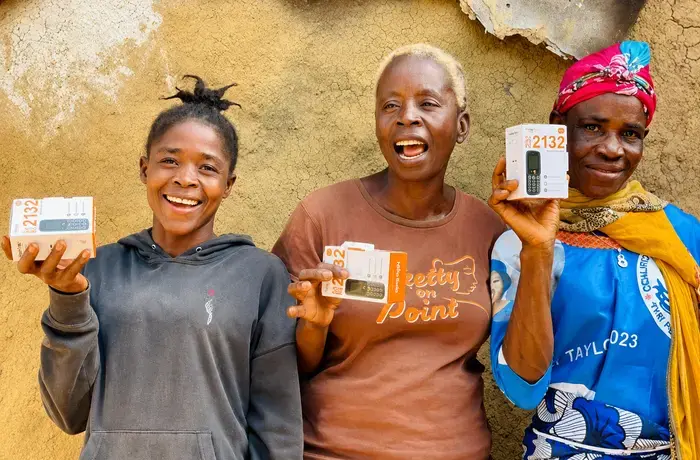
Ma Nowai Kaine (centre) and two other women from Sargent Kollie Town, Bong County, Liberia, hold mobile phones received through the D4WEE Project, implemented by UN Women with support from the Orange Foundation. Photo: UN Women/Aisha Kolubah.
Feature

For rural women in Liberia, digital and economic empowerment go hand-in-hand

1 October 2026
For rural women in Liberia, digital and economic empowerment go hand-in-hand

Footer menu-HQ

  • News and stories
  • Resources
  • What we do
  • How we work
  • Where we are
  • Partnerships
  • Employment
  • Procurement
  • Contact us
  • Executive Board
  • Commission on the Status of Women

Donate button menu [Footer tablet]

  • Donate

Donate button menu [Footer]

  • Donate

Social media menu

  • Facebook
  • Twitter
  • LinkedIn
  • Flickr
  • YouTube
  • Instagram
UN Women - For all women and girls

Footer bottom [Menu]

  • Copyright
  • Information security
  • Privacy notice
  • Report wrongdoing
  • Terms of use
Share this page
  • Share to Facebook
  • Share to Twitter
  • Share to LinkedIn
  • Share to E-mail

Or copy link