Universal menu

  • Global
  • Regions
    • Africa
    • Americas and the Caribbean
    • Arab States
    • Asia and the Pacific
    • Europe and Central Asia
  • Knowledge
  • Data
  • Training
  • Transparency
UN Women - For all women and girls

Main Navigation-HQ

  • Who we are
    • About us
      • About UN Women
      • Business model
      • Guiding documents
      • Worldwide presence
    • Leadership
      • Governance structure
      • Executive leadership
      • Executive Board
      • Accountability
    • Work with us
      • Employment
      • Procurement
      • Calls for proposals
      • Contact us
      • UN Women Strategic Plan 2026–2029
      • UN Women Strategic Plan 2026–2029 - social media image
        UN Women Strategic Plan 2026–2029
  • What we do
    • Focus areas
      • Ending violence against women
      • Peace and security
      • Humanitarian action
      • Leadership and governance
      • Economic empowerment
      • Innovation and technology
      • Women with disabilities
      • Youth
      • HIV and AIDS
    • How we work
      • 2030 Agenda for Sustainable Development
      • Commission on the Status of Women
      • Gender parity in the UN system
      • Intergovernmental support
      • Partnerships
      • Research and data
      • Training Centre
      • Trust funds
      • UN system coordination
      • Gender Equality Accelerators
      • Gender Equality Accelerators artwork
        Gender Equality Accelerators
  • News and stories
    • Latest
      • News
      • Articles and explainers
      • In focus
    • Media center
      • Press materials
      • Media contacts
      • Explainer: Why are women so exhausted? Care work and the mental load
      • Two adults stand at a table changing diapers on baby dolls, with laundry hanging on a clothesline behind them in a home setting.
        Explainer: Why are women so exhausted? Care work and the mental load
      • Press release: Aid cuts dismantle women’s organizations working in humanitarian crises
      • A young Ugandan woman sits with another local woman to talk
        Press release: Aid cuts dismantle women’s organizations working in humanitarian crises
  • Digital library
    • Resources
      • Publications
      • Annual reports
      • Gender snapshot
      • Progress of the world’s women
      • World survey on the role of women in development
    • GenderTerm
      • GenderTerm
      • Reprint permissions
      • UN Women Highlights 2025–2026
      • A smiling woman.
        UN Women Highlights 2025–2026
      • Gender snapshot 2026
      • A diverse group of people represented as simplified silhouettes, arranged against a dark blue background.
        Gender snapshot 2026
  • Get involved
    • How to get involved
      • For ALL Women and Girls
      • International Women's Day
      • 16 Days of Activism to End Violence against Women and Girls
      • UNiTE! Campaign to End Violence against Women
      • Generation Equality
      • He for She
Ask AI
https://84e5cfacd5c7e99f9825edf344450c.1b.environment.api.powerplatform.com/powervirtualagents/botsbyschema/crad4_websiteQA/directline/token?api-version=2022-03-01-preview
1
-
Ask your question here
AI website assistant

Hello, how can I assist you?

AI chatbot responses may be incorrect. Always verify important information.

Donate button menu

Donate

Breadcrumb

  1. Home
  2. News and stories
  3. Press release

Website survey

We want to know how we can improve your experience on this website. Completing this survey takes less than 5 minutes.

TAKE THE SURVEY
Press release

Press release: The world is failing girls and women, according to new UN report

New figures point to the need of an additional USD 360 billion in investment per year to achieve gender equality and women’s empowerment by 2030.

7 September 2023
  • Share to Facebook
  • Share to Twitter
  • Share to LinkedIn
  • Share to E-mail

New York — Despite global efforts, the world is falling short of achieving gender equality. This year's edition of the UN Women and UN DESA “Progress on the Sustainable Development Goals: The gender snapshot 2023”, launched today, paints a worrisome picture halfway through the 2030 Agenda for Sustainable Development.

“The gender snapshot 2023” warns that, if current trends continue, more than 340 million women and girls—an estimated 8 per cent of the world’s female population—will live in extreme poverty by 2030, and close to one in four will experience moderate or severe food insecurity. The gender gap in power and leadership positions remains entrenched, and, at the current rate of progress, the next generation of women will still spend on average 2.3 more hours per day on unpaid care and domestic work than men.

The annual publication provides a comprehensive analysis of the current state of gender equality across all 17 Sustainable Development Goals (SDGs) and highlights prevailing trends, gaps, and recent setbacks on the journey towards achieving gender equality by 2030.

This year’s report includes sex-disaggregated data on the intersections of gender and climate change for the first time, and projects that by mid-century, under a worst-case climate scenario, climate change may push up to 158.3 million more women and girls into poverty (16 million more than the total number of men and boys).

Ms. Sarah Hendriks, UN Women Deputy Executive Director, ad interim, said: “In this critical midpoint moment for the SDGs, this year’s report is a resounding call to action. We must collectively and intentionally act now to course-correct for a world where every woman and girl has equal rights, opportunities, and representation. To achieve this, we need unwavering commitment, innovative solutions, and collaboration across all sectors and stakeholders.”

With a special focus this year on older women, the report finds that older women face higher rates of poverty and violence than older men. In 28 of the 116 countries with data, fewer than half of older women have a pension; in 12 countries fewer than 10 per cent had access to a pension. Halfway to 2030, progress on SDG 5—gender equality—is clearly way off track. The report shows that the world is failing women and girls with a mere two Goal 5 indicators being “close to target” and no SDG 5 indicator at the “target met or almost met” level.

“The gender snapshot 2023” underscores the urgent need for concrete efforts to accelerate progress towards gender equality by 2030, revealing that an additional USD 360 billion per year is needed to achieve gender equality and women’s empowerment across key global goals. The report also includes calls for an integrated and holistic approach, greater collaboration among stakeholders, sustained funding, and policy actions to address gender disparities and empower women and girls worldwide, concluding that failure to prioritize gender equality now could jeopardize the entire 2030 Agenda for Sustainable Development.

“Gender equality is not just a goal within the 2030 Agenda,” said Maria-Francesca Spatolisano, Assistant Secretary-General for Policy Coordination and Inter-Agency Affairs of UN DESA. “It is the very foundation of a fair society, and a goal upon which all other goals must stand. By breaking down the barriers that have hindered the full participation of women and girls in every aspect of society, we unleash the untapped potential that can drive progress and prosperity for all.”

Further facts and figures highlighted in the report include:

  • Under a worst-case climate scenario, food insecurity is projected to affect as many as 236 million more women and girls, compared to 131 million more men and boys, due to climate change.
  • No country is within reach of eradicating intimate partner violence, and only 27 countries have comprehensive systems to track and make budgetary allocations for gender equality and women’s empowerment.
  • The number of women and girls in conflict-affected contexts has risen significantly, with catastrophic consequences. In 2022, the number of women and girls living in such contexts reached 614 million, 50 per cent higher than the number in 2017.
  • Globally, at current rates of progress, an estimated 110 million girls and young women will be out of school in 2030.
  • The labour and earnings gap remains persistently high. For each dollar men earn in labour income globally, women earn only 51 cents. Only 61.4 per cent of prime working age women are in the labour force, compared to 90 per cent of prime working age men.

Access the report.

See also:

  • Global gender equality in 2023: Urgent efforts needed to reach 2030 goals
  • The 11 biggest hurdles for women’s equality by 2030

Media contacts:

  • Janine Kandel, UN Women, [ Click to reveal ], [ Click to reveal ]
  • Inés Esteban González, UN Women, [ Click to reveal ]
  • Kiri Jo Ginnerup, UN Women, [ Click to reveal ]
  • Francyne Harrigan, UN Department of Global Communications, [ Click to reveal ]
  • Predrag Vasic, UN Department of Economic and Social Affairs, [ Click to reveal ]

Topics

  • 2030 Agenda for Sustainable Development
  • Sustainable Development Goals (SDGs)
  • Climate change
  • Financing for gender equality

Related content

Image
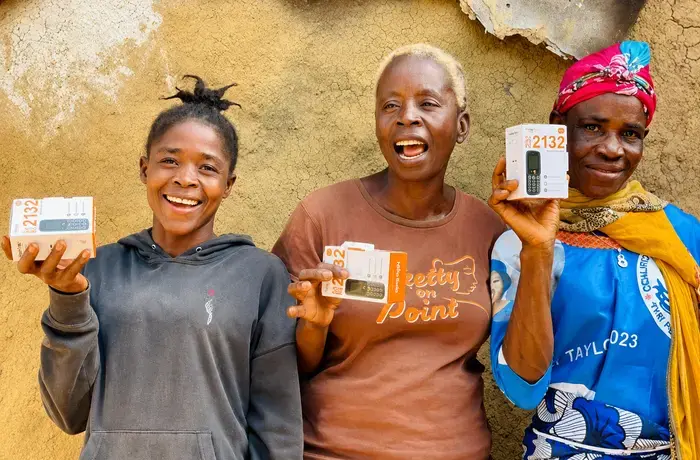
Ma Nowai Kaine (centre) and two other women from Sargent Kollie Town, Bong County, Liberia, hold mobile phones received through the D4WEE Project, implemented by UN Women with support from the Orange Foundation. Photo: UN Women/Aisha Kolubah.
Feature

For rural women in Liberia, digital and economic empowerment go hand-in-hand

1 October 2026
For rural women in Liberia, digital and economic empowerment go hand-in-hand
Image
Five women chefs stand together, arms folded, and pose for a photo
Feature

One month after the Nepal floods, women are running community kitchens, feeding their communities, and rebuilding their lives

25 September 2026
One month after the Nepal floods, women are running community kitchens, feeding their communities, and rebuilding their lives
Image
A young woman speaks into a microphone
News

UN Women Leaders Network champions intergenerational leadership at UNGA81

25 September 2026
UN Women Leaders Network champions intergenerational leadership at UNGA81

Footer menu-HQ

  • News and stories
  • Resources
  • What we do
  • How we work
  • Where we are
  • Partnerships
  • Employment
  • Procurement
  • Contact us
  • Executive Board
  • Commission on the Status of Women

Donate button menu [Footer tablet]

  • Donate

Donate button menu [Footer]

  • Donate

Social media menu

  • Facebook
  • Twitter
  • LinkedIn
  • Flickr
  • YouTube
  • Instagram
UN Women - For all women and girls

Footer bottom [Menu]

  • Copyright
  • Information security
  • Privacy notice
  • Report wrongdoing
  • Terms of use
Share this page
  • Share to Facebook
  • Share to Twitter
  • Share to LinkedIn
  • Share to E-mail

Or copy link